“We must read only the kind of books that wound and stab us. If the book we are reading does not wake us up with a blow to the head, then what are we reading it for? A book must be the axe for the frozen sea inside us.” …Franz Kafka
Some of the best writers in world literature—Kafka in German, say, Isaac Babel in Russian, Philip Roth in English—are the kind of writers who love to inflict blows to the head of the reader. In so doing they must, however, be ever aware that someone smacked upside the head will yell, and yell loudly.
Nathaniel Rich discusses this issue in regard to Roth (NYRB, March 8, 2018).
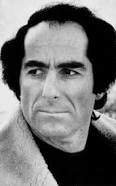
Philip Roth had “to defend himself and to explain himself to the paranoid assimilationists of his father’s generation who berated him for ‘informing the goyim that some Jews might not be paragons of virtue and might even possess human qualities.’” Roth told his detractors, “Fiction is not written to affirm the principles and beliefs that everybody seems to hold.” This was in response to the reaction to his story, “Defender of the Faith,” published in The New Yorker in 1959. Continue reading →

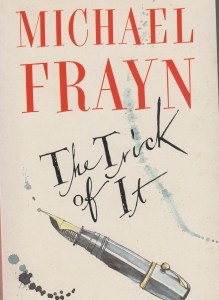 Two professors of literature, old friends, one in England (RD, our narrator), one having emigrated to Australia (R), are writing letters to each other. This suggests one of the many metaphors in The Trick of It (Viking, 1989, 172 pp.): “Forgotten questions and meaningless answers passing each other somewhere over the Indian Ocean at thirty thousand feet—an image of human communication. Of love and literature and life.” So is this an old-fashioned epistolary novel? Far from it. The Trick of It is a marvelous, sparkling-new one-way-epistolary and modern piece of metafiction. I would rank it right up there with Don DeLillo’s White Noise as one of the great comic novels of the twentieth century.
 THE GREAT AMERICAN BOONDOGGLE