The Dactyl annual award returns

The last “annual” award was given in late 2019. The lockdown and rollout were unsettling for everyone. I felt it keenly. After that, I was tapped to work full time as an editor for a political/health related publication. I was distracted. That’s not much of an excuse, but it’s the only one I’ve got.

I will be considering all the books that were nominated in the interim. I thank all the reviewers who kept the reviews coming while I slacked.

For more information about the award see this page.

If you would like to donate, please follow this link.

Best,

V. N. Alexander, editor

Herscht 07769 by László Krasznahorkai, translated by Ottilie Mulzet

[October 9, 2025, it was announced that László Krasznahorkai was awarded the Nobel Prize in Literature.] Here is a pertinent citation from Dennis Overbye (NY Times, 12/22/2024): “Everything that scientists have learned tells us that the universe is dynamic, and so is our knowledge of it. Nothing lasts forever, not even forever itself. Stars are born and they die, their ashes congeal in new generations of flash and crash. And so the show goes, until the last, biggest black hole gasps its last puff of subatomic vapor into the void.

“We don’t know what wonders await discovery back in the first nanosecond of time or in the yawning eons yet ahead. We don’t know why there is something instead of nothing at all. Or why God plays dice, as Einstein put it as he mulled the randomness implicit in quantum mechanics, the house rules of the subatomic realm.”

Continue reading

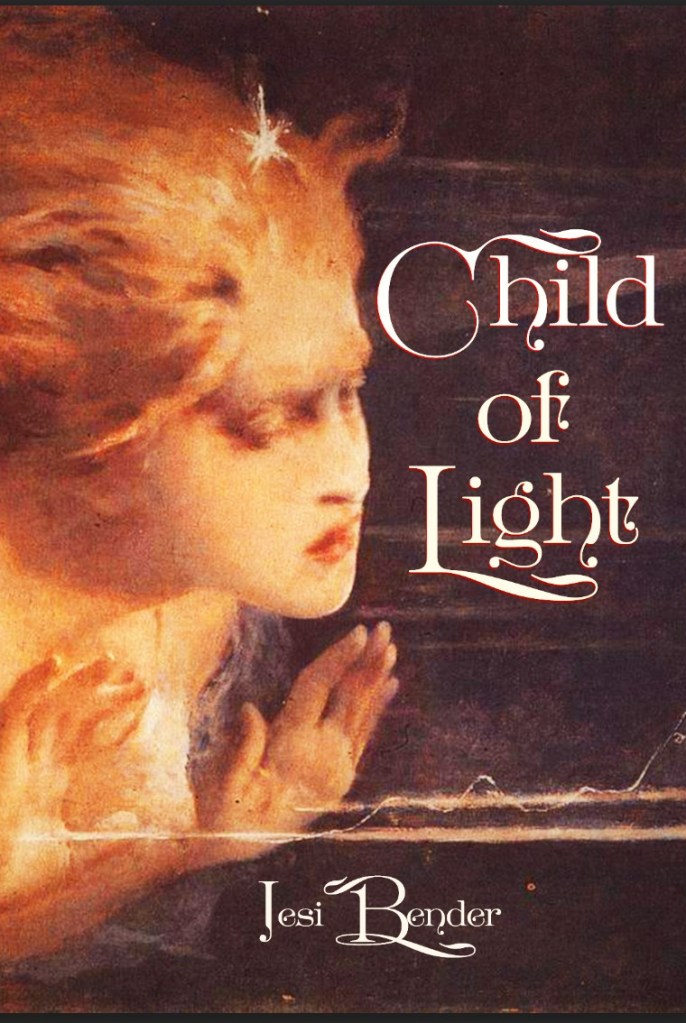
Child of Light by Jesi Bender

What do we really know when epistemic parameters are fluid? This question is central to Jesi Bender’s historical novel, Child of Light (Whisky Tit, 318 pages), set in upstate New York at the end of the 19th century. It centers on Ambrétte Memenon, a clever and dutiful young woman whose father is a French scientist immersed in his studies of electricity, and whose mother is a Québécoise enthusiast of Spiritualism.  Papa seeks to illuminate cities at night, Maman to communicate with the dead.

These are rather different agendas, to put it mildly, but the story dramatizes how, within the context of the period, both pursuits are cutting edge. And Ambrétte, in an attempt to mend her broken family, tries to reconcile the two.

Continue reading

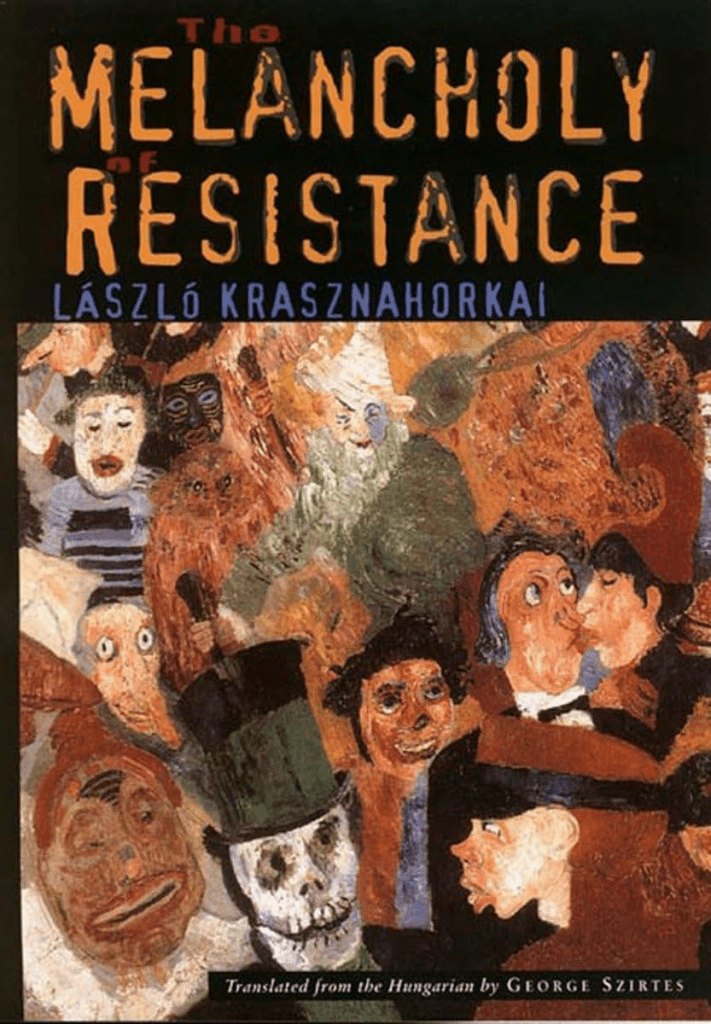
The Melancholy of Resistance, by László Krasznahorkai (translated by George Szirtes)

Part One: “An Emergency: Introduction”

The Malaise

[Note: the part in quotes above is Krasznahorkai’s. These brief titles for various sections of the book are all he gives the reader to go on. I see this as a kind of perversity on the part of the storyteller, a middle finger stuck up in the face of the reader. Figure it out for yourself, sucker. Therefore, in my review—in aide of the reader—I sometimes provide chapter numbers and titles, the things the writer himself should have provided. A few breaks for paragraphs would have been a nice thing too. The words are crammed together in huge glomps on every page, so as to squeeze the tender brains of any reader. Dialogue is not set off in separate paragraphs, but placed in quotation marks in amidst the glomps.]

Continue reading

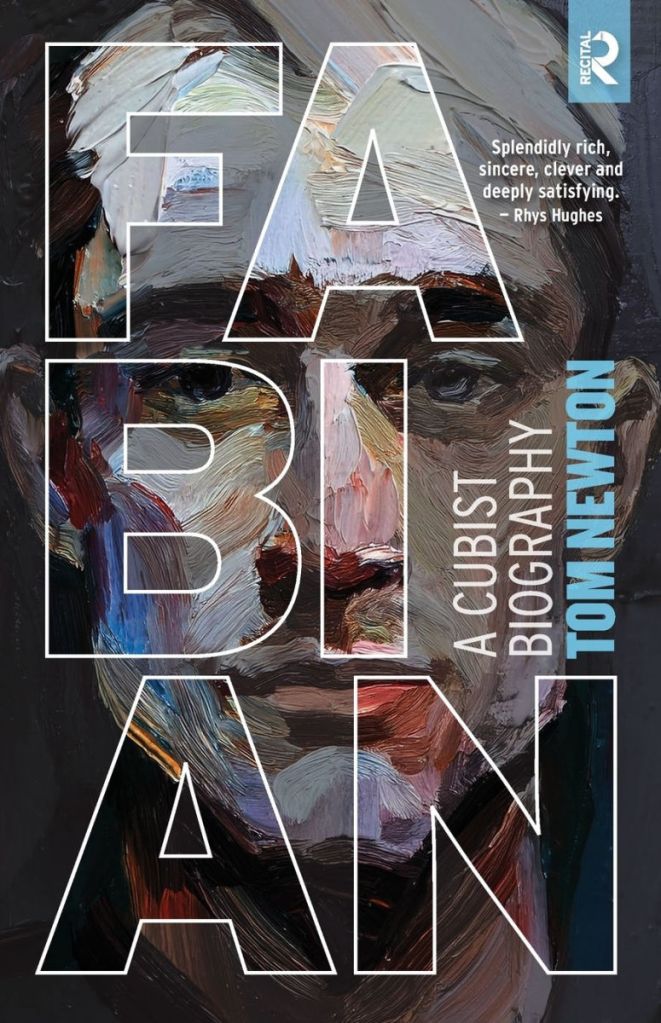
Fabian: A Cubist Biography, by Tom Newton

Tom Newton’s latest novel, Fabian: A Cubist Biography (264 pages Recital Publishing), presents itself as a biography of Fabian, a “disillusioned, would-be filmmaker.” Fabian, a civil servant in the British Ministry of Information during WWII, longs to make a groundbreaking film, but never quite does it. He creates a treatment. He thinks through his artistic desire. Leaving off a Godot-like deferral of Fabian’s planned film, the novel careens fantastically through epochs and ideas. We encounter Spanish conquistadors and Aztec priests, Dr. French (a time-traveling psychoanalyst), Junita (another enigmatic time-traveler) and more. Everyone has a backstory and place in intertwined narratives, arriving at a resolution that challenges the notion that a good book should tuck every loose end in place. 

Continue reading

Alexandria by Paul Kingsnorth

Alexandria (Graywolf Press, 408 pages) is a post-apocalyptic tale set a thousand years in the future, following a small band of survivors living in what once was England. The tiny clan inhabits a world where civilization has collapsed, and, not surprisingly, they have rejected technology, instead favoring ancient ways under a primigenial religion. They may be the last human inhabitants of the planet.

 The narrative revolves around the group’s opposition to a transhuman entity known as Alexandria. They were driven from their ancient homeland by the gradual encroachment of this anti-human force, which once spread across the planet as a successor to modern globalization. Now fully transformed into its posthuman form, Alexandria is in its mopping-up phase, tracking down the survivors with the assistance of an emissary known only as K. The novel unfolds as a series of monologues by the five surviving group members, supplemented by K, a loyal field operative for Alexandria who becomes entangled in the drama of the final collapse when he realizes that Alexandria has abandoned him. The surviving tribe’s language is hyper-simplified English, while K’s reports resemble a corporate memo. 

Continue reading

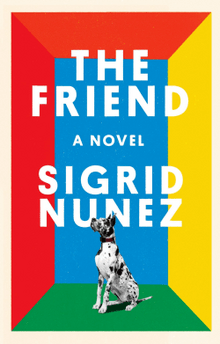
The Friend, by Sigrid Nunez

Maybe a better title for this book would be Bereavement, since that’s the main theme. We begin on the first page with a description of Cambodian women who had gone through hideous traumatic experiences and who, subsequently, appeared to have cried themselves blind. That, in a sense, is what the narrator is doing throughout the pages of the novel: metaphorically crying herself blind.

Names are scarce in this book. The unnamed first-person narrator, like the author herself, lives in New York City and teaches creative writing in a university. They appear to be about the same age (sixties or early seventies), so Nunez—who at some point has lost the tilde in her last name (that’s a different issue)—could be basing the action of the novel largely on her own experience. We do not know, for all that, if she ever lost a best-friend-fellow-writer to suicide and, subsequently, adopted that writer’s bereaved dog, a Great Dane. More on the dog later.

Continue reading

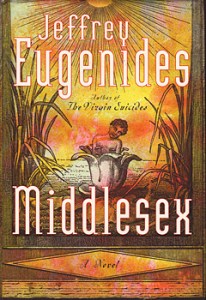
Middlesex by Jeffrey Eugenides

Like a hermaphrodite, Middlesex (Farrar, Straus and Giroux) by Jeffrey Eugenides is composed of two parts that are not usually joined together.
The first half of this 529-page novel is a memoir of an average Greek-American family living in Detroit. I was expecting a story about a person with genetic mutation that deeply affects his identity and sex life, but what is presented in that first half of the novel is a nostalgic tale of a Greek couple fleeing the Greek-Turkish war in 1922, settling down, in what was then becoming the Motor City,  having children, running into financial problems, and surviving a race riot.

None of this had much to do the immigrant couple’s grandson (née granddaughter, apparently). That novel didn’t start until the chapter called “Middlesex” on page 253 where an amazing coming-of-age story finally begins to unfold. Cal/Calliope was born with undeveloped genitals and was mistaken for a girl until puberty started to try to catch his body up at fourteen. Continue reading

Hope and Wild Panic by Sean Ennis

Some writers refuse to get in line with linearity, or take up common cause with causality. In Sean Ennis’s Hope and Wild Panic (Malarkey Books, 202 pages), the reader finds a depiction of life in the contemporary U.S. with recognizable settings and characters—realism, in a word—but it is also fundamentally destabilized, relying on non-chronological fragments (chapters? flash fictions?) of only one or two pages to explore the lives of a middle-aged narrator and his family. One section begins as follows:

“Rejoice with me, I have beaten psoriasis. There’s this trick I have of not watching the news. Most things don’t happen, and there’s been some debate internally about the order of events. I keep losing things and the obvious answer is that they’ve been stolen! But the investigation is finished—it is what it is. A black government helicopter is circling, and I’m just reading my big heavy book like that’s just a ceiling fan. Our neighbors behind the house, across the gulch, have been growing marijuana. I wonder what for. A family of foxes is our other neighbor. Is there some apophenia going on here? Doot-dee-doo.”

Continue reading

Ierapetra, or His Sister’s Keeper by Joachim Frank

In Ierapetra, or His Sister’s Keeper (Canoe Tree Press, 247 pages), Joachim Frank’s splendid new novel, we find ourselves in the company of Reiner and his sister Monika. Reiner has two passions, science and writing. Monika has family and quilting. We accompany them on holiday to Island of Crete. We are immediately immersed in an archetype, innocents abroad in a challengingly unfamiliar culture, in this case two youths from the stern clime of northern Germany transported to the sunny sensuality of the Mediterranean.

The powerful narrative that pulls the reader relentlessly through the novel from beginning to end is familiar. What effect will culture shock have on our siblings while they are in Greece, and will it persist when they return home? Will their old commitments survive? Continue reading