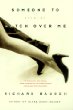
 In Someone to Watch Over Me (Harper Perennial, 224 pages), with stories about older men with younger women, a woman recovering from a dysfunctional relationship who hooks up with a horrible golfer who persuades himself he is good, a man with low self-esteem who stumbles out of a bar drunk one morning to save a busload of children, a man who wins the lottery only to face the final anomie of life as loss, Richard Bausch takes somewhat downtrodden and mundane middle-to-lower class characters and reveals them in their secret glory. He has a way of fully seizing an everyday situation and revealing to us its depths, sometimes switching character point of view within the same story. The stories have the opposite effect of Continue reading →
Two or Three Things I Know for Sure by Dorothy Allison
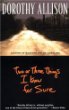 I believe Ernest Hemmingway said “All you have to do to be a writer is write one honest sentence.” Well by that definition, and although this slim book with its refrains of the title in different contexts reads almost like a performance piece between two covers–it is in fact reconstructed from texts used in performances used to publicize 1993’s Bastard Out of Carolina–Dorothy Allison is certainly a writer. And yet curiously, and at times almost bewitchingly, Allison plays with and cozies up to the notion of story in its ability not just to tell the truth but to conceal it–here, in the simplest possible language, and using her own experiences as a child abuse victim by her stepfather in the American South, she psychoanalyzes the nature of story and story-telling as a means of healing the ego and reinventing the self. The book is integrated with Continue reading →
Brief Interviews with Hideous Men: Stories by David Foster Wallace
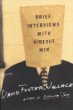 David Foster Wallace is clearly an accomplished and, at times, brilliant writer. If it were only a matter of judging his playfulness, innovation, and enthusiasm-sheer energy-it would be hard to imagine him scoring higher. For example, one of his conceits, Datum Centurio, features a hard copy version of a future (2096) dictionary which defines “date.” In Brief Interviews with Hideous Men (Little, Brown and Company, 288 pages) the innovative “story” mimics the complete typographical layout of a real dictionary and notes to the effect that with “compatible hardware” (e.g., a neural plug) we could get the entire “pentasensory” (i.e., virtual reality) illustrative support. The dictionary definition traces the ancestral origins of date to earlier in the century (i.e., our time) when the term was Continue reading →
Bob the Gambler by Frederick Barthelme
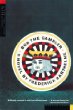 The night after I finished this book I found myself before a slot machine in a small casino. I had a feeling and put a quarter in. I won and won again. I stuffed the quarters in my pockets but there were no buckets available. When I lost two quarters in a row I left. Unfortunately this was a dream and I awoke empty handed. Bob the Gambler (Mariner Books, 224) is a beautifully observed, enviably perfect novel by a master who doesn’t seem flashy because he stays within his means. It is also a surprisingly, even surreally loving story. The novel centers around the fissioned nuclear family of down-on-his luck Biloxi architect Ray Kaiser, a plump transplant moved by the Mississippi coastal decay before it was invaded by “gussied-up Motel 6 hotel Continue reading →
The Law of Averages: New and Selected Stories by Frederick Barthelme
 Although seemingly simply written, these are some of the most sophisticated stories I have ever read. Barthelme is so even tempered, so subtly loving, and so good at fixing upon key details that bring a scene to life that his work is both a joy to read and a reward to study. His subject, the “New South,” with its strip malls and pierced adolescents, is much less differentiated than Faulkner’s, and much less expansive than Hemingway’s grandiose global stage of writerly operations. Yet Barthelme’s prose is more than up to Continue reading →
Because They Wanted to: Stories by Mary Gaitskill
 Because They Wanted to (Scribner, 256 pages). Mary Gaitskill is the real thing, as Hem said about F. Scott Fitzgerald, and Coke says about itself. She is one of those writers you feel writes in black blood, and only tells lies to clarify the truth. Like Bukowski, she is attracted to the ugly truth far more than representation of the beautiful or the good. Her detailed descriptions of female pixies and the inexorable pivots on which their love lives slip into what would be despair if they were not so inured to pain from its constant presence, her often seamless use of flashbacks in narrators or protagonists chaotically attracted Continue reading →
The Vanishing Moon by Joseph Coulson
 Whereas we in the west speak of, and see, a “man” on the moon, the Chinese tell stories of and see a rabbit on the moon. Poet, playwright, and editor Joseph Coulson’s great first novel The Vanishing Moon (Archipelago Books, 330 pages) is hardly focused on the moon and yet it is, one might say, focused on the vanishing of beautiful things for which the elusive moon is a most, perhaps the most, romantic emblem: a unique book of pressed wildflowers; the innocence of children playing in the woods before they become conscious of a humiliating poverty; and the exceptional beauty of the unconsummated (preserving the sublime) over the requited (wallowing in the mire) Continue reading →
Black Dogs by Ian McEwan
 Rarely does it seem that a great writer is recognized in his time, but Ian McEwan is an exception. Using the trope of two black mastiffs left behind by the Gestapo but still menacing the beautiful French countryside, in Black Dogs (Nan A. Talese, 149 pages) McEwan tells the tale of an older couple June and Bernard Tremaine, living in different countries but still in love. The clever narrator, their son-in-law whose own parents died when he was eight, pieces together the interlacing of the private lives and world events of his adoptive parents from deathbed interviews with once-stunningly beautiful June and her big-chinned rational Marxist politician husband. The action toggles in space and Continue reading →
Chinese Checkers: Three Fictions by Mario Bellatin. Translated by Cooper Renner.
 Chinese Checkers: Three Fictions (Ravenna Press, 139 pages). In “Hero Dogs: A Look at the Future of Latin America Envisioned as an Immobile Man and His 30 Belgian Malinois Shepherds” (2000), the collection’s second fiction, Bellatin reduces the theme of atrophied human nature and skewed relationships, explored in “Chinese Checkers,” to absurdity. In a nearly affectless prose unrelieved by symbol, metaphor, or ornament, the third-person narrator details the life of a paralytic recluse, a Beckettian protagonist of indeterminate age, whose single purpose is the care and training of thirty dogs “able to kill anyone with a single bite to the jugular.” Despite his immobility, the unnamed Continue reading →
The Proud Beggars by Albert Cossery. Translated by Thomas W. Cushing.
 I often wonder about sentences – about their impact, their purity, their necessity of being. I wonder about wasted words, wasted pages, and wasted stories. I wonder every time I read.
Yet, whenever I reach for The Proud Beggars (Black Sparrow Press, 190 pages), I find myself in awe, mesmerized, a captive to Cossery’s mastery of language, his scenes, his characters, and his ideology. If there ever was the perfect literary book, for me, it is this one. Continue reading →

