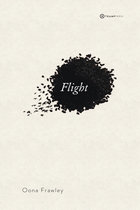
 Flight (223 pages, Tramp Press) by Oona Frawley, is a novel set in Ireland, the United States, Vietnam, and Zimbabwe that explores how its characters have been affected by both old-style colonialism and the new colonialism–corporate globalism that began to rise in the 1990s. Themes center on migration and immigration, on feeling homesick and rootless at the same time. It’s about writing letters home, some of which are sent, some of which are kept. Continue reading →
Category / just literary fiction
Naked Singularity by V. N. Alexander
 One of the many dark beauties of Victoria N. Alexander’s new novel, Naked Singularity (Permanent, 189 pages) is that, not only is it the proverbial good read, it is also an a proverbially brilliant one. Alexander — holder of a Ph.D in English from CUNY, Graduate School — has dished up a heart-stoppingly beautiful heroine who holds similar degrees in teleology (the study of why) and she thinks, and writes, like a dream. Witness this sample from a soliloquy by Hali on death: “You had thought death would at least be romantic, but now you realize there is nothing to be thankful for-how vacuous, how colorless, how without pity, how without regard for your intentions . . . . ” This, from a piece of popular fiction, is almost asking too much in the matter of sheer, unabused style.
Unfortunately, both narrator and author have run up against that same ontically insurmountable obstacle as described above: Hali’s beloved father, former pipe fiend Dave MacDonald, is, as we join the proceedings, being slowly undone, in sickbed and out, by a gross cancer that proceeds from mere discomfort of the throat areas to grueling pain of the neck and head, a progression unforeseen by his bubble-brained doctors to the utter despair of this wife and three daughters, including Hali.
Triangle by Hisaki Matsuura (translation by David Karashima)
 Tokyo, 1994. Japan is now well into what observers will later call the “lost decade,” a downward spiral triggered by the Japanese central bank’s bursting the speculative bubble of the 1980s. The seemingly inviolable climb of the Japanese economy—and society—has reversed.
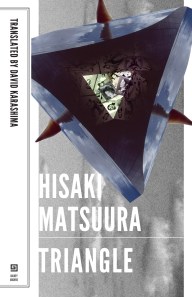
Triangle, the 2001 novel by the respected Japanese writer Hisaki Matsuura released in its first English edition by Dalkey Archive Press (233 pages) this month, is an attempt to transform the Japanese downward spiral into a metaphysical thriller. But novels—even literary ones—based on conceptual ideas rarely work. Continue reading →
The Absurd Demise of Poulnabrone by Liam Howley
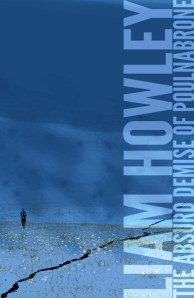 Liam Howley opens The Absurd Demise of Poulnabrone (Jagged C Press, 344 pages) with an introduction to Cornelius Solitude Conlon, an aging man who, I assumed, was the primary protagonist. In fact, my assumption continued throughout a good portion of the novel, even though the narrative shifted to various other characters as I read along. Nevertheless, as the story progressed, Cornelius became but one piece in the game board that is Poulnabrone.
It is, in fact, Poulnabrone that is the centerpiece of this story. Primary and secondary characters appear on the scene, make an impact, and leave. Some return later on, some never appear again, yet others remain present to weave the fabric of the tale as it is spun along, carrying with them the thread of continuity without overshadowing the main premise.
Continue reading →
Battleborn by Claire Vaye Watkins
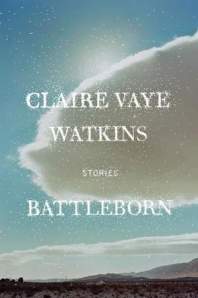 Claire Vaye Watkins writes as if she scratches her stories from the grit and mining detritus of the Nevada desert she grew up in, then transforms the elemental by gathering language as rich and as natural as the sand or minerals found there like an alchemist. The work is as layered as the often brutal human history of the region, a history she both draws upon and to which she will surely add her own narrative. And like the harsh landscapes and histories that everywhere informs these brilliant stories, when you peer long enough, closely enough, at what seems an empty, heartless place, you not only see its unforgiving beauty within the parched hills and among the tailings castaway after decades of exploitation, you also find glitter among the hardscape, the glint of silver and gold. Like the characters in her story collection Battleborn (Riverhead Books, 283 pages), the truths Watkins unearths require strong stomachs and strong wills to digest but reward the reader with sparkling prose, hard but achingly accurate portraits of unforgettable characters, and gemstones of hope among the chaos of despair and interior pain. Continue reading →
Hush Now, Don’t Explain by Dennis Must
 This is a unique American novel, written in the language of the heartland before Jesus became a pawn in the political battle for the American soul. It is written in a subdued, subtle, understated lyrical style. It is as rich and diverse as America herself. It is at once a romance complete with trains, whorehouses, steel mills, and the death of the drive-in-movie theater and a coming of age novel in which the protagonist emerges from the chrysalis to transform into a singing butterfly.
Here, in Hush Now, Don’t Explain (Coffeetown Press, 287 pages), Dennis Must cuts a swath a mile wide and generations deep through the America of the lost dream. On a pilgrimage across a spoiling land and on a quest for lost parents, the dual protagonists—Honor and Billy—experience America as raw and pure and as complex as she has ever been.
Continue reading →
The World’s Smallest Bible by Dennis Must
 Death is always bearing down in Dennis Must’s somber, disquieting novel, The World’s Smallest Bible (Red Hen Press, 232 pages). Death knocks on the window above the bed shared by brothers Ethan and Jeremiah Meuller in the small town of Hebron, in north central Pennsylvania; death is in the hand-me-downs they receive as gifts from the parents of soldiers who have just been killed in World War II; death brews inside their suicidal mother Rose, who has been scorned by their father; death dogs at their Aunt Eva, a stripper at the Elks Club; and death badgers their neighbor, Stanley Cuzack, as he tries to invent a perpetual motion machine. Half suffocating himself, Must’s narrator, Ethan, tries to push himself away.
The Contractor by Charles Holdefer
As the twenty-fist century accelerates toward a new low point in modern political history, eighty-five people possess about forty percent of the world’s wealth (that’s not a typo),* second- and third-generation war-terrorized children are born to benumbed, dehumanized parents, and most news reports would probably seem horribly unreal to even Bradbury and Orwell.
One may ask, What does twenty-first century art have to say about all this? We’ve heard from activists, a few courageous whistle-blowers; we’ve seen Hollywood thrillers with at least one Cheney-like character snarling with glee as he slaughters the hopes of yet another welfare mom. But where is the nuanced rendering of this story about the death of democracy?
Blinding: The Left Wing by Mircea Cărtărescu
 It starts in adolescence. The questions come to you while lying in bed (certainly now with a growing awareness of your sexuality), the walls of your room expanding into endless grainy darkness, as if the room itself could encompass the entire world: why am I here, why is there anything at all?
The questions may haunt you at age 13 or 15 or 17, but by adulthood they tend to feel banal. Unanswerable, impossible, if taken seriously debilitating, they are in a word blinding, and so you tend to avert your gaze. But suppose you can’t, suppose the inviolable white light only draws you closer, to madness possibly, to paint or write or drink or pray (to what God, tell me?) almost certainly. And so perhaps you scribble, the pages of your notebooks filling with furious script, like eons of sediment piling into sad mute mountains no one else will ever excavate or carve or climb. Continue reading →
The Grievers By Marc Schuster
 This wry, touching novel, The Grievers (The Permanent Press, 175 pages), takes an intelligent look at the meaning of friendship, a distinctly pertinent topic in an age when “friend” and “unfriend” are ubiquitous verbs referring mostly to people we’ve never met. It’s a novel of ideas that also dares to be funny, a dangerous strategy when so many critics see humor as a crime against literature. After all, doesn’t serious writing demand uncompromising hopelessness and despair? Continue reading →

