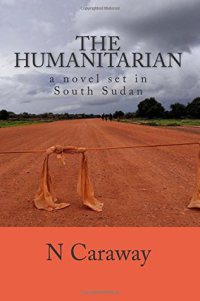
 How do the powers that bring aid to displaced and starving people spread over a vast continent? The answer is in ways that don’t meet their true needs because these have long been either erased by or made irrelevant to the imperial incursions, power grabs, and internecine intrigues that go hand-in-hand with the delivery of the aid itself. The immediate merit of N. Caraway’s The Humanitarian (E-Publications, 239 pages) is that it doesn’t dwell upon the depredations that are in play and that any informed reader will bring to the book. The horrors that continue on the African continent are well known and provide for much of our daily news consumption. As of his last writing, one of the locales remains a United Nations no-go zone.
Train Dreams by Denis Johnson
 The next time you walk into a bookstore, it’s worth remembering that unseen battles have raged over the shelf-space in front of you. Winning the prime, eye-level locations and avoiding the dustier corners requires strategy, charm, the offer of a good lunch and perhaps even hard cash.
The stores themselves, of course, want you believing that here is either what you want, or should want, and so going into London’s largest bookstore last week, I decided to be led. With time-plus-cash in hand, and my cynicism tucked away, I roamed only within a restricted locus near the main entrance. And it was here that I picked up Train Dreams, by Dennis Johnson (Granta, 128). The first thing to remark upon, is size: it’s eye-catchingly small. Continue reading →
Attention Authors: 2014 Dactyl Literary Award
Dear Authors,
Every book reviewed on Dactyl Review is automatically nominated for the Dactyl Foundation Literary Award. The author or publisher just needs to contact us at info@dactyl.org to accept the nomination and enter. Please see more info about the award here. Some very nice books have been reviewed this year, but we’ve only heard from a few authors and publishers. Please let us know right away if you would like your book to be considered.
-VNA
The Scapegoat by Sofia Nikolaidou
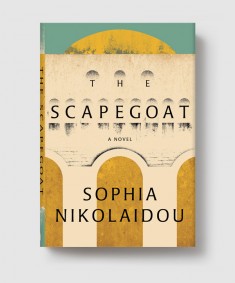 As I begin to write this on January 20, 2015, the news from Buenos Aires isn’t good. Albert Nisman, the federal prosecutor assigned to finally uncover the truth about the 1994 bombing of the Argentina Israelite Mutual Association, a Jewish community center, was found dead in his apartment. Nisman was about to reveal a high-level government conspiracy to cover up Iran’s role in the bombing, which killed 85 people. Argentina has long struggled with corruption and politicization of its government institutions, making it almost impossible for the nation to confront its demons—from sheltering Nazis to the 1970s/1980s rounding up and killing of leftists, communists, intellectuals, and Jews who became known as the desaparecidos opposed to the ruling right-wing Junto. The powerful are usually protected. Continue reading →
The Sea Trials of an Unfortunate Sailor by Kurt Brindley
 Before I begin this review, let me first recommend to anyone whom it persuades to read The Sea Trials of an Unfortunate Sailor (Amazon,198 pages), that after doing so they further benefit themselves by looking again at their copy of Herman Melville’s Billy Budd, Sailor that I shall, however, quote from extensively. Kurt Brindley’s accomplishment should come into even greater focus when looked at through the lens of the nineteenth-century classic novel. Continue reading →
The Land Across by Gene Wolfe
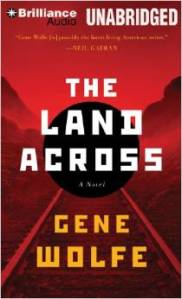 Lately I don’t read much science fiction, though it was once a passion. I received this book as a gift, though, and found the cover information intriguing. “Wolfe is our Melville,” proclaims Ursula Le Guin on the inside jacket. She’s an author I admire, so started in, not looking for Moby Dick, exactly, but maybe Billy Budd.
Support Dactyl Review
 Dear Friends,
In the past four years, Dactyl Foundation has concentrated on growing the literary fiction community, which has dwindled over the past twenty years as publishing houses began to focus on big sellers ignoring the niche market of fine literature. In 2010, we launched Dactyl Review, a community of literary fiction writers who review literary fiction and nominate works for Dactyl Foundation’s $1000 annual prize. The contest is open to any living literary fiction writer, regardless of date of publication or type of publication. We are especially interested in books that came out some time ago and have not yet received the recognition they deserve.
Support this worthy project now. There are a lot of great writers out there who need encouragement. We can’t do it without you. Thanks in advance for your support. Dactyl Foundation is a 501 c3 organization, and your donation is fully tax-deductible.
Your friends in art and thought,
Neil Grayson, Director
Victoria N. Alexander, PhD, Director
When Rosa Came Home by Karen Wyld
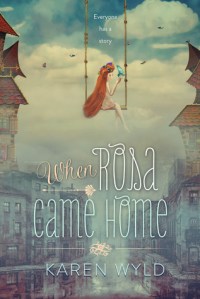 One after one, exotic characters, each with a miraculous tale to tell, come to visit comatose Rosa and her troubled family in Karen Wyld’s When Rosa Came Home (Amazon, 238 pages). Many of these visitors are circus performers or former circus performers. Some are human, some not. The Ambrosia family home is a remote vineyard and becomes yet another magical character — reacting to and affecting the actions set there. It’s trees and gardens fall into shadows when trouble prevails, and burst with light and life when joy arrives. Continue reading →
Vox Populi by Clay Reynolds
 In Vox Populi: A Novel of Everyday Life (Texas Review Press, 211 pages) an unnamed narrator endures various brief encounters with strangers while out on errands—waiting for, paying for, or ordering something. Clay Reynolds must have been keeping a journal for years because his little tales ring true in their preposterousness. Truth is stranger than fiction. It is hard to believe people can be so rude, so tactless, so pushy, so dumb, and yet people are. Usually the unrelated event described in each chapter involves some implausibly insensitive and very loud person disrupting the normal course of humdrum business with performances that are as outrageous as they are unfortunately common. We’ve all have been shocked and appalled to witness such scenes in our own daily lives, and once home we say to our spouses, You’ll never believe what this crazy lady did at the grocery store, etc. Continue reading →
Flight by Oona Frawley
 Flight (223 pages, Tramp Press) by Oona Frawley, is a novel set in Ireland, the United States, Vietnam, and Zimbabwe that explores how its characters have been affected by both old-style colonialism and the new colonialism–corporate globalism that began to rise in the 1990s. Themes center on migration and immigration, on feeling homesick and rootless at the same time. It’s about writing letters home, some of which are sent, some of which are kept. Continue reading →

