California Rush by Sherwood Kiraly

californiarushTed Williams once said that the hardest thing in the world was to hit a baseball with a bat. The second hardest thing, he continued, was to throw baseball where a batter couldn’t hit it with a bat.

Williams might have added that the third hardest thing to do is to write an original novel about baseball. Oh, it’s been done. But for every home run such as Ron Hays’ The Dixie Association or Ray Kinsella’s Field of Dreams, for every Bull Durham and The Natural, for every book by Ring Lardner, Jim Bouton and Lawrence Ritter, there are volumes of strikeouts. Continue reading →
The Corrections by Jonathan Franzen

correctionsGifted chronicler of American life, Jonathan Franzen offers a rather quiet plot in The Corrections (FSG, 568 pages), which follows the lives of the Lambert family headed by Enid and Alfred, typical Midwestern parents, whose children have scattered, eager to find their own definitions of happiness.  The oldest, Gary, is a money manager, an asshole son, whose inner workings are described with surprising compassion; the middle son, Chip, is a lecherous and pretentious academic who’s just lost his position and his girlfriend and is working on an autobiographical screenplay that betrays a dreadful lack of self-awareness; the youngest, daughter Denise, is a talented chef who keeps throwing herself into undesirable relationships. Will they succeed?  Is the aging patriarch going completely mad? And why is Alfred  such an unhappy old man?  Will Enid get all her children to come home for one last Christmas together?

Continue reading →

Blinding: The Left Wing by Mircea Cărtărescu

Blindingforweb1It starts in adolescence. The questions come to you while lying in bed (certainly now with a growing awareness of your sexuality), the walls of your room expanding into endless grainy darkness, as if the room itself could encompass the entire world: why am I here, why is there anything at all?

The questions may haunt you at age 13 or 15 or 17, but by adulthood they tend to feel banal. Unanswerable, impossible, if taken seriously debilitating, they are in a word blinding, and so you tend to avert your gaze. But suppose you can’t, suppose the inviolable white light only draws you closer, to madness possibly, to paint or write or drink or pray (to what God, tell me?) almost certainly. And so perhaps you scribble, the pages of your notebooks filling with furious script, like eons of sediment piling into sad mute mountains no one else will ever excavate or carve or climb. Continue reading →

The Grievers By Marc Schuster

the-grieversThis wry, touching novel, The Grievers (The Permanent Press, 175 pages), takes an intelligent look at the meaning of friendship, a distinctly pertinent topic in an age when “friend” and “unfriend” are ubiquitous verbs referring mostly to people we’ve never met. It’s a novel of ideas that also dares to be funny, a dangerous strategy when so many critics see humor as a crime against literature. After all, doesn’t serious writing demand uncompromising hopelessness and despair? Continue reading →

At Last by Edward St. Aubyn

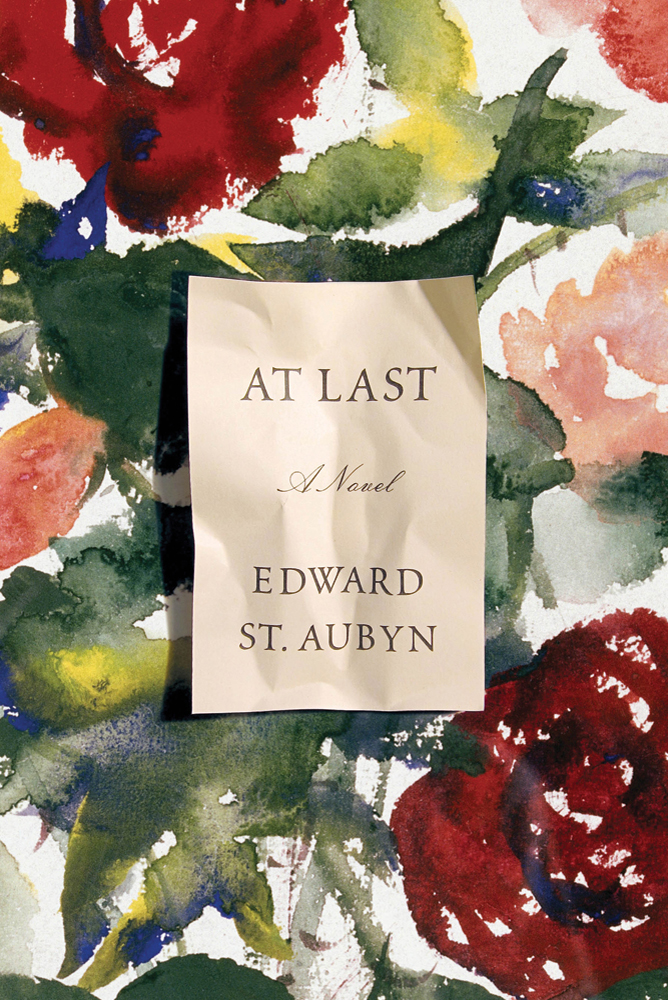
At-Last-by-Edward-St-AubynAt Last by Edward St. Aubyn  (Farrar, Strauss and Giroux, 266 pages) is the fourth novel about Patrick Melrose and his family; the others are Never Mind, Bad News, Some Hope, and Mother’s Milk.

St. Aubyn, like the characters in the novel, comes from a wealthy English family. He, like Patrick, was raped by his father as a child. He, like Patrick, is a recovering drug addict and alcoholic. Indeed, given the facts of St. Aubyn’s life, it is remarkable that he is alive and functioning, let alone that he writes brilliantly.
Continue reading →

Flaubert’s Parrot by Julian Barnes

indexJulian Barnes’ Flaubert’s Parrot (Picador 2002, 190 pages) is the story of one man’s quest, his “project” to find the writer outside his writings, despite Flaubert’s insistence that the books should be enough, the writer should disappear and be left alone. Geoffrey Braithwaite, this amusing novel’s British protagonist, is a medical doctor about sixty. He pursues museums, letters, literary works, criticism, and Flaubert the person in a long quest as unofficial biographer and tireless seeker. Continue reading →

Tales of Barranco Lagarto by Steven C. Levi

TalesLeviAccording to a note on the title page Tales of Barranco Lagarto (277 pages, Kindle) is a collection of stories which first appeared in The Coachella Post Gazette. The tales were handed down by one Horatio Shackleton, who died in 1925, and eventually assembled into a single collection by his grandson, Horatio Shackleton III. These characters are based on actual persons. Grandson Horatio is the mask which the “editor”—author Steven C. Levi—utilizes for his satirical tribute to a time gone by. The book concentrates on American culture in the southwest in the late 19th and early 20th centuries. It is not so much an intellectual history as a whimsical foray into a forgotten past, with the narrator’s twinkling eye always at the ready. Continue reading →

Milligan and Murphy by Jim Murdoch

milliganOpening a novel with a quote, particularly one from a writer as universally celebrated as Samuel Beckett, risks much. A reader is apt to spend a good deal of the novel comparing the works of the writer before him to those of the great master, fall into a reverie about how great was the work of the great master, and lose track of what the book in hand is going on about. Jim Murdoch, the author of Milligan and Murphy (Fandango Virtual, 180 pages), assumes that risk. Continue reading →

Frog City Updike by Arthur Graham

Frog City Updike never would’ve been without Brautigan’s Trout Fishing in America, the book that showed me just how loose I could get with form. — Arthur Graham, Big Al’s Books and Pals

One of the words I use too often in reviews is “interesting,” but I never really make it clear whether a particular word piques my interest or holds it. It’s the same with “nice,” which I also overuse; nice can have negative connotations; the last thing your wife wants to hear when she walks in wearing a new outfit is, “You look nice, Dear.” Even more confusing I would expect is when something gets referred to as “nice and interesting.” Frog City Updike–the place, not the book–sounds like a nice, interesting place. I’m not sure I’d want to live there but if I did I can see myself running across interesting things and saying, “Oh, that’s nice,” or vice versa. Continue reading →

All About H. Hatterr by G.V. Desani

Warning!!

Warning!!

Better heed those first warnings, and all those !!!!! This – fellers! femmes! — this book – is mad. Like a hatter?

Ostensibly an “autobiographical,” All About H. Hatterr, by Govinas Vishnoodas Desani (New York Review Books, 318 pages) was first published in 1948. Desani explains,

…Though I was attending a world war, the first row, I worked….It seemed I’d be stuck for years; the post-Cease Fire ones too…well meaning people kept butting in, demanding that I stop breathing the bracing air of war-time England with my windows shut. I do anything for peace…the windows open, work would be impossible…

Continue reading →