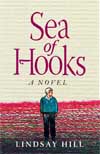
Sea of Hooks by Lindsay Hill

seaofhooksLindsay Hill casts a magician’s spell across his Sea of Hooks (McPherson, 348 pages). On the surface his world is rendered in bright pixels of quivering light, while underneath a seamless narrative undercurrent pulls us into the mysterious depths of experience. For the reader willing to dive under, this journey is unforgettable.

Sea of Hooks is, on the one hand, a fiercely original Bildungsroman set in San Francisco in the 50’s and 60’s. Christopher is an overly imaginative boy, part Holden Caulfield and part Little Lame Prince, who lives in precarious affluence in a darkish Victorian on the edge of Pacific Heights. His delicate, high-strung mother is obsessed with Japanese culture and dead by suicide in the first paragraph. Dad works in finance on the Pacific Stock exchange, until he doesn’t anymore. There are prep schools, bridge games, Dickensian neighbors like the wise and wonderful Dr. Thorn; along with house fires, a very nasty tutor/pederast from Stanford, a trip to Bhutan and encounters with Buddhist monks. Hill’s rich prose makes us feel Christopher is someone we have always known, a boy who lives in a house we have been to, whose eccentric mother we’ve had tea with, whose city we are walking in. Continue reading →

This Earth You’ll Come Back To by Barbara Roether

cover ideas.inddThis vivid, lyrical, character and place-based story (McPherson, 250 pages) begins with Rose Healy Koehner’s youngest daughter, Stephanie, searching a rural Ohio cemetery for Rose’s grave in 2008 while the deceased Rose watches from above and embarks on her life’s story told in the first person. The prickly, fondly contentious, mother-daughter relationship is apparent from the start in the underlying current of criticism that Rose levels at her daughter:

Course you couldn’t find it right away…You should have used the sense God gave you and asked your brother…Why you always insist on making things hard for yourself I’ll never know; but it’s just like you to take a simple errand and turn it into a full-blown crusader pilgrimage.

Continue reading →

Emma Who Saved My Life by Wilton Barnhardt

emmaEvery once in a while a reviewer receives a book he puts on the shelf and just wishes it would go away. Emma Who Saved My Life (St Martin’s, 496 pages) is that kind of book.

Cursed with what is arguable the worst title ever given a novel ( and double-cursed with a depressingly ugly dust jacket), it had press releases that touted it with superlatives that would make Gore Vidal blush. It’s in the fist person and has one of those woesome post-adolescent narrators. Worse, it’s a first novel by a guy named Wilton who is at Oxford working on a doctoral thesis about Henry James. Continue reading →

Her 37th Year, An Index by Suzanne Scanlon

ScanlonCover

The abecedarium has a long literary history, and some of its best-known examples, such as Ambrose Bierce’s Devil’s Dictionary or Gustave Flaubert’s Le Dictionnaire des idées reçues, play with the form’s implied authority for purposes of satire. Recently Matt Bell’s Cataclysm Baby used the template to convey hellish fragments of an environmental dystopia. Suzanne Scanlon, author of Promising Young Women (2012), turns to a woman’s experience in contemporary America and offers a probing and artful inventory in Her 37th Year, An Index (Noemi Press, 161 pages). Continue reading →

Nominate your favorite literary fiction author for the $1,000 Dactyl Award

Keyboard_typingDactyl Foundation offers a $1000 award to any literary fiction author, writing in English, who has published a book-length work, novel or collection of short stories. To be considered for the 2016 award, an author must be nominated by a peer, another published literary fiction author who must submit a review of one of the author’s works to Dactyl Review by December 31, 2015. Continue reading →

The Corrections by Jonathan Franzen

correctionsGifted chronicler of American life, Jonathan Franzen offers a rather quiet plot in The Corrections (FSG, 568 pages), which follows the lives of the Lambert family headed by Enid and Alfred, typical Midwestern parents, whose children have scattered, eager to find their own definitions of happiness.  The oldest, Gary, is a money manager, an asshole son, whose inner workings are described with surprising compassion; the middle son, Chip, is a lecherous and pretentious academic who’s just lost his position and his girlfriend and is working on an autobiographical screenplay that betrays a dreadful lack of self-awareness; the youngest, daughter Denise, is a talented chef who keeps throwing herself into undesirable relationships. Will they succeed?  Is the aging patriarch going completely mad? And why is Alfred  such an unhappy old man?  Will Enid get all her children to come home for one last Christmas together?

Continue reading →

Andrew’s Brain by E. L. Doctorow

Andrew’s Brain (Random House, 244 pages), by E. L. Doctorow, is the narrative of a brain whose content has been digitized, whose DNA code has been cracked, and which now resides in a vat or has been uploaded to a computer at some Bush-era detention or torture site, unaware that he is no longer embodied, believing himself to be telling his story to a therapist (who, Andrew suspects, may be CIA), sometimes imagining himself to be elsewhere, writing to or phoning his therapist, sometimes visiting his office, but never realizing that he, like any human perhaps, has no true self-awareness because a brain cannot objectively know itself. Continue reading →
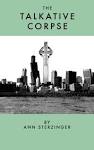
The Talkative Corpse by Ann Sterzinger

talkativeLurking in the shadows of the seedy underbelly of the American heartland are the kinds of people you’re probably scared of. The kinds of people you, perhaps, don’t think of often. The kinds of people who just scrape by, praying for lottery-ticket miracles, and Heavenly rewards, and three consecutive days of tranquility and security. People like John Jaggo. Continue reading →

Dismantle The Sun by Jim Snowden

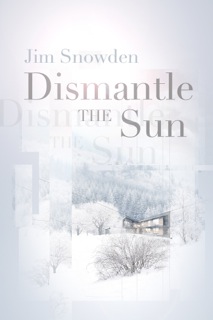
DTS_cv“Someone had to die for Hal Nickerson to live in the house that he and his wife Jodie bought for a song seven years ago.” So begins this dry-toned, cool, and detached novel Dismantle The Sun (Booktrope Editions, 324 pages) with a line and a sentiment that prove to be something of a mantra for its main protagonist and a lynchpin refrain for the narrative arc. In the world of nature — in the world of man — something has to die for something else to live. Some persons — the Nickersons — include this in their ample proof of the non-existence of a beneficent Creator, while others — the fundamentalists — attribute the state of the cosmos to original and ongoing sin. Both take it all very personally. Hal Nickerson’s atheism in conjunction with that of his wife informs all of his sensibility while providing a certain distance from the most basic issues of life and death, love and hatred. Continue reading →