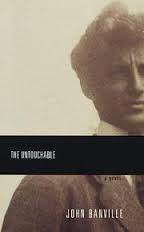
 When Banville is writing at his best, he tends to reminisce about people and places rather than tell a story. In The Untouchable (Knopf, 668 pages), Victor Maskell, an Irishman living in England, becomes a spy for the Soviets during World War II. The book begins when the elderly Sir Maskell’s secret past has been revealed in the press. A young biographer, Serena Vandeleur, comes to interview him, and he takes the opportunity to look back over his life. Banville’s most artful writing is to be found in the plotless parts of the narrative, where he is working on characterization by relating memories of his childhood and young adulthood. Continue reading →
Category / just literary fiction
Going Native by Stephen Wright
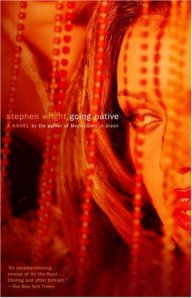 Going Native (Vintage, 305 pages), published in 1994, was Stephen Wright’s third novel. Meditations in Green (1983) was inspired by his experiences in Vietnam during the war. M31: A Family Romance (1988) is set among UFO cultists, who rely on an autistic child to communicate with aliens. Going Native is—more or less—a picaresque novel that follows a sociopath who abandons his Chicago family to travel to Los Angeles. It is not an easy trip. It is not an easy book. But it is a fascinating one, and, as I hope to show, one that says important things about modern American life. Continue reading →
Escaping Barcelona by Henry Martin
 In Escaping Barcelona (Smashwords, 230 pages), Henry Martin demonstrates a subtle mastery of first-person fiction. His protagonist Rudy is an aimless but amiable narrator whose decision to backpack to Barcelona is just a slacker lark until he’s assaulted and robbed upon his arrival. Traumatized and penniless, Rudy suddenly has to fend for himself. Continue reading →
Sunflower by Cass McMain
 Sunflower (Holland House Books, 452 pages) moves slowly forward, accumulating in its plain language the details of Michael’s uneventful life as a metal worker and sculptor. He and his live-in girlfriend, Jess, mostly talk about ordinary things, like what to pull out of the freezer for dinner, why the item in the freezer wasn’t pulled out in time for dinner, and whether or not Michael has finished the metal fence commissioned weeks and weeks ago. (He hasn’t.) Continue reading →
At Last by Edward St. Aubyn
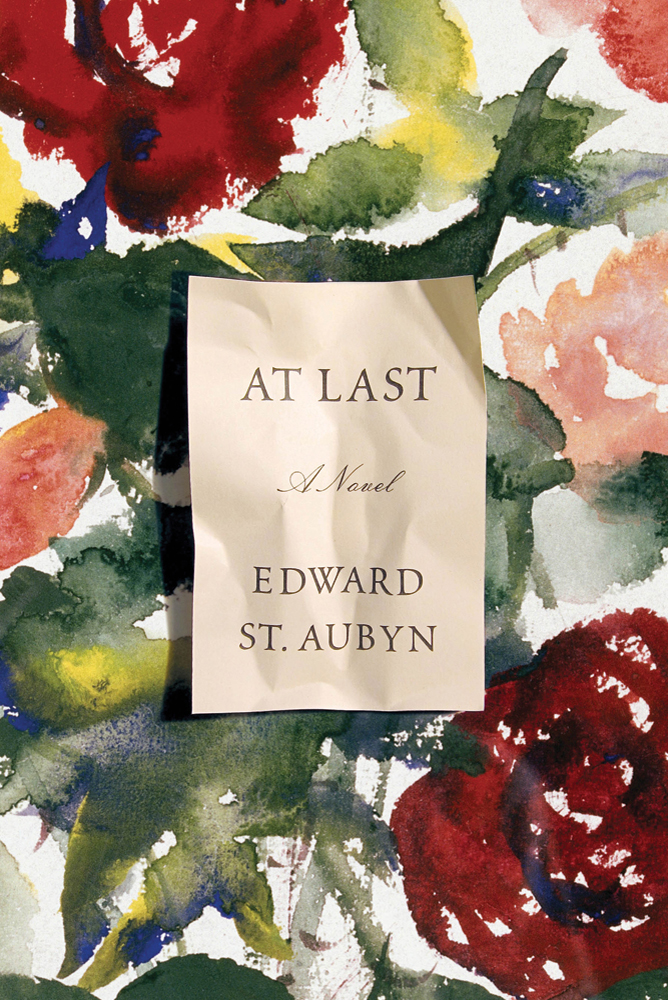 At Last by Edward St. Aubyn (Farrar, Strauss and Giroux, 266 pages) is the fourth novel about Patrick Melrose and his family; the others are Never Mind, Bad News, Some Hope, and Mother’s Milk.
St. Aubyn, like the characters in the novel, comes from a wealthy English family. He, like Patrick, was raped by his father as a child. He, like Patrick, is a recovering drug addict and alcoholic. Indeed, given the facts of St. Aubyn’s life, it is remarkable that he is alive and functioning, let alone that he writes brilliantly.
Continue reading →
A Room Where the Star Spangled Banner Cannot Be Heard by Levy Hideo, translated by Christopher S. Scott
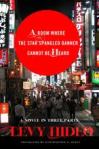 This short novel in three parts comes with high praise from Nobel Prize winner Oe Kenzaburo: “Have we failed to catch the calm but earnest tone that echoes like music through Levy Hideo’s prose? With his unique literary voice, this writer clearly represents a new kind of novelist for Japanese literature….” Continue reading →
Cocoa Almond Darling by Jeffra Hays
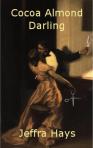 Jeffra Hays’ Cocoa Almond Darling (Smashwords 2011, 126 pages) is the story of Millicent Randolph, survivor of a bad marriage and starting over in tough circumstances. These include finding a place to live and a job. She finds work in a sewing shop and enjoys a brief, happy relationship with her employer, in which she becomes pregnant although he is married. Her difficulties are then resumed through a long, turbulent aftermath to this affair. The turmoil continues following the birth of her child and on up to this daughter’s marriage and birth of her own daughters, when Milly becomes a grandmother. Continue reading →
Flaubert’s Parrot by Julian Barnes
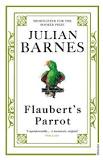 Julian Barnes’ Flaubert’s Parrot (Picador 2002, 190 pages) is the story of one man’s quest, his “project” to find the writer outside his writings, despite Flaubert’s insistence that the books should be enough, the writer should disappear and be left alone. Geoffrey Braithwaite, this amusing novel’s British protagonist, is a medical doctor about sixty. He pursues museums, letters, literary works, criticism, and Flaubert the person in a long quest as unofficial biographer and tireless seeker. Continue reading →
Dismantle the Sun by Jim Snowden
 Dismantle the Sun (Booktrope, 324 pages) is literary, but if you are looking for a novel of bright sunshine, lollipops along with skittles and beer, this is not the book for you. It reeks pathos; “wrenches” is the term used on the back cover of the book, and the work lives up to that term. It is an uncomfortable read because you are being dragged into the intimate, excruciating dynamics of a couple where the wife is dying and the husband is struggling with that reality.
Continue reading →
The Darling by Russell Banks
 “[M]erely the story of an American darling,” Banks’ 2004 novel The Darling (Harper Perennial, 393 pages) ends on September 10, 2001, one day before “a new history” in America begins. The words “merely” and “darling” are strongly ironic, suggesting the “new history,” beginning on the next day, will be even more ominous and horrible than the one recounted by Hannah Musgrave, the novel’s protagonist. She is also known as Dawn Carrington, her adopted pseudonym due to youthful foolishness in abetting the Weathermen revolutionary group in America during the late 1960’s into the 1970’s. Hannah is essentially still on the run, although she will manage to marry a Liberian minister close to President Samuel Doe, plus later be exploited by the CIA in arranging the escape from prison of Charles Taylor. She has been a self-necessitating fugitive, obliging herself with a life of running and hiding, and unaware of herself as also a political tool easily exploited. Continue reading →

