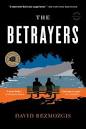
 The Betrayers (Little, Brown & Co, 267 pages) begins with a Russian expression on a young woman’s face. A pretty blonde woman working as hotel clerk in Yalta is berated by a young woman from Israel, who insists she be given a room. The clerk “endured the assault with a stiff, mulish expression. A particularly Russian sort of expression, Kotler thought. The morose, disdainful expression with which the Russians had greeted their various invaders. An expression that denoted an irrational, mortal refusal to capitulate—the pride and bane of the Russian people.”
Tag / character-driven story
Disgrace by J.M. Coetzee
 In Disgrace (Penguin Books, 220 pages), Professor David Lurie’s crisis begins with his foolishly taking advantage of one of his students, then proceeds to his inadequate response under enquiry. Gradually, the story’s emphasis on “disgrace” pervades the entire narrative. It extends to white dominance and native reprisal in South Africa, to cruelty with animals, and to self-obsession within the human community generally.
An early reference on page 2 to the final chorus of Oedipus Rex, “Call no man happy until he is dead,” joins the suggestion David Lurie is a Lucifer in an earthly darkness, the fallen angel. Oedipus of course is humbled through his arrogance and self-righteousness, so the allusion clearly applies. Professor Lurie resists from inside the wall of his pretensions as an academic and Romantic, as if he has some kind of right to “desire” in an honorable history descending from his study of Byron, who is simultaneously his hero. His unlearning will take a long time. Continue reading →
This Earth You’ll Come Back To by Barbara Roether
 This vivid, lyrical, character and place-based story (McPherson, 250 pages) begins with Rose Healy Koehner’s youngest daughter, Stephanie, searching a rural Ohio cemetery for Rose’s grave in 2008 while the deceased Rose watches from above and embarks on her life’s story told in the first person. The prickly, fondly contentious, mother-daughter relationship is apparent from the start in the underlying current of criticism that Rose levels at her daughter:
Course you couldn’t find it right away…You should have used the sense God gave you and asked your brother…Why you always insist on making things hard for yourself I’ll never know; but it’s just like you to take a simple errand and turn it into a full-blown crusader pilgrimage.
Emma Who Saved My Life by Wilton Barnhardt
 Every once in a while a reviewer receives a book he puts on the shelf and just wishes it would go away. Emma Who Saved My Life (St Martin’s, 496 pages) is that kind of book.
Cursed with what is arguable the worst title ever given a novel ( and double-cursed with a depressingly ugly dust jacket), it had press releases that touted it with superlatives that would make Gore Vidal blush. It’s in the fist person and has one of those woesome post-adolescent narrators. Worse, it’s a first novel by a guy named Wilton who is at Oxford working on a doctoral thesis about Henry James. Continue reading →
Isaac: A Modern Fable by Ivan G. Goldman
 How should we suppose poor Isaac felt — son of a father all-too-willing to sacrifice him at the suggestion of some voice in his head? Christians are wont to overlook the obvious horror and absurdity of the Biblical tale. According to some (less awful) Jewish interpretations of events, it was perhaps Satan, as an agent of God, who spoke to Abraham, which would make more sense to those who imagine God to be not quite so sadistic. Either way though, what kind of man would this traumatized son become? In Isaac: A Modern Fable (Permanent, 223 pages), Ivan G. Goldman has arranged it so that Isaac, after the mishap at the altar, has been granted the gift of eternal youth. The identity of benefactor is not clear; the gift may be from Satan or from Jehovah. Isaac himself has never been able to decide, as his immortality and eternal youth often seem to him like a curse.
Wanderer Springs by Robert Flynn
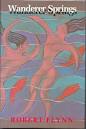 Up in that part of state just east of the Cap Rock, south of the Red River and west and north of Wichita Falls is a region of the country the residents continue to call “East Texas,” although, even at 70 mph it is hours from Amarillo, Lubbock or Spur, a half-day from San Angelo and Odessa, and a long, hard, hot day from Ozona or El Paso.
It is a part of the country that rhetorician Jim Cordon once called “terra incognito,” forgotten by most of Texas, ignored by everyone else. It is a hard land, filled with rattlesnakes, mesquite, winters that freeze livestock and people, summers that dry the ground so hard it cracks. Continue reading →
The Corrections by Jonathan Franzen
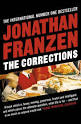 Gifted chronicler of American life, Jonathan Franzen offers a rather quiet plot in The Corrections (FSG, 568 pages), which follows the lives of the Lambert family headed by Enid and Alfred, typical Midwestern parents, whose children have scattered, eager to find their own definitions of happiness. The oldest, Gary, is a money manager, an asshole son, whose inner workings are described with surprising compassion; the middle son, Chip, is a lecherous and pretentious academic who’s just lost his position and his girlfriend and is working on an autobiographical screenplay that betrays a dreadful lack of self-awareness; the youngest, daughter Denise, is a talented chef who keeps throwing herself into undesirable relationships. Will they succeed? Is the aging patriarch going completely mad? And why is Alfred such an unhappy old man? Will Enid get all her children to come home for one last Christmas together?
The Marriage Plot by Jeffrey Eugenides
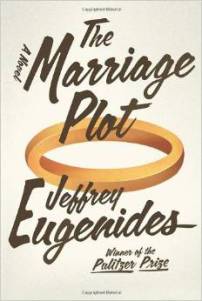 As the title confesses right up front, The Marriage Plot (FSG, 416 pages) is all plot, all 19th-century-style plot, with full biographical sketches and family histories for everyone who walks onstage for more than a few paragraphs to alter the action. Which of the two men will Madeleine, English major and lover of Jane Austen and George Eliot, end up with? Will it be Leonard, the big, broody sex-crazed boyfriend, a biology/philosophy double major? Or will it be Mitchell, the worshiping-from-afar religious studies student, whom Madeleine’s parents prefer? Continue reading →
Andrew’s Brain by E. L. Doctorow


The Pilgrim of Love: a ludibrium by Charles Davis
“I was pleased to discover in myself an uncanny knack for interpreting the hermetic language of alchemy, as if my book learning had been but a preparation for decrypting enigmatic texts, reading meaning into that which, on the surface, seemed meaningless.”
So says the unnamed narrator of Charles Davis’ The Pilgrim of Love: a ludibrium, an obsessively researched and elaborately plotted parody of an historical romance. (Parody, as I understand the term, is best written by an author who actually loves his target, but who can put some ironic distance between himself and his subject.) The story is set in the abbey of the legendary Mont Michel in 1621, when the absence of roadway access meant visiting pilgrims had to make their way around quicksand between dangerously unpredictable tides. The landscape always plays an important and often symbolic role in Davis’ novels. The pilgrims must interpret the patterns in the sand to avoid sinking in the lise. Continue reading →

