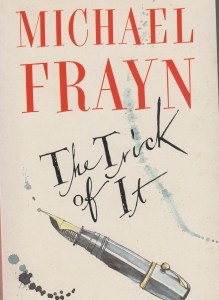
 Two professors of literature, old friends, one in England (RD, our narrator), one having emigrated to Australia (R), are writing letters to each other. This suggests one of the many metaphors in The Trick of It (Viking, 1989, 172 pp.): “Forgotten questions and meaningless answers passing each other somewhere over the Indian Ocean at thirty thousand feet—an image of human communication. Of love and literature and life.” So is this an old-fashioned epistolary novel? Far from it. The Trick of It is a marvelous, sparkling-new one-way-epistolary and modern piece of metafiction. I would rank it right up there with Don DeLillo’s White Noise as one of the great comic novels of the twentieth century. Continue reading →
Dactyl Review selected by Feedspot for Top 50 Fiction sites
 Dactyl Review is unlike any other fiction review site, helping readers find the particular kinds of “literary fiction” they prefer. Because Dactyl is not a commercial site, they don’t favor the newest books or books by best-selling authors. They publish reviews of only the best literary fiction, older and new, as judged by other literary fiction writers.
Errata by Jacob Smullyan
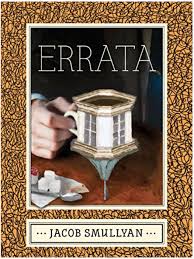
To describe a book as unclassifiable is, of course, to classify it, but that fact is entirely in keeping with the spirit of Jacob Smullyan’s Errata (Sagging Meniscus, 72 pages). Comprising thirty short chapters of mini-essays, stories and philosophical aperçus, it straddles numerous genres and grapples with the process of making sense.
Continue reading →
Why I started Dactyl Review
 I had been director of the Dactyl Foundation in NYC for a dozen years, organizing art-science collaborations and hosting poetry readings, before it occurred to me that we were doing nothing to support literary fiction. As a literary fiction novelist myself, I was well aware that these unlikely-to-be-bestsellers could use some support. But it was not immediately clear to me what I could do to help. Hosting readings did not work. Poets tend to turn out for each other and buy each other’s work; they dedicate poems to each other and even write poems about each other’s poems, but not literary fiction novelists; they are as independent as cats. They keep to themselves, don’t do reviews, fear influence, and reserve their admiration for dead authors.
I was such a writer, I realized. What could I do to get mavericks, like myself, to form a community?
Continue reading →
Tenth of December by George Saunders
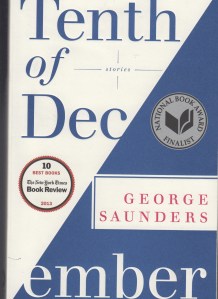 In a recent rant I wrote on the sad state of the contemporary American short story, I railed against what is sometimes known as ‘The New Yorker story,’ that all-too-common pedestrian thing called “domestic literary fiction.” Happily, there are always exceptions to egregious trends, and George Saunders (Tenth of December, Random House, 272 pages), who is a contributor to The New Yorker, is a big one. Exception, that is.
How is his fiction different from the normal, run-of-the-mill domestic stuff—the kind of fiction I can’t stand? A good place to begin would be with a comparison between his Tenth of December and another book of short stories recently published, The Refugees, by Viet Thanh Nguyen. I picked up Nguyen’s book with high expectations, having read his novel, The Sympathizer, which has great writing, wonderful sentences on every page.
Continue reading →
The New Yorker short stories
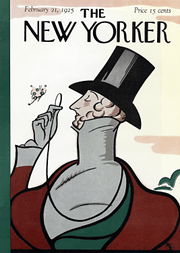 THE GREAT AMERICAN BOONDOGGLE
(The Sad State of the American Short Story)
The situation has been the same for years. Nothing ever seems to change and practically no one deems it necessary even to talk about it. Almost forty years ago a colleague at the university where I taught, a lifelong reader of The New Yorker and a person whose intelligence I respect, said to me, “I love The New Yorker, but I never read the fiction. ‘The New Yorker story’ does not appeal to me.” In a visit to my general practitioner a month ago, the doctor, an avid reader of classical literary fiction—the canonical literary works of the world—remarked, “I love the articles in The New Yorker, but I never read the fiction. Most of it is a total bore.” Over a period of forty years how many other intelligent readers of fiction have said the same thing? Repeatedly. Why is nobody listening? Continue reading →
Infinite Summer by Edoardo Nesi
 Edoardo Nesi’s new novel, Infinite Summer, translated from the Italian by Alice Kilgarriff (Other Press, 320 pages), takes place in Tuscany between August 1972 and August 1982, right in the middle of the period known in Italy as the “Years of Lead,” a period of social and political turmoil marked by left-wing and right-wing killings and bombings. Knowing a bit of this history gives the novel a feeling of unfolding in an alternate Italy, an Italy of booming growth, expanding global markets for Italian goods, and limitless possibilities.
Nesi is a translator, writer, filmmaker, and politician. He has translated Bruce Chatwin, Malcolm Lowry, Stephen King, and David Foster Wallace, among others. He’s written a dozen books, one of which, Fughe da Fermo, was made into a film that he directed. In 2013 he was elected to the Italian Parliament’s Chamber of Deputies. Continue reading →
The Second Mrs. Hockaday by Susan Rivers
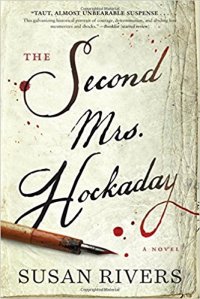 The Second Mrs. Hockaday, (Algonquin Books, 272 pages) is an epistolary novel that moves seamlessly between letters to court documents to diary entries. There are chapters that end in the middle of a scene, a diary entry interrupted, leaving the reader to hold his/her breath. The scene continues at the beginning of the next chapter. It is an amazingly effective technique, one that makes us want to race through the pages. The ending of the book? Continue reading →
The Sense of an Ending, by Julian Barnes
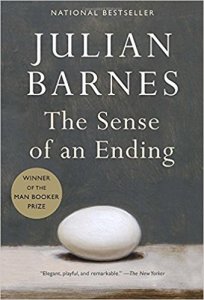 In Julian Barnes’ novel, The Sense of an Ending (Penguin Random House, 2011), we meet a narrator in the long tradition of the sad-sack loser telling his story. Anthony (Tony) Webster, resident of London, now in his sixties, looks back on his life from present time. The novel begins as Tony recalls his days as a student, a time when his life appeared to have a good deal of promise. We meet him as a teenage schoolboy in a public boys school—“public” being the British for “private”—pondering, along with his best friends Alex and Colin, certain grand philosophical issues, such as What is history?
Continue reading →
Purity by Jonathan Franzen
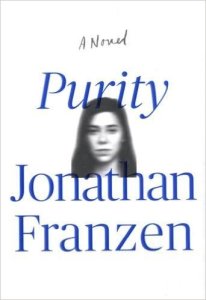 I listened to the audiobook of Purity (FSG, 576 pages) as I was held captive on a thirty-five hour road trip. Although the first fifty pages or so had some wit and interesting characters, such as Andreas Wolf, a Julian Assange persona, Purity soon devolved into stylistically bland chicklit. Jenna Lamia narrates the part of the twenty-something title character, with, appropriately for the writing style, that special millennial lilt that seems to run out of energy at the end of every sentence. The remaining 526 pages were concerned with relationship negotiations between men and women, children and parents. People complain, worry about their self-image, elaborate the details of “he said, she said” and, instead of having interests in the world, all the characters try to control and manage how other people feel about them. The characters are pure self-interest without any self-reflection. Worse yet, the plot is straight about of a women’s drug store novel: Purity’s love relationships fail as she seeks a father figure, having grown up without one. Confronting hard economic times and suffering through dead-end jobs, she finally stumbles upon her father and discovers that she is an heiress.
Seriously. An heiress. Continue reading →

