This Earth You’ll Come Back To by Barbara Roether

cover ideas.inddThis vivid, lyrical, character and place-based story (McPherson, 250 pages) begins with Rose Healy Koehner’s youngest daughter, Stephanie, searching a rural Ohio cemetery for Rose’s grave in 2008 while the deceased Rose watches from above and embarks on her life’s story told in the first person. The prickly, fondly contentious, mother-daughter relationship is apparent from the start in the underlying current of criticism that Rose levels at her daughter:

Course you couldn’t find it right away…You should have used the sense God gave you and asked your brother…Why you always insist on making things hard for yourself I’ll never know; but it’s just like you to take a simple errand and turn it into a full-blown crusader pilgrimage.

Continue reading →

Emma Who Saved My Life by Wilton Barnhardt

emmaEvery once in a while a reviewer receives a book he puts on the shelf and just wishes it would go away. Emma Who Saved My Life (St Martin’s, 496 pages) is that kind of book.

Cursed with what is arguable the worst title ever given a novel ( and double-cursed with a depressingly ugly dust jacket), it had press releases that touted it with superlatives that would make Gore Vidal blush. It’s in the fist person and has one of those woesome post-adolescent narrators. Worse, it’s a first novel by a guy named Wilton who is at Oxford working on a doctoral thesis about Henry James. Continue reading →

Isaac: A Modern Fable by Ivan G. Goldman

isaacHow should we suppose poor Isaac felt — son of a father all-too-willing to sacrifice him at the suggestion of some voice in his head? Christians are wont to overlook the obvious horror and absurdity of the Biblical tale. According to some (less awful) Jewish interpretations of events, it was perhaps Satan, as an agent of God, who spoke to Abraham, which would make more sense to those who imagine God to be not quite so sadistic.  Either way though, what kind of man would this traumatized son become?  In Isaac: A Modern Fable (Permanent, 223 pages), Ivan G. Goldman has arranged it so that Isaac, after the mishap at the altar, has been granted the gift of eternal youth. The identity of benefactor is not clear; the gift may be from Satan or from Jehovah. Isaac himself has never been able to decide, as his immortality and eternal youth often seem to him like a curse.

Continue reading →

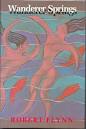
Wanderer Springs by Robert Flynn

wandererUp in that part of state just east of the Cap Rock, south of the Red River and west and north of Wichita Falls is a region of the country the residents continue to call “East Texas,” although, even at 70 mph it is hours from Amarillo, Lubbock or Spur, a half-day from San Angelo and Odessa, and a long, hard, hot day from Ozona or El Paso.

It is a part of the country that rhetorician Jim Cordon once called “terra incognito,” forgotten by most of Texas, ignored by everyone else. It is a hard land, filled with rattlesnakes, mesquite, winters that freeze livestock and people, summers that dry the ground so hard it cracks. Continue reading →

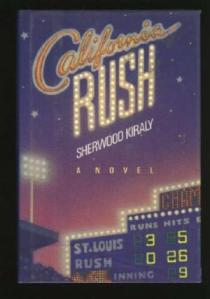
California Rush by Sherwood Kiraly

californiarushTed Williams once said that the hardest thing in the world was to hit a baseball with a bat. The second hardest thing, he continued, was to throw baseball where a batter couldn’t hit it with a bat.

Williams might have added that the third hardest thing to do is to write an original novel about baseball. Oh, it’s been done. But for every home run such as Ron Hays’ The Dixie Association or Ray Kinsella’s Field of Dreams, for every Bull Durham and The Natural, for every book by Ring Lardner, Jim Bouton and Lawrence Ritter, there are volumes of strikeouts. Continue reading →

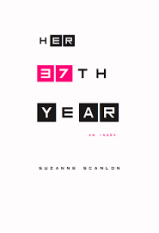
Her 37th Year, An Index by Suzanne Scanlon

ScanlonCover

The abecedarium has a long literary history, and some of its best-known examples, such as Ambrose Bierce’s Devil’s Dictionary or Gustave Flaubert’s Le Dictionnaire des idées reçues, play with the form’s implied authority for purposes of satire. Recently Matt Bell’s Cataclysm Baby used the template to convey hellish fragments of an environmental dystopia. Suzanne Scanlon, author of Promising Young Women (2012), turns to a woman’s experience in contemporary America and offers a probing and artful inventory in Her 37th Year, An Index (Noemi Press, 161 pages). Continue reading →

Nominate your favorite literary fiction author for the $1,000 Dactyl Award

Keyboard_typingDactyl Foundation offers a $1000 award to any literary fiction author, writing in English, who has published a book-length work, novel or collection of short stories. To be considered for the 2016 award, an author must be nominated by a peer, another published literary fiction author who must submit a review of one of the author’s works to Dactyl Review by December 31, 2015. Continue reading →

The Corrections by Jonathan Franzen

correctionsGifted chronicler of American life, Jonathan Franzen offers a rather quiet plot in The Corrections (FSG, 568 pages), which follows the lives of the Lambert family headed by Enid and Alfred, typical Midwestern parents, whose children have scattered, eager to find their own definitions of happiness.  The oldest, Gary, is a money manager, an asshole son, whose inner workings are described with surprising compassion; the middle son, Chip, is a lecherous and pretentious academic who’s just lost his position and his girlfriend and is working on an autobiographical screenplay that betrays a dreadful lack of self-awareness; the youngest, daughter Denise, is a talented chef who keeps throwing herself into undesirable relationships. Will they succeed?  Is the aging patriarch going completely mad? And why is Alfred  such an unhappy old man?  Will Enid get all her children to come home for one last Christmas together?

Continue reading →

The Marriage Plot by Jeffrey Eugenides

marriageplotAs the title confesses right up front, The Marriage Plot (FSG, 416 pages) is all plot, all 19th-century-style plot, with full biographical sketches and family histories for everyone who walks onstage for more than a few paragraphs to alter the action.  Which of the two men will Madeleine, English major and lover of Jane Austen and George Eliot,  end up with? Will it be Leonard, the big, broody sex-crazed boyfriend, a biology/philosophy double major? Or will it be Mitchell, the worshiping-from-afar religious studies student, whom Madeleine’s parents prefer? Continue reading →