Witz by Joshua Cohen

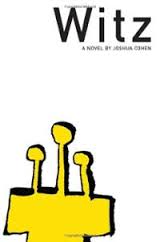
witzOy vey you say. Another funny Holocaust book?

Now is the month of holidays, from the Jewish New Year through the Feast of Tabernacles and ending with Celebration of Torah. My (Orthodox) friend of forty years came to visit. I showed her a page from Witz (Dalkey Archive Press, 817 pages). She closed the book, fast. “There’s a lot in there I wouldn’t approve of,” she said.

Yes, O WickedWitz. Continue reading →
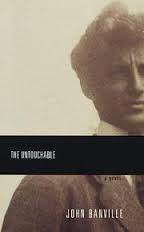
The Untouchable by John Banville

untouchableWhen Banville is writing at his best, he tends to reminisce about people and places rather than tell a story. In The Untouchable (Knopf, 668 pages), Victor Maskell, an Irishman living in England, becomes a spy for the Soviets during World War II. The book begins when the elderly Sir Maskell’s secret past has been revealed in the press. A young biographer, Serena Vandeleur, comes to interview him, and he takes the opportunity to look back over his life. Banville’s most artful writing is to be found in the plotless parts of the narrative, where he is working on characterization by relating memories of his childhood and young adulthood. Continue reading →

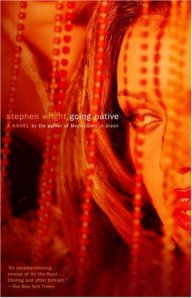
Going Native by Stephen Wright

nativeGoing Native (Vintage, 305 pages), published in 1994, was Stephen Wright’s third novel. Meditations in Green (1983) was inspired by his experiences in Vietnam during the war. M31: A Family Romance (1988) is set among UFO cultists, who rely on an autistic child to communicate with aliens. Going Native is—more or less—a picaresque novel that follows a sociopath who abandons his Chicago family to travel to Los Angeles. It is not an easy trip. It is not an easy book. But it is a fascinating one, and, as I hope to show, one that says important things about modern American life. Continue reading →

Escaping Barcelona by Henry Martin

maddaysofmeIn Escaping Barcelona (Smashwords, 230 pages), Henry Martin demonstrates a subtle mastery of first-person fiction. His protagonist Rudy is an aimless but amiable narrator whose decision to backpack to Barcelona is just a slacker lark until he’s assaulted and robbed upon his arrival. Traumatized and penniless, Rudy suddenly has to fend for himself. Continue reading →

Sunflower by Cass McMain

sunflowerSunflower (Holland House Books, 452 pages) moves slowly forward, accumulating in its plain language the details of Michael’s uneventful life as a metal worker and sculptor. He and his live-in girlfriend, Jess, mostly talk about ordinary things, like what to pull out of the freezer for dinner, why the item in the freezer wasn’t pulled out in time for dinner, and whether or not Michael has finished the metal fence commissioned weeks and weeks ago. (He hasn’t.) Continue reading →

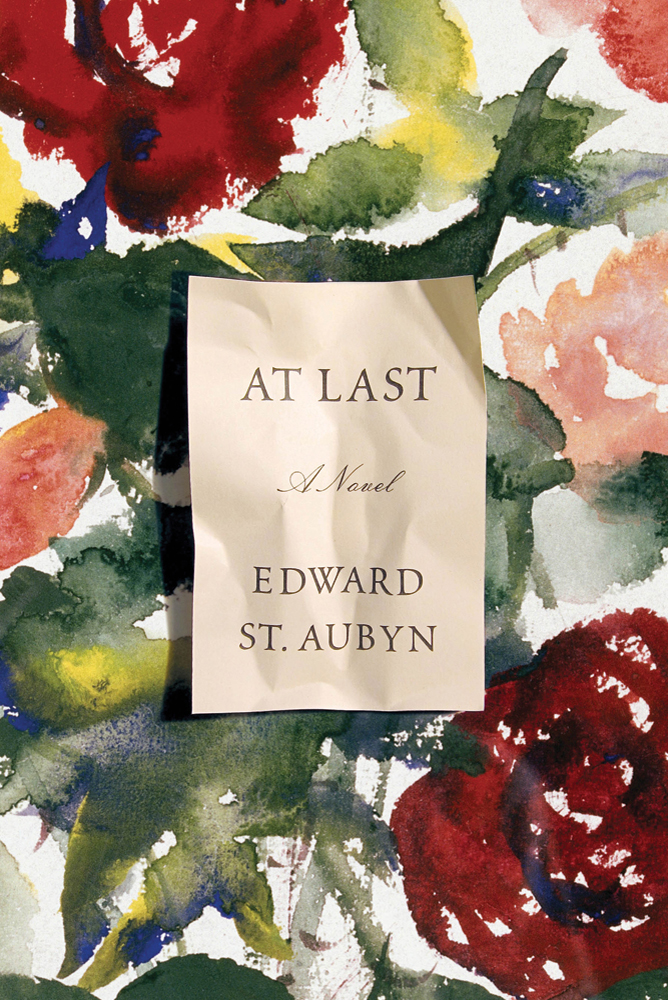
At Last by Edward St. Aubyn

At-Last-by-Edward-St-AubynAt Last by Edward St. Aubyn  (Farrar, Strauss and Giroux, 266 pages) is the fourth novel about Patrick Melrose and his family; the others are Never Mind, Bad News, Some Hope, and Mother’s Milk.

St. Aubyn, like the characters in the novel, comes from a wealthy English family. He, like Patrick, was raped by his father as a child. He, like Patrick, is a recovering drug addict and alcoholic. Indeed, given the facts of St. Aubyn’s life, it is remarkable that he is alive and functioning, let alone that he writes brilliantly.
Continue reading →

A Room Where the Star Spangled Banner Cannot Be Heard by Levy Hideo, translated by Christopher S. Scott

This short novel in three parts comes with high praise from Nobel Prize winner Oe Kenzaburo: “Have we failed to catch the calm but earnest tone that echoes like music through Levy Hideo’s prose? With his unique literary voice, this writer clearly represents a new kind of novelist for Japanese literature….” Continue reading →

Cocoa Almond Darling by Jeffra Hays

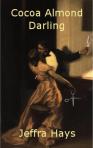
cocoaalmonddarlingJeffra Hays’ Cocoa Almond Darling (Smashwords 2011, 126 pages) is the story of Millicent Randolph, survivor of a bad marriage and starting over in tough circumstances. These include finding a place to live and a job. She finds work in a sewing shop and enjoys a brief, happy relationship with her employer, in which she becomes pregnant although he is married. Her difficulties are then resumed through a long, turbulent aftermath to this affair. The turmoil continues following the birth of her child and on up to this daughter’s marriage and birth of her own daughters, when Milly becomes a grandmother. Continue reading →

Road to Nowhere by Józef Mackiewicz

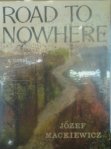
mackiewiczEzra Pound’s observation that “literature is news that STAYS news” certainly applies to Road to Nowhere (Henry Regnery Company, 382 pages). This excellent novel, first published by a Polish exile in 1955, is consistently engaging and, for its aching, visceral power, still feels fresh. Given the unfortunate fact that Józef Mackiewicz is generally unknown in the U.S. and most of his work is untranslated or out of print, he might as well be seen as a new writer, as far as Americans are concerned. Considered in this light, he is quite simply the most intriguing new writer I have encountered in years. Continue reading →