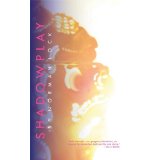
 An uncanny tale of the limits and power of story telling, Shadowplay (Ellipsis Press, 137 pages) also works with a mesmerizing and subtle structure where the story repeats and folds into itself over and over again. Among Lock’s best work, it continues the self-conscious fascination and manipulation of the theme of “other” that appeared in works like A History of the Imagination and Land of the Snow Men. Here however Lock’s uproarious and dark-humored wit has been replaced with a different mode: that of a parable or fable. The alienation, vanity, occasional triumph, and seemingly inevitable destruction of the story-teller are almost classically illustrated in this compact and powerful tale. Continue reading
Category Archives: literary fable
Walk On, Bright Boy by Charles Davis
 Set in Medieval Spain, Walk On, Bright Boy (The Permanent Press, 144 pages), a story of a boy’s first confrontation with political and religious corruption, strives less for historical accuracy than for universal applicability. Written with lovely economy and sensitivity, it is reminiscent of a fable or of a young adult coming-of-age tale. At the same time, however, it is also complex in its exploration of human foibles and conflicting philosophies.
Continue reading
 (The Permanent Press, 144 pages), a story of a boy’s first confrontation with political and religious corruption, strives less for historical accuracy than for universal applicability. Written with lovely economy and sensitivity, it is reminiscent of a fable or of a young adult coming-of-age tale. At the same time, however, it is also complex in its exploration of human foibles and conflicting philosophies.
 Dactyl Review