
“I wasn’t sure what he was hinting at, but I had a sense he was offering me something abominable—like decaffeinated coffee or coitus interruptus.”
Muriel Spark
U.R. Bowie, author of Such Is the Scent of Our Sweet Opalescence
“I wasn’t sure what he was hinting at, but I had a sense he was offering me something abominable—like decaffeinated coffee or coitus interruptus.”
Muriel Spark
U.R. Bowie, author of Such Is the Scent of Our Sweet Opalescence
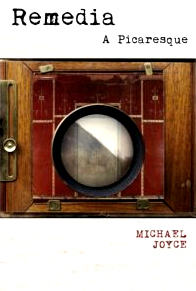 Three Explorations of Michael Joyce’s Novel Remedia, A Picaresque (Steerage Press 306 pages).
This review takes the form of three colloquies between two readers who seek to understand the multiple meanings of this enormously rich novel.
I. Scenes and Adventures
You finished Remedia.
Terrific novel—characters, places, drama, linguistic acrobatics, mystery. But I would’ve read it just to get to that great ending.
Very elegiac. The whole book resonates in it. Made me think of those last minutes of Mahler’s Ninth.
I need to talk about this book. Continue reading →

The American writer Don DeLillo is the poet of “an insidious and chronic disquiet.” But in what is probably his best novel, White Noise, a wild spirit of rambunctious laughter crashes through the disquiet, dismantles the morbid tentativeness, and roars out its sheer joy in the absurd act of human existence.
U.R. Bowie
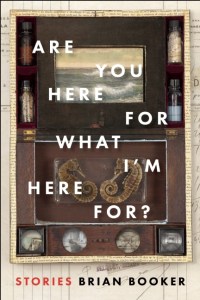 Deep oppression pervades Brian Booker’s collection of seven stories Are You Here for What I’m Here For? (Bellevue Literary Press, 256 pages). The mood is confining, suffocating, maddening, the writing evocative of a heart pulsing beneath the floorboards of a cabin far from anywhere. Booker awakens—allays—awakens—allays—and awakens again profound tensions: Something is wrong. Everything is ok. But something is wrong.
Prepare to contend with psychic turmoil, ordinary figures sick in unusual ways: “…The bus didn’t come and Francie caught a chill. Then she got sick, lost her legs; they burned her toys in the backyard. She ended up in that school for damaged children, sweet Francie among the mongoloids and midgets…” Continue reading →
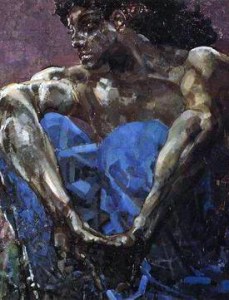 “Only part of us is sane: only part of us loves pleasure and the longer day of happiness, wants to live to our nineties [she did] and die in peace, in a house that we built, that shall shelter those who come after us. The other half of us is nearly mad. It prefers the disagreeable to the agreeable, loves pain and its darker night despair, and wants to die in a catastrophe that will set back life to its beginnings and leave nothing of our house save its blackened foundations. Our bright natures fight in us with this yeasty darkness, and neither part is commonly quite victorious, for we are divided against ourselves.”
Rebecca West, Black Lamb and Grey Falcon
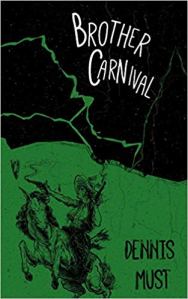 In Brother Carnival (Red Hen Press, 209 pages), a fiercely engaging literary work, Dennis Must plays with time and character, leading the reader into a special world of space and time, almost a quantum universe, where characters can be in two places at the same time–or can they? Laced with an intense investigation into the nature of divinity and deities, Brother Carnival weaves an impressive litany of human weakness into the warp-quest for the divine. These lines point to the nature of Our Problem: Continue reading →
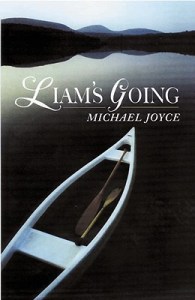 Three Approaches to Liam’s Going
You find in your hands a work of great beauty, like Michael Joyce’s novel, Liam’s Going (McPherson, 207 pages). It makes you uneasy. You feel like one of those Trojan elders chirping the perilous beauty of Helen. Send her back. You warily mention to a friend that you have discovered a 21st century novel of great lyric beauty. Right, she says, a baby born with a beard. That kind of fiction went out with Virginia Woolf. What about Michael Ondaatje and Margaret Atwood, you say.
OK, moments of lyricism, but very provisional and nervous. Continue reading →
 I happen to be contemplating these days how Artificial Intelligence (AI) differs from Biological Intelligence (BI), and so I finally took down Galatea 2.2 (FS&G, 329 pages) from my bookshelf where it has stood waiting for me for about fifteen years. I may have belatedly cracked the spine, but the pleasure of reading good science fiction only improves as its predictions either come to pass or not.
The main plot turns on a Turing Test. Can scientists train a neural network to pass a comprehensive literature exam? Continue reading →
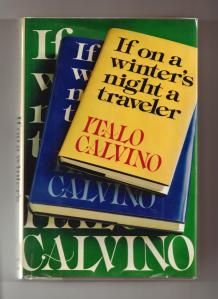
THE ACME OF METAFICTION, THE QUINTESSENCE OF POSTMODERNISM
Some important works of fiction deserve another look, another read, even some forty years after their original publication. Such is Italo Calvino’s tour de force of a novel—published originally in Italian as Se una notte d’inverno un viaggiatore in 1979, translated into English by William Weaver (Harcourt Brace Jovanovich, 1981). The novel is actually an anti-novel, and one of the most creative works about reading and writing fiction that I have ever read. Continue reading →
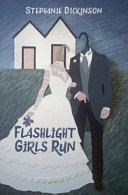 When does a presence become a force to be reckoned with? A few years ago, I became aware of Stephanie Dickinson because her name often appeared in literary magazines. She was a prolific writer, popping up in many places. I’d read a few of her flash pieces, which were strong in imagery, but I’d never read an entire book of her work until now. Her latest collection of short stories, Flashlight Girls Run (New Meridian, 254 pages), has made me sit up and pay attention. Continue reading →

