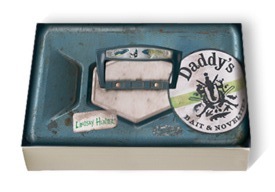
 Lindsay Hunter’s Daddy’s (Featherproof, 210 pages) is a fairly disturbing look at life in a southern rural area, though I think the book probably is meant to depict many rural areas. What the work is able to do, however, is entertain on more than one level through her craftsmanship in voice. The cold, matter-of-factness with which she writes is met in a simultaneous observational sentimentality, which works to then give us an inner clock-working machine we can hear clicking. Have you ever known a girl who has a deadpan sense of humor and this sort of distant manner yet simultaneously is obviously deep in existential thought? That’s what we’re working with here. Continue reading →
The Voting Booth After Dark: Despicable, Embarrassing, Repulsive by Vanessa Libertad Garcia
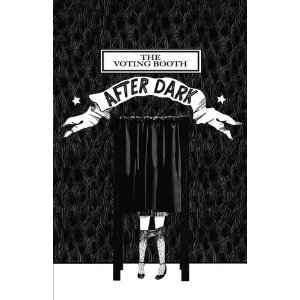 Vanessa Libertad Garcia’s first book, The Voting Booth After Dark: Despicable, Embarrassing, Repulsive (Fiat Libertad Co., 92 pages), is a slim volume of 23 short pieces, some of them poems, many of them first-person or third-person vignettes that capture a few minutes or hours of a given character’s “despicable, embarrassing, or repulsive” life.
Gritty and unflinching, the tone of the book is one of desperation and starkness as each character depicted—Marta, a young, disenchanted lesbian; or Diaz Diaz, a gay fashion designer, for example—speaks to us of their heartbreak, alienation, and sometimes of suicidal plans. The personas that Garcia invokes are products of a society that is too fast-paced, too materialistic, and too shallow for twenty-somethings or thirty-somethings trying to find a meaningful niche in life, as they struggle simultaneously to pay bills, be successful in a career, find true love, or simply forge a connection to someone or something outside of themselves that can make their lives fulfilling. Welcome to the underbelly of Los Angeles. Continue reading →
Freedom by Jonathan Franzen
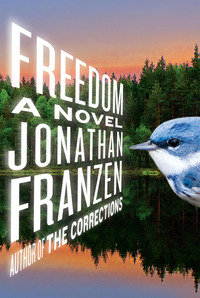 Americans have always had, in addition to wide-spread arrogance in imagining that their current literature is the best, the inferiority complex for not producing the Great Novel, nothing that could be compared with War and Peace and Brothers Karamazov or David Copperfield and Vanity Fair or Remembrance of the Things Past and Lost Illusions or The Magic Mountain and Tin Drum, or Don Quixote, or One Hundred Years of Solitude. Of course, it could be argued that Moby Dick, Invisible Man, Grapes of Wrath, The American Pastoral (Roth addresses terrorism before it became the central American problem) or Continental Drift by Russell Banks are great American novels, but somehow the critics and reviewers are still dreaming of The Great American Novel. And this novel has been anointed as such by many. Continue reading →
Stories II by Scott McClanahan
 Scott McClanahan is an author gifted with stating intuition implicitly. A part of our work as writers is to make sense, to distill, to state it both beautifully and with clarity, and yet in McClanahan’s most recent collection Stories II (Six Gallery Press, 155 pages), not for a moment, does the writing feel put on, on purpose, pushed. However, in these 155 pages, we find ourselves bathed in truth, relating universally, unequivocally taken to these very specific and personal stories, stories written in a very distinct Southern/Appalacia dialect, at that. Continue reading →
The Suburban Swindle by Jackie Corley
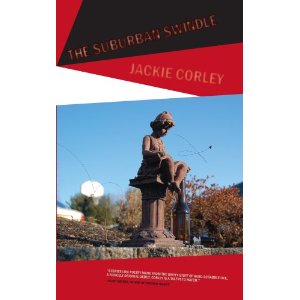 With The Suburban Swindle (So New Books, 99 pages) Jackie Corley delivers a collection of memoir-like stories about drunk, pissed-off, reckless, late-teen and twenty-something Jersey suburbanites fucking up relationships and getting the shit beat out of them. The narrative voice, sensibly consistent throughout the collection and rising to a kind of tortured literariness, wedges a space between author-narrator (who is destined to get the hell out of there) and subjects (who aren’t going anywhere). The narrator is an outsider-in-the-making, not quite not-one-of-them yet, but well on her way. Throughout this collection, the language is kicking violently against the box it finds itself in, rebelling like a young suburbanite, trying to find its meaning. It’s angry and frustrated: Continue reading →
Vestments by John Reimringer
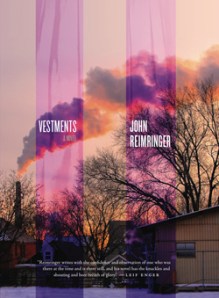 One of the pleasures of literary fiction is its fluidity, how it engages both the physical world and mental states, moving back and forth in a manner that not only reproduces the experience of being alive, but adds to it. The book in hand is less a mirror than an additional, highly sensitive appendage of the self.
John Reimringer’s Vestments (Milkweed, 407 pages) highlights the process by staking out two sharply contrasting worlds: the earthy, often violent family of James Dressler, a young man growing up in blue-collar Saint Paul, and James’ calling as a Roman Catholic priest, Continue reading →
The Suburban Swindle by Jackie Corley
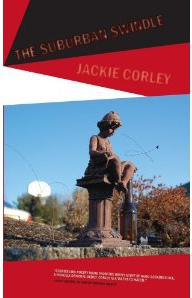 Jackie Corley’s The Suburban Swindle (So New Publishing, 100 pages ) paints a specific place in a specific time with a specific aesthetic in a timeless style which transcends narrative mode and delivers a straight-served good story. Short works bound together through an ultimately honest, sometimes naïve narrator showcase Corley’s ability to communicate what it is to be a young, smart, bored person in the suburban life, which in its own way at times, reads as surprisingly feminist. Continue reading →
How to Survive a Natural Disaster by Margaret Hawkins
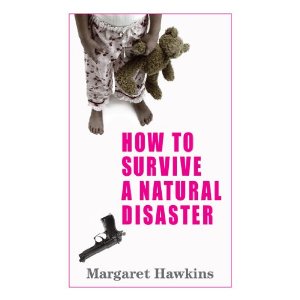 It’s unfortunate that “adult entertainment” has become synonymous with porn, because there’s a shortage of the real thing. By that, I mean books and films for grown-ups. Not only about sex, but about the multitude of other concerns that mature people care about. These people know that there is more to life than celebrities, shopping and getting skinny. Or having to choose between zombies and vampires.
Margaret Hawkins’ How To Survive a Natural Disaster (Permanent Press, 199 pages) confidently embraces this fact and offers a literary novel that is both Continue reading →
Tales of Woe by John Reed
 John Reed’s most recent book, Tales of Woe (MTV Press, 204 pages), structured in novelistic intertwined short stories, is actually a work of non-fiction. Each tale is entirely true, which perhaps is ultimately what makes the book so difficult and simultaneously profound. We walk with Reed through the murky depths of the worse angels of our nature.
Part crime-log, part historical map, we follow countries in contemporary time into the psyche of many cruelties. Reed’s tight minimal prose reads poetic, ultimately serving the work both in realistic relay of information, but also in Continue reading →
Her Mouth Looked Like a Cat’s Bum By Matthew Ward
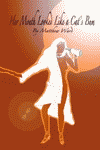 The twenty-one stories in Matthew Ward’s latest collection Her Mouth Looked Like a Cat’s Bum (World Audience, 164 pages) are idiosyncratic and challenging. Built primarily out of character studies from society’s outcasts, the stories traverse a nihilistic baseline, where societal norms end and disintegration begins. The opening story, “Bathrobes” is almost a novella at 38 pages, at least compared to the other stories in this book. Within the story is the line that forms the book’s title, and the sense of disapproval that the title conveys is one which clearly sets the tone for the book. The stories are intended to shock, cause the reader to disapprove, frown, but perhaps also see life from a slightly different perspective. The characters are homosexual, naked, playing cards with Continue reading →
 Dactyl Review