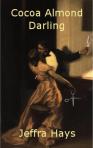
 Jeffra Hays’ Cocoa Almond Darling (Smashwords 2011, 126 pages) is the story of Millicent Randolph, survivor of a bad marriage and starting over in tough circumstances. These include finding a place to live and a job. She finds work in a sewing shop and enjoys a brief, happy relationship with her employer, in which she becomes pregnant although he is married. Her difficulties are then resumed through a long, turbulent aftermath to this affair. The turmoil continues following the birth of her child and on up to this daughter’s marriage and birth of her own daughters, when Milly becomes a grandmother. Continue reading
Monthly Archives: May 2013
Road to Nowhere by Józef Mackiewicz
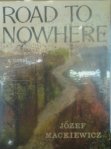 Ezra Pound’s observation that “literature is news that STAYS news” certainly applies to Road to Nowhere (Henry Regnery Company, 382 pages). This excellent novel, first published by a Polish exile in 1955, is consistently engaging and, for its aching, visceral power, still feels fresh. Given the unfortunate fact that Józef Mackiewicz is generally unknown in the U.S. and most of his work is untranslated or out of print, he might as well be seen as a new writer, as far as Americans are concerned. Considered in this light, he is quite simply the most intriguing new writer I have encountered in years. Continue reading
Flaubert’s Parrot by Julian Barnes
 Julian Barnes’ Flaubert’s Parrot (Picador 2002, 190 pages) is the story of one man’s quest, his “project” to find the writer outside his writings, despite Flaubert’s insistence that the books should be enough, the writer should disappear and be left alone. Geoffrey Braithwaite, this amusing novel’s British protagonist, is a medical doctor about sixty. He pursues museums, letters, literary works, criticism, and Flaubert the person in a long quest as unofficial biographer and tireless seeker. Continue reading
Tales of Barranco Lagarto by Steven C. Levi
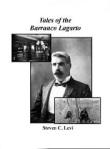 According to a note on the title page Tales of Barranco Lagarto (277 pages, Kindle) is a collection of stories which first appeared in The Coachella Post Gazette. The tales were handed down by one Horatio Shackleton, who died in 1925, and eventually assembled into a single collection by his grandson, Horatio Shackleton III. These characters are based on actual persons. Grandson Horatio is the mask which the “editor”—author Steven C. Levi—utilizes for his satirical tribute to a time gone by. The book concentrates on American culture in the southwest in the late 19th and early 20th centuries. It is not so much an intellectual history as a whimsical foray into a forgotten past, with the narrator’s twinkling eye always at the ready. Continue reading
The Plague by Albert Camus
 Composed in 1948, Albert Camus’ The Plague (Vintage International, 308 pages) is a study of human habit and frailty in a time of widespread destruction and crisis. A plague appears in a modern city called Oran in Algeria, afflicting the community for most of a year, then as abruptly lifts. Residents celebrate, much in the way of celebrations for the ending of world wars, with renewed energy for humanity’s “humble yet formidable love” (301). It is this love, an adult’s understanding of love in the view of protagonist Dr. Rieux, that Camus highlights toward the ending of the novel—that is, love as desire to join with another, whether adult son with mother, father with child, doctor with patients, wife with husband, or “true healers” who seek peace (254). Continue reading
 Dactyl Review