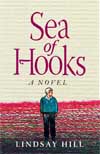
 Sea of Hooks (McPherson & Co) was nominated by Barbara Roether, author of This Earth You’ll Come Back To. In her review of Hill’s unusual novel, Roether writes,
There is a paradox that floats through the Sea of Hooks, which is that the experience of reading it is almost the opposite of how it is written. That is to say, while the story is told in its short collage-like segments, their effect is an almost seamless classical narrative. The way sections move from multiple perspectives, dreamtime, real-time, then meld together with such cohesive and penetrating storytelling, is a testament to the author’s insightful eye for detail and character.

 In Disgrace (Penguin Books, 220 pages), Professor David Lurie’s crisis begins with his foolishly taking advantage of one of his students, then proceeds to his inadequate response under enquiry. Gradually, the story’s emphasis on “disgrace” pervades the entire narrative. It extends to white dominance and native reprisal in South Africa, to cruelty with animals, and to self-obsession within the human community generally.
 Dactyl Review