Child of Light by Jesi Bender

What do we really know when epistemic parameters are fluid? This question is central to Jesi Bender’s historical novel, Child of Light (Whisky Tit, 318 pages), set in upstate New York at the end of the 19th century. It centers on Ambrétte Memenon, a clever and dutiful young woman whose father is a French scientist immersed in his studies of electricity, and whose mother is a Québécoise enthusiast of Spiritualism.  Papa seeks to illuminate cities at night, Maman to communicate with the dead.

These are rather different agendas, to put it mildly, but the story dramatizes how, within the context of the period, both pursuits are cutting edge. And Ambrétte, in an attempt to mend her broken family, tries to reconcile the two.

Continue reading
Hope and Wild Panic by Sean Ennis

Some writers refuse to get in line with linearity, or take up common cause with causality. In Sean Ennis’s Hope and Wild Panic (Malarkey Books, 202 pages), the reader finds a depiction of life in the contemporary U.S. with recognizable settings and characters—realism, in a word—but it is also fundamentally destabilized, relying on non-chronological fragments (chapters? flash fictions?) of only one or two pages to explore the lives of a middle-aged narrator and his family. One section begins as follows:

“Rejoice with me, I have beaten psoriasis. There’s this trick I have of not watching the news. Most things don’t happen, and there’s been some debate internally about the order of events. I keep losing things and the obvious answer is that they’ve been stolen! But the investigation is finished—it is what it is. A black government helicopter is circling, and I’m just reading my big heavy book like that’s just a ceiling fan. Our neighbors behind the house, across the gulch, have been growing marijuana. I wonder what for. A family of foxes is our other neighbor. Is there some apophenia going on here? Doot-dee-doo.”

Continue reading

What Did You Do Today? by Anthony Varallo

Fiction labeled magic realism is sometimes too squishy, to my taste, relying too much on novelty or hoped-for charm. Instead of providing an added charge to the storytelling, the other-worldly conceits can bring about a dilution, like a film that leans too heavily on special effects.

In What Did You Do Today? (UNT Press, 216 pages), winner of the Katherine Anne Porter Prize, Anthony Varallo avoids this pitfall across 45 stories that often defy realistic convention. He knows how to strike the right balance between the ordinary and the frankly impossible. Bizarre events occur against a backdrop of everyday domesticity, as parents and children go about their lives.

Continue reading

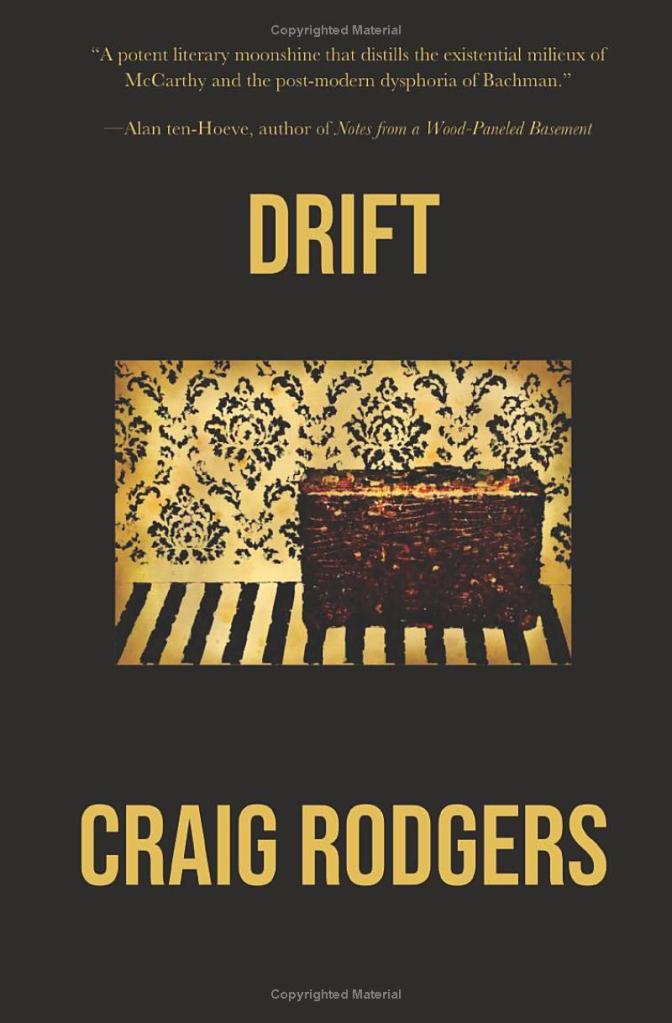
Drift by Craig Rodgers

Sometimes a novel’s originality is less a matter of affirmation than an act of refusal. Refusal to go along with received ideas of how to tell a story or create verisimilitude or even how words signify. Saying no opens up new space, or at least points towards what has been neglected by complacence.

Craig Rodgers’ Drift (Death of Print, 156 pages) is such a novel. A dystopian tale of a bible salesman named Charlie, it will defy the ingrained expectations of many readers. Plotwise, Charlie has no trouble making a sale: everyone seems to want his product. He has no idea why. Women like Charlie—no struggles there, either. Other characters include a clown on a rampage and a mysterious goon in a dented bowler hat who seems to be following Charlie. There’s a bearded lady, with whom Charlie has sex, and a young boy afflicted by plague who becomes his travel companion. Then the boy steals Charlie’s car. Continue reading

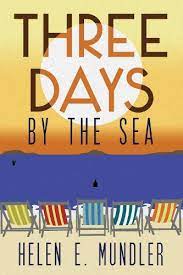
Three Days by the Sea by Helen E. Mundler

My initial response when I started to read Helen Mundler’s Three Days by the Sea (Holland House Books, 300 pages) was “Yes, we need more of this.” In addition to the interest of the story, the book serves as a reminder of the strengths of literary realism, at a time when for many readers, journalism and nonfiction have replaced the novel as a chronicle of lived experience.

This situation is the product of a changing culture but it’s also, I think, the fault of many novelists, who too often settle for what I’ve come to think of as “weather report realism.” In these novels, Plot X or Y occurs against a backdrop of dutiful descriptions of everyday life, a supposedly reliable accounting of facial expressions, brand names and what the weather was like that day.

Of course life is full of facial expressions and brand names and weather, but verisimilitude is not an end in itself. Saying as much is nothing new. Surely it’s what Willa Cather had in mind when she defended the novel démeublé. As a masterful realistic writer, she knew the risks of her chosen mode. An artist can faithfully render how life appears while neglecting how it feels. “How wonderful,” Cather observed, “it would be if we could throw all the furniture out of the window.” Continue reading

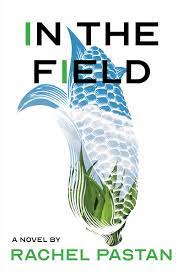
In the Field by Rachel Pastan

Literary fiction about science remains an exception. When C.P. Snow voiced concern in 1959 about “Two Cultures” in reference to the growing gap between science and the arts, it created a stir. Nowadays, no one would debate the notion. It has hardened into fact.

Often, when literary fiction tries to engage with science, it tends toward speculative writing. For instance, Kazuo Ishiguro’s Never Let Me Go or Ian McEwan’s Solar or any of a number of Richard Powers’ novels. They show a hypothetical present or future and ask: “What if?Continue reading

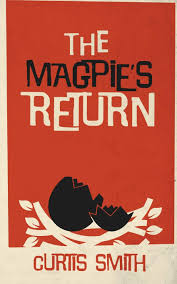
The Magpie’s Return by Curtis Smith

Timely literary fiction is uncommon. Stories deemed “topical” by major media outlets flicker at us as frantically as a strobe light. Literary fiction, in contrast, offers a slow burn. Lag times in the publishing industry exacerbate the situation. By the time a story ripped from the headlines reaches the reader, it can exude a whiff of old news, precisely because it’s been ripped from the headlines. Continue reading

All the Useless Things Are Mine: A Book of Seventeens by Thomas Walton

WaltonFlash fiction has enjoyed a boom in recent years but sometimes overlooked are shorter prose forms which don’t respect the conventions of flash—e.g., at least an implied plot or hint of closure—in order seek out other literary effects. Thomas Walton’s All the Useless Things Are Mine: A Book of Seventeens (Sagging Meniscus, 138 pages) is an intriguing entry into this field. It is both experimental, in the sense that there isn’t really a label for the genre, and traditional, for it deploys aphorism and image in a manner which is readily accessible, despite its peculiarity.
The author calls the pieces in this collection “seventeens” because each freestanding entry is composed of exactly seventeen words. A few pieces are titled, but most are not, and the book is arranged in 26 chapters with titles like “Animal Sketches,” “Art Criticism” and “Birdsong.” The fixation on seventeen words recalls the haiku form, which in its English rendering is typically composed of seventeen syllables in three lines. Here, though, instead of relying on poetry techniques like line breaks or rhythm assisted by white space on the page, Walton opts for a “prosier” approach, working with short, punchy sentences. Continue reading

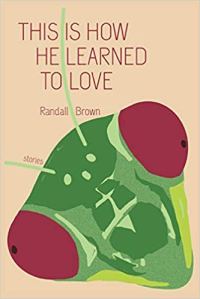
This is How He Learned to Love by Randall Brown

Was it the intention of Randall Brown or his publisher to make a statement by putting the word “stories” on the cover of This Is How He Learned to Love (Sonder Press, 88 pages)? I don’t know. Of course, it’s a convention to tag book titles with explanatory genre labels such as “a novel” or “stories” or “a memoir.” But Brown is a particular case. He is a prolific and expert writer of flash fiction as well as the author of A Pocket Guide to Flash Fiction. He also writes longer forms (see his novella How Long is Forever), but it’s not unreasonable to think of him as “Mr. Flash,” one of the chief exponents of the form in America. Continue reading
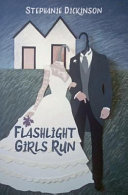
Flashlight Girls Run by Stephanie Dickinson

C__Data_Users_DefApps_AppData_INTERNETEXPLORER_Temp_Saved Images_content(1)When does a presence become a force to be reckoned with? A few years ago, I became aware of Stephanie Dickinson because her name often appeared in literary magazines. She was a prolific writer, popping up in many places. I’d read a few of her flash pieces, which were strong in imagery, but I’d never read an entire book of her work until now. Her latest collection of short stories, Flashlight Girls Run (New Meridian, 254 pages), has made me sit up and pay attention. Continue reading