 Sunflower (Holland House Books, 452 pages) moves slowly forward, accumulating in its plain language the details of Michael’s uneventful life as a metal worker and sculptor. He and his live-in girlfriend, Jess, mostly talk about ordinary things, like what to pull out of the freezer for dinner, why the item in the freezer wasn’t pulled out in time for dinner, and whether or not Michael has finished the metal fence commissioned weeks and weeks ago. (He hasn’t.) Continue reading
Author Archives: Dactyl Review
At Last by Edward St. Aubyn
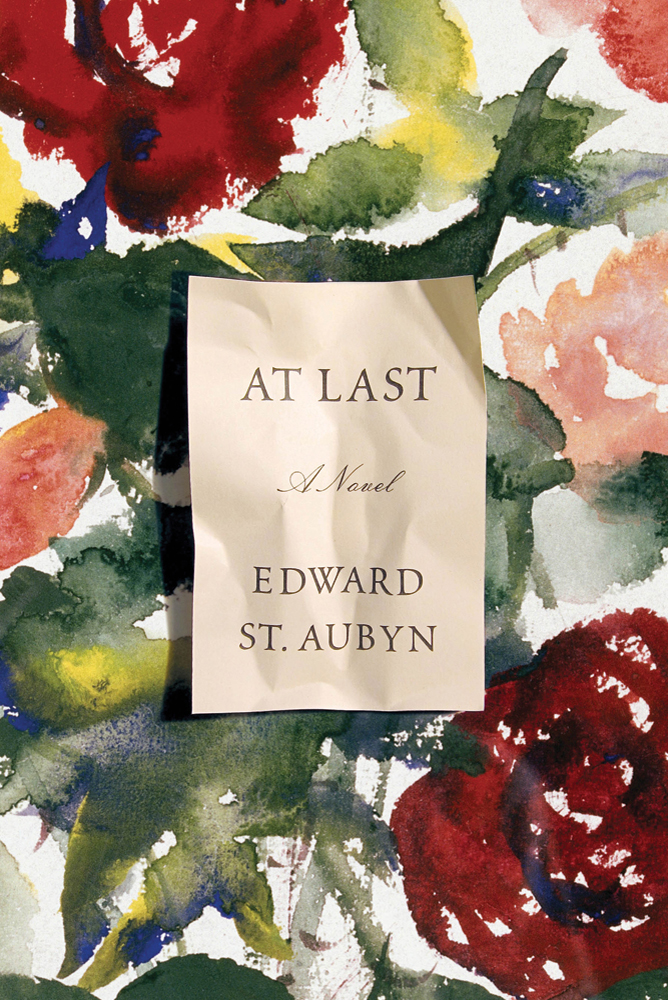 At Last by Edward St. Aubyn (Farrar, Strauss and Giroux, 266 pages) is the fourth novel about Patrick Melrose and his family; the others are Never Mind, Bad News, Some Hope, and Mother’s Milk.
St. Aubyn, like the characters in the novel, comes from a wealthy English family. He, like Patrick, was raped by his father as a child. He, like Patrick, is a recovering drug addict and alcoholic. Indeed, given the facts of St. Aubyn’s life, it is remarkable that he is alive and functioning, let alone that he writes brilliantly.
Continue reading
A Room Where the Star Spangled Banner Cannot Be Heard by Levy Hideo, translated by Christopher S. Scott
 This short novel in three parts comes with high praise from Nobel Prize winner Oe Kenzaburo: “Have we failed to catch the calm but earnest tone that echoes like music through Levy Hideo’s prose? With his unique literary voice, this writer clearly represents a new kind of novelist for Japanese literature….” Continue reading
Greenwood Tree by Bustles Lloyd
 I suggest you open this mystery novel the way you open a beautifully wrapped gift: with heightened perceptions and the tiniest bit of doubt. What if it’s not my size? Most mysteries (correct me if I’m wrong) are not stylized, legend-inspired stories that have bigamous murders occurring two centuries apart.
Mechanic of Fortune by Peter Bollington
 In the ‘bad old days’ when there were a dozen publishing power houses in New York that controlled the industry, everyone knew what a genre books was. If it was a mystery, it started with a murder. If it was romance, it was boy-meets-girl-loses-girl-gets-girl-back. It was all very simple and quite generic, the root of the term genre. But all of that has changed. The industry has outsized and now books that would not have gotten so much as a nod a decade ago are in print. Continue reading
Dismantle the Sun by Jim Snowden
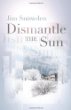 Dismantle the Sun (Booktrope, 324 pages) is literary, but if you are looking for a novel of bright sunshine, lollipops along with skittles and beer, this is not the book for you. It reeks pathos; “wrenches” is the term used on the back cover of the book, and the work lives up to that term. It is an uncomfortable read because you are being dragged into the intimate, excruciating dynamics of a couple where the wife is dying and the husband is struggling with that reality.
Continue reading
Milligan and Murphy by Jim Murdoch
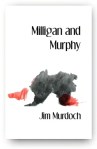 Opening a novel with a quote, particularly one from a writer as universally celebrated as Samuel Beckett, risks much. A reader is apt to spend a good deal of the novel comparing the works of the writer before him to those of the great master, fall into a reverie about how great was the work of the great master, and lose track of what the book in hand is going on about. Jim Murdoch, the author of Milligan and Murphy (Fandango Virtual, 180 pages), assumes that risk. Continue reading
Frog City Updike by Arthur Graham
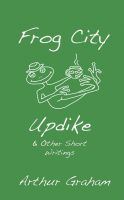
Frog City Updike never would’ve been without Brautigan’s Trout Fishing in America, the book that showed me just how loose I could get with form. — Arthur Graham, Big Al’s Books and Pals
One of the words I use too often in reviews is “interesting,” but I never really make it clear whether a particular word piques my interest or holds it. It’s the same with “nice,” which I also overuse; nice can have negative connotations; the last thing your wife wants to hear when she walks in wearing a new outfit is, “You look nice, Dear.” Even more confusing I would expect is when something gets referred to as “nice and interesting.” Frog City Updike–the place, not the book–sounds like a nice, interesting place. I’m not sure I’d want to live there but if I did I can see myself running across interesting things and saying, “Oh, that’s nice,” or vice versa. Continue reading
The Beach Beneath the Pavement by Roland Denning
 Bernard Hawkes is a cynical, disillusioned journalist who finds himself in a spot of trouble when someone starts enacting the theoretical terrorist plots described in his satirical newspaper column. So begins this sardonic tale of conspiracies within conspiracies set in modern-day London.
With the sinister Tranquility Foundation (a New Age conglomerate promising “serenity with security”) on one side and the Primitive Front (a group bent on shaking people out of such complacency) on the other, Bernard’s previously humdrum existence suddenly becomes quite interesting as he is drawn ever deeper into the intrigue behind the bombings. Adding to his problems are Inspector Pitmarsh, the paradoxically chummy yet menacing police detective, a vivacious young revolutionary calling herself Animal, and Dillwyn, his alternatively rational and paranoid neighbor. Continue reading
Editorial by Arthur Graham
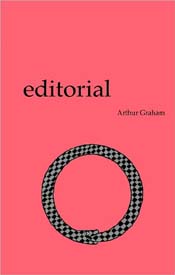 At the onset, our protagonist in Editorial (CreateSpace, 140 pages) is sent to live with an aunt/uncle after the untimely death of his parents, and he finds the routine and familiarity therapeutic in a sado-masochistic sort of way, until the day comes when his aunt and uncle basically throw him out on his own with nothing possession-wise to speak of other than his porn mag collection. Well, at least our narrator handles it well: with wit, sarcasm, and what was probably a heat stroke induced delusion.
 Dactyl Review