The Death of Patsy McCoy by Levi Montgomery

“His death began the moment we saw him. It just took a long time to consummate that death. We began to kill him when we first saw him…”

The Death of Patsy McCoy (Inflatable Rider Press, 147 KB) is a story about a murder, but long before that, it was a story about suicide. The suicide of a small town, the suicide of a new kid seeking acceptance, and the suicide of five young men who would never be able to push aside memories left behind in their childhood, memories that are nothing more than the strewn wreckage of innocence gone lost. Continue reading
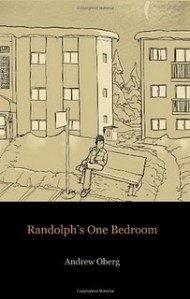

Randolph’s One Bedroom by Andrew Oberg

Randolph’s One Bedroom (CreateSpace, 156 pages), for me, wasn’t so much about Randolph as it was his state of mind, specifically how he dealt with the everyday oddities of his world. The truth is stranger than fiction, and where Randolph lives, pretty much everything is strange. What I think I loved most about this story collection was that none of the characters were all that out of the ordinary. We are surrounded by the bizarre every single day, and we, like Randolph, have become unaffected by the goings on around us. If we didn’t insulate ourselves in this way, we would all be mental by now. When I see some of the things my own neighbours do, I swear my husband and I are the only normal people on the block. That’s a stretch, all things considered, but then we think, hey, they probably think we are weird, and they wouldn’t be that far off base. That’s really the whole point of the book I think: it’s an abstract look at society’s various psychological tics. Randolph’s cursing pet parrot is really the only thing predictable in his entire world, well, that and he never gets any mail. Continue reading

Cities of the Red Night, The Place of Dead Roads, and The Western Lands by William S. Burroughs

NOTHING IS TRUE. EVERYTHING IS PERMITTED
Undeniably the magnum opus of his later (some might say entire) career, the trilogy of novels produced by William S. Burroughs between 1981 and 1987 continues to cast its shadow as one of the most enduring pieces of experimental American literature ever written.

Whether readers find this “great work” to be great indeed or just greatly disappointing will largely depend on their opinion of Naked Lunch (1959) and his other novels from the 60s and 70s, because although the form and substance have matured quite a bit in the intervening decades, there is still much from these early cut-ups prefiguring the wild rides that are Cities of the Red Night (1981), The Place of Dead Roads (1983), and The Western Lands (1987). The lurid descriptions of sex, drugs, and violence are still very much present in Continue reading

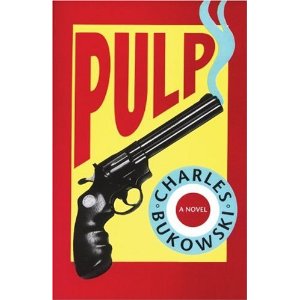
Pulp by Charles Bukowski

For newcomers to the world of Charles Bukowski, be forewarned: Pulp (Ecco, 202 pages) is probably not the best place to start.

I say this, not because it doesn’t rank right up there with his other books, or because greener readers will fail to grasp the allusions to earlier work it contains, but rather because as his ultimate novel (completed months before his death) Pulp can easily be seen as Bukowski’s final farewell. In it, the aged author takes his readers on one last foray into familiar territories of sex, madness, and death, while at the same time expanding on those themes in brilliant and often unexpected ways. Drawing on science fiction and hardboiled noir elements as well, the end result is a bizarre send-up of genre fiction that is just as hilarious and insightful as anything else he wrote. Continue reading

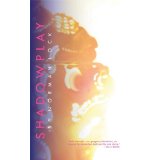
Shadowplay by Norman Lock

An uncanny tale of the limits and power of story telling, Shadowplay (Ellipsis Press, 137 pages) also works with a mesmerizing and subtle structure where the story repeats and folds into itself over and over again. Among Lock’s best work, it continues the self-conscious fascination and manipulation of the theme of “other” that appeared in works like A History of the Imagination and Land of the Snow Men. Here however Lock’s uproarious and dark-humored wit has been replaced with a different mode: that of a parable or fable. The alienation, vanity, occasional triumph, and seemingly inevitable destruction of the story-teller are almost classically illustrated in this compact and powerful tale. Continue reading

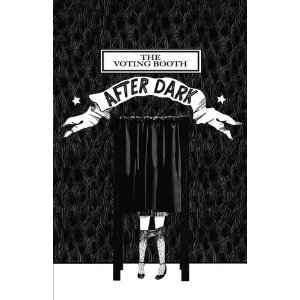
The Voting Booth After Dark: Despicable, Embarrassing, Repulsive by Vanessa Libertad Garcia

Vanessa Libertad Garcia’s first book, The Voting Booth After Dark: Despicable, Embarrassing, Repulsive (Fiat Libertad Co., 92 pages), is a slim volume  of 23 short pieces, some of them poems, many of them first-person or third-person vignettes that capture a few minutes or hours of a given character’s “despicable, embarrassing, or repulsive” life.
Gritty and unflinching, the tone of the book is one of desperation and starkness as each character depicted—Marta, a young, disenchanted lesbian; or Diaz Diaz, a gay fashion designer, for example—speaks to us of their heartbreak, alienation, and sometimes of suicidal plans. The personas that Garcia invokes are products of a society that is too fast-paced, too materialistic, and too shallow for twenty-somethings or thirty-somethings trying to find a meaningful niche in life, as they struggle simultaneously to pay bills, be successful in a career, find true love, or simply forge a connection to someone or something outside of themselves that can make their lives fulfilling. Welcome to the underbelly of Los Angeles. Continue reading

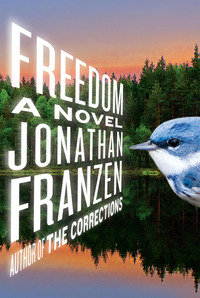
Freedom by Jonathan Franzen

Americans have always had, in addition to wide-spread arrogance in imagining that their current literature is the best, the inferiority complex for not producing the Great Novel, nothing that could be compared with War and Peace and Brothers Karamazov or David Copperfield and Vanity Fair or Remembrance of the Things Past and Lost Illusions or The Magic Mountain and Tin Drum, or Don Quixote, or One Hundred Years of Solitude. Of course, it could be argued that Moby Dick, Invisible Man, Grapes of Wrath, The American Pastoral (Roth addresses terrorism before it became the central American problem) or Continental Drift by Russell Banks are great American novels, but somehow the critics and reviewers are still dreaming of The Great American Novel. And this novel has been anointed as such by many. Continue reading

Her Mouth Looked Like a Cat’s Bum By Matthew Ward

The twenty-one stories in Matthew Ward’s latest collection Her Mouth Looked Like a Cat’s Bum (World Audience, 164 pages) are idiosyncratic and challenging. Built primarily out of character studies from society’s outcasts, the stories traverse a nihilistic baseline, where societal norms end and disintegration begins. The opening story, “Bathrobes” is almost a novella at 38 pages, at least compared to the other stories in this book. Within the story is the line that forms the book’s title, and the sense of disapproval that the title conveys is one which clearly sets the tone for the book. The stories are intended to shock, cause the reader to disapprove, frown, but perhaps also see life from a slightly different perspective. The characters are homosexual, naked, playing cards with Continue reading
The Best Australian Stories 2006 edited by Robert Drewe

The Best Australian Stories 2006, edited by Robert Drewe (Black Inc, 380 pages). As an art form, the short story seems to be growing stronger. Writers still bemoan the difficulty in getting a short story collection published, but collections like Black Inc annual ‘best of’ series are a testament to the continuing demand for short fiction. The reasons why are obvious – a short story is fully contained, able to be read in a single sitting, and are often engaging, without needing the development time of a full-scale novel. Part of the reason why the Black, Inc collections are so successful is the careful editorial input. This is the sixth year that this series has been in production, and the process for finding stories is a fascinating one, involving scouting through publications of respected literary mags, and, from this year on, accepting submissions from any writer so inclined. For writers, it’s a terrific opportunity to showcase work, get your name out, and pick up loyal readers. For readers, it’s a really nice way to expose yourself to a range of Continue reading

The Bait Shack by Harry Hughes

In The Bait Shack (BeWrite Books), Dale Cooles is a mathematician ready to tie up some messy ends. He’s quit his fancy university job, said goodbye to his last fling, and applied himself to his new life as unemployed, kept husband of Lacy Chamblet. Lacy is secretary to robber baron Henry Meredith, who makes his living cheating his tenants, avoiding tax, and hiring low-cost street kids too unemployable to blow the whistle on him. But this time, he’s teamed up with mobster Johnny Avalino, and his plans take a nasty turn. Are Dale and Lacy smarter than Meredith thinks they are? Is thwarted conservation officer Continue reading