
Author Archives: VN Alexander

The Pilgrim of Love: a ludibrium by Charles Davis
“I was pleased to discover in myself an uncanny knack for interpreting the hermetic language of alchemy, as if my book learning had been but a preparation for decrypting enigmatic texts, reading meaning into that which, on the surface, seemed meaningless.”
So says the unnamed narrator of Charles Davis’ The Pilgrim of Love: a ludibrium, an obsessively researched and elaborately plotted parody of an historical romance. (Parody, as I understand the term, is best written by an author who actually loves his target, but who can put some ironic distance between himself and his subject.) The story is set in the abbey of the legendary Mont Michel in 1621, when the absence of roadway access meant visiting pilgrims had to make their way around quicksand between dangerously unpredictable tides. The landscape always plays an important and often symbolic role in Davis’ novels. The pilgrims must interpret the patterns in the sand to avoid sinking in the lise. Continue reading
2014 Dactyl Foundation Literary Fiction Award goes to Dennis Must
We had many outstanding nominations for 2014 (and several late entries, hence the delay in announcing the award), and we are happy to congratulate Dennis Must for his fine work, Hush Now, Don’t Explain (Coffeetown Press in 2014), for which he will receive a $1000 prize.
In his review, Jack Remick called Hush Now, Don’t Explain, “a unique American novel, written in the language of the heartland before Jesus became a pawn in the political battle for the American soul. It is written in a subdued, subtle, understated lyrical style. It is as rich and diverse as America herself. It is at once a romance complete with trains, whorehouses, steel mills, and the death of the drive-in-movie theater.”
Here is Must:
These colossal land ships (trains) with spoked iron wheels taller than three of us…these were the engines of our dreams…Not like in the Pillar of Fire Tabernacle, where Christ hung on a cross and a single candle flickered under this feet…Everything inside the round house was glistening black, oil-oozing soot, except the hope curling out from under the bellies of those locomotives and their stacks, rising right up to the clerestory windows, then out to the sky and heaven. (109)
Thanks to Jack Remick for contributing the review. For more information about the Dactyl Award click here.
Attention Authors: 2014 Dactyl Literary Award
Dear Authors,
Every book reviewed on Dactyl Review is automatically nominated for the Dactyl Foundation Literary Award. The author or publisher just needs to contact us at info@dactyl.org to accept the nomination and enter. Please see more info about the award here. Some very nice books have been reviewed this year, but we’ve only heard from a few authors and publishers. Please let us know right away if you would like your book to be considered.
-VNA
Support Dactyl Review
 Dear Friends,
In the past four years, Dactyl Foundation has concentrated on growing the literary fiction community, which has dwindled over the past twenty years as publishing houses began to focus on big sellers ignoring the niche market of fine literature. In 2010, we launched Dactyl Review, a community of literary fiction writers who review literary fiction and nominate works for Dactyl Foundation’s $1000 annual prize. The contest is open to any living literary fiction writer, regardless of date of publication or type of publication. We are especially interested in books that came out some time ago and have not yet received the recognition they deserve.
Support this worthy project now. There are a lot of great writers out there who need encouragement. We can’t do it without you. Thanks in advance for your support. Dactyl Foundation is a 501 c3 organization, and your donation is fully tax-deductible.
Your friends in art and thought,
Neil Grayson, Director
Victoria N. Alexander, PhD, Director
Vox Populi by Clay Reynolds
 In Vox Populi: A Novel of Everyday Life (Texas Review Press, 211 pages) an unnamed narrator endures various brief encounters with strangers while out on errands—waiting for, paying for, or ordering something. Clay Reynolds must have been keeping a journal for years because his little tales ring true in their preposterousness. Truth is stranger than fiction. It is hard to believe people can be so rude, so tactless, so pushy, so dumb, and yet people are. Usually the unrelated event described in each chapter involves some implausibly insensitive and very loud person disrupting the normal course of humdrum business with performances that are as outrageous as they are unfortunately common. We’ve all have been shocked and appalled to witness such scenes in our own daily lives, and once home we say to our spouses, You’ll never believe what this crazy lady did at the grocery store, etc. Continue reading
Flight by Oona Frawley
 Flight (223 pages, Tramp Press) by Oona Frawley, is a novel set in Ireland, the United States, Vietnam, and Zimbabwe that explores how its characters have been affected by both old-style colonialism and the new colonialism–corporate globalism that began to rise in the 1990s. Themes center on migration and immigration, on feeling homesick and rootless at the same time. It’s about writing letters home, some of which are sent, some of which are kept. Continue reading
The Contractor by Charles Holdefer
As the twenty-fist century accelerates toward a new low point in modern political history, eighty-five people possess about forty percent of the world’s wealth (that’s not a typo),* second- and third-generation war-terrorized children are born to benumbed, dehumanized parents, and most news reports would probably seem horribly unreal to even Bradbury and Orwell.
One may ask, What does twenty-first century art have to say about all this? We’ve heard from activists, a few courageous whistle-blowers; we’ve seen Hollywood thrillers with at least one Cheney-like character snarling with glee as he slaughters the hopes of yet another welfare mom. But where is the nuanced rendering of this story about the death of democracy?
Dactyl Foundation Literary Fiction Award 2013
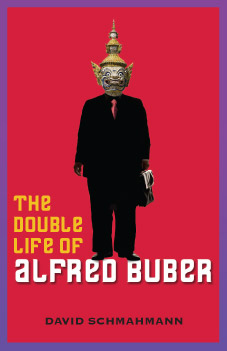
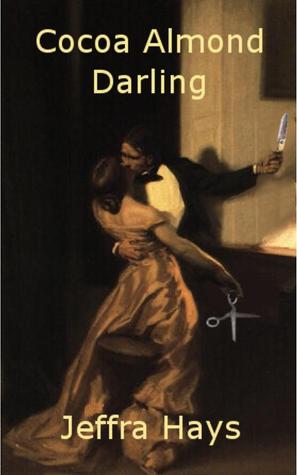 Because we were unable to give awards in 2011 and 2012, due to lack of qualifying entries, we decided to give two awards in 2013. The first award goes to The Double Life of Alfred Buber by David Schmahmann, which was reviewed by top DR reviewer Charles Holdefer. The second award goes to Cocoa Almond Darling by Jeffra Hays, which was reviewed by Peter Bollington, also a top DR reviewer, and VN Alexander, DR editor. Both authors receive a $1000 prize. Congratulations to David and Jeffra for their fine work.
Cocoa Almond Darling by Jeffra Hays
 Cocoa Almond Darling (Kindle, 126 pages), by Jeffra Hays, is a rather intense, deliberately-paced story about a tailor Mr. Benton, his assistant Milly, and their daughter Nicky. The main action seems to be set in the 1960s, give or take a decade, and the story is told entirely from Milly’s perspective. The novel’s limited first-person narration is masterfully rendered by Hays, who allows the reader to experience a degree of empathy not possible except through the lens of skillful realist fiction. The language of the novel is plain. The narrator is not a gifted poet, nor especially clever or funny. She is not given to much analysis, but she does pay attention to detail, and she is sometimes capable of rather admirable self-awareness and honesty. Continue reading
 Dactyl Review