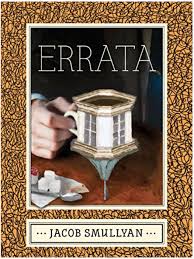
Errata by Jacob Smullyan

To describe a book as unclassifiable is, of course, to classify it, but that fact is entirely in keeping with the spirit of Jacob Smullyan’s Errata (Sagging Meniscus, 72 pages). Comprising thirty short chapters of mini-essays, stories and philosophical aperçus, it straddles numerous genres and grapples with the process of making sense.
Continue reading →

Why I started Dactyl Review

I had been director of the Dactyl Foundation in NYC for a dozen years, organizing art-science collaborations and hosting poetry readings, before it occurred to me that we were doing nothing to support literary fiction. As a literary fiction novelist myself, I was well aware that these unlikely-to-be-bestsellers could use some support. But it was not immediately clear to me what I could do to help. Hosting readings did not work. Poets tend to turn out for each other and buy each other’s work; they dedicate poems to each other and even write poems about each other’s poems, but not literary fiction novelists; they are as independent as cats. They keep to themselves, don’t do reviews, fear influence, and reserve their admiration for dead authors.

I was such a writer, I realized. What could I do to get mavericks, like myself, to form a community?
Continue reading →

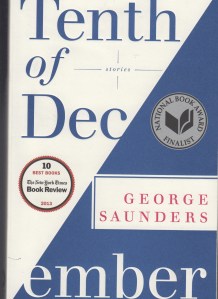
Tenth of December by George Saunders

In a recent rant I wrote on the sad state of the contemporary American short story, I railed against what is sometimes known as ‘The New Yorker story,’ that all-too-common pedestrian thing called “domestic literary fiction.” Happily, there are always exceptions to egregious trends, and George Saunders (Tenth of December, Random House,  272 pages), who is a contributor to The New Yorker, is a big one. Exception, that is.

How is his fiction different from the normal, run-of-the-mill domestic stuff—the kind of fiction I can’t stand? A good place to begin would be with a comparison between his Tenth of December and another book of short stories recently published, The Refugees, by Viet Thanh Nguyen. I picked up Nguyen’s book with high expectations, having read his novel, The Sympathizer, which has great writing, wonderful sentences on every page.
Continue reading →
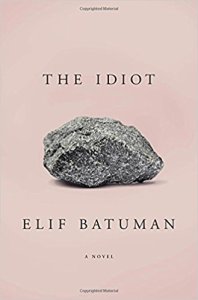
The Idiot by Elif Batuman

The Idiot (Penguin Press, 423 pages) is a debut novel by a young writer who promises to do big things in the future. Apparently the title, borrowed from Dostoevsky, refers to the main character and narrator of the story, Selin Karadag (the g is silent), who is a young woman from New Jersey of Turkish background (like the author herself). Far from being an idiot, Selin—in this novel prominently featuring words and languages—is highly intelligent. At age eighteen, as she enters Harvard University, she already speaks English and Turkish fluently, has a passable knowledge of Spanish. Over the course of the book she studies, as well, Russian and Hungarian. Her quest for new words is insatiable. Continue reading →

Worthy of This Great City by Mike Miller

This tale of the inner workings of city politics in Philadelphia, Worthy of This Great City (Jam Publishing, 249 pages), is what you might term an impressionistic novel. Meaning that it consists of a plethora of descriptions of people and scenes with very little progression of plot. The reader steps back from the many colored dots and contemplates the thing as a whole, and that’s when it begins to come into focus.

Teeming with characters who play minor roles, the book has essentially only two main characters. The first of these is Constantine Manos, an investigative journalist, who is doing a feature article on the second, Ruth Askew, a radio personality on a local station and the wife of Councilman Thom Askew. Continue reading →

The Tale of the Bastard Feverfew: One Man’s Journey into the Land of the Dead by U.R. Bowie

I like a book that’s unafraid of big themes, and this one has a beauty: mortality itself, the reality waiting behind our illusions of security. It’s a mythic idea, Orpheus’ descent into the underworld, and Bowie clearly intends us to understand it in terms of the universal as well as the particular.

The Tale of the Bastard Feverfew
(Ogee Zakamora, 342 pages) begins rather slowly and at too much length, but pacing is less of an issue once the Palm Sunday riot at the Southwest Ohio Correctional Facility is fully underway and the initial explosion of violence settles into unmitigated tension. Length works then, mimicking the ongoing, endless strain. Personalities emerge, and we begin to hold our breath. Continue reading →

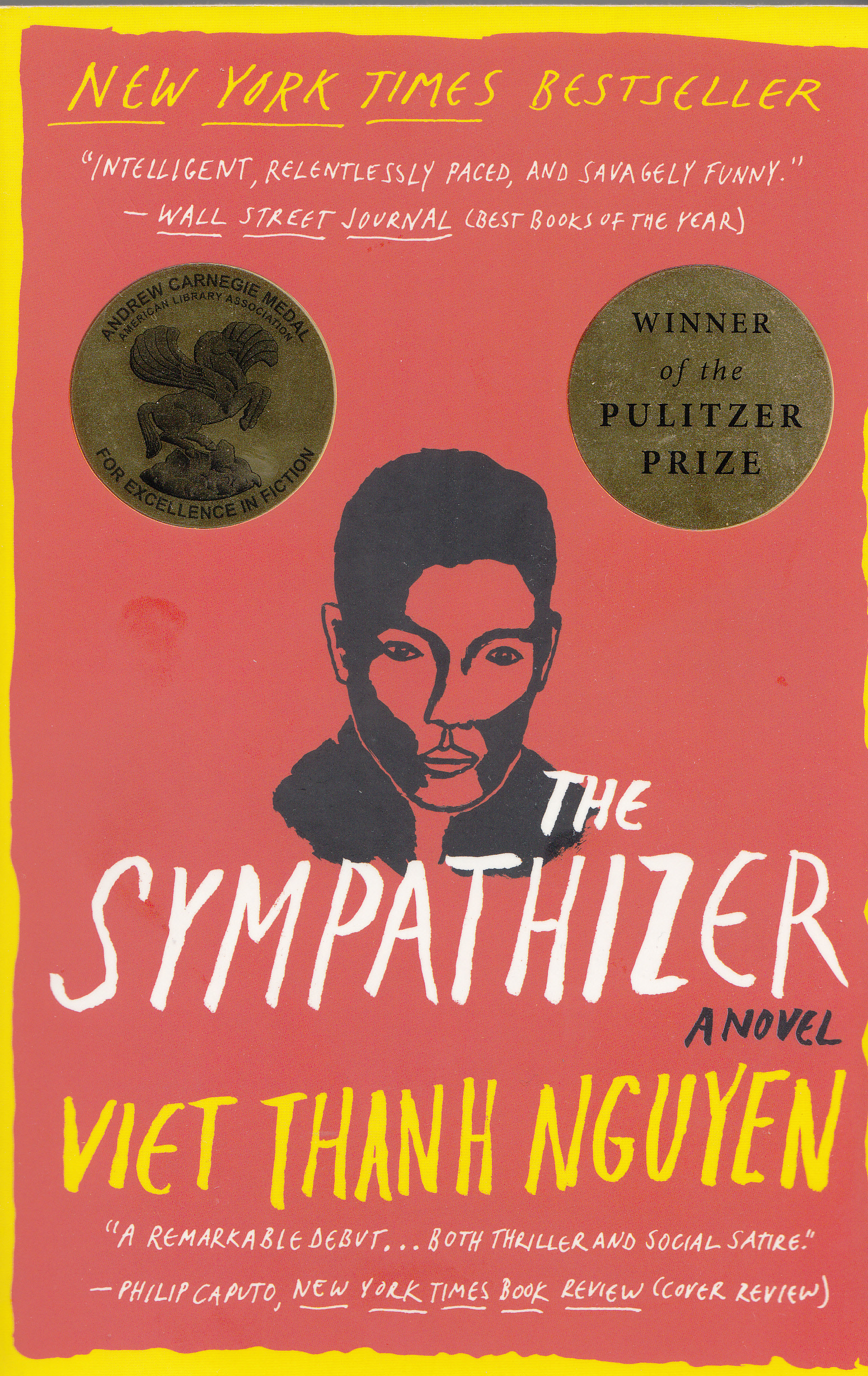
The Sympathizer by Viet Thanh Nguyen

Don’t bother reading all the blurbs that go with the paperback edition of this book (The Sympathizer, Grove Press, 382 pages). Just read the first page; already you know you are in the presence of a talented writer. Here’s how we begin:

“I am a spy, a sleeper, a spook, a man of two faces. Perhaps not surprisingly, I am also a man of two minds. I am not some misunderstood mutant from a comic book or a horror movie, although some have treated me as such. I am simply able to see any issue from both sides.” Continue reading →

The Free World by David Bezmozgis

bezmozgis-cover-the-free-worldAs a child on his way to a new home in Canada, David Bezmozgis himself went the way of the fictitious characters in this novel, The Free World (FSG, 356 pages). The book is set in 1978, and mention is frequently made of what is going on in the world at the time of the action. For example, “in Beirut, the Syrians were shelling the Christians, and Israel was massing troops on its northern border.” Meanwhile, “Begin was in America meeting with Carter and the Egyptian Sadat.” Continue reading →

News of the World by Paulette Jiles

newoftheworldI will avoid the absurdity of defending a National Book Award finalist; we can agree that the western can be literature. We have Larry McMurtry and Charles Portis to underline the point. The clean prose of News of the World (William Morrow, 224 pages) similarly explores universal themes of honor, purpose, age, and culture within a detailed period piece, allowing the conventions of bar fights and gunfights, natives and lawless towns, blacksmiths, willing ladies, and Mexican aristocracy to tell a fresh and compelling tale. Continue reading →

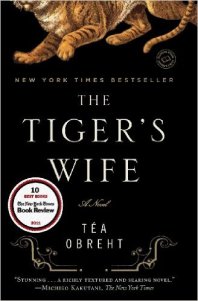
The Tiger’s Wife by Téa Obreht

tigerswifeLike many who have read this first novel, written by a young woman still in her twenties, I marvel at the very existence of the The Tiger’s Wife (Random House, 338 pages). How could someone this young have written a narrative this complicated, this full of insights into human nature, this teeming with art—this GOOD? I have read several reviews of the book online and I marvel once again at the caviling, the failure to appreciate the book on the part of some reviewers. Have American readers become so inured to the genre of “domestic literary realism,” this dull, insipid stuff that dominates the publishing world these days—stories of ordinary Americans doing ordinary things, told, for the most part, in flat ordinary language—that they fail to appreciate something with genuine verve and brilliance? Continue reading →