 DeLillo surely kept a journal while living in Athens and visiting various places in the Middle East and India. He noted scenes, described the climate and vegetation, philosophized on the locals then published his journal as the novel, The Names
 discovered that the narrator, who has been described as a Continue reading →
Category / just literary fiction
Death with Interruptions by Jose Saramago
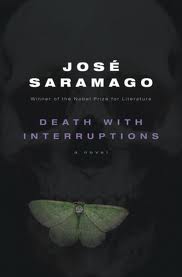 As a reviewer, there are two things you’ll want to know about me before bothering to read further. I only like literary fiction, and I only like literary fiction that’s a bit “difficult,” in one way or another, style or theme, preferably both.
A good theme for me might include controversial social issues, human paradoxes, ethical puzzles– problems to which there are no easy solutions. The concerns of unmarried 32-year-old woman and the plight of a middle-aged man whose affair is petering out are not real “problems,” in my view, nor is the temporary loss of faith in God or humanity. Continue reading →
Garner by Kirstin Allio
 In the opening pages of Kirstin Allio’s debut novel, Garner (Coffee House Press, 232 pages ), young Frances Giddens is found by the town’s postman drowned in Blood Brook. It is 1925, and the town of Garner, New Hampshire is struggling financially. The postman, Willard Heald, is obviously troubled by Frances’s death even as he labors over his handwritten history of the town. His wife watches him with suspicion, for she suspects him of having harbored a crush on the spirited teenager. The summer boarders staying at the Giddens family’s house remain silent, as do those who lift her body out of the stream. No one dares utter the questions lurking in the reader’s mind: Did Frances kill herself or was she murdered? And why? Continue reading →
The History of Love by Nicole Krauss
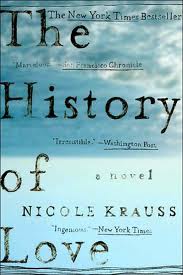 Nicole Krauss’s astonishing novel The History of Love (W. W. Norton & Company 252 pages), about a manuscript that survives the Holocaust, a flood, broken friendships, a plagiarist, misunderstanding, and obscurity has all the heart and intelligence of the best fiction being published today. Elderly Leo Gursky is afraid of dying unnoticed, and he plans his days so that people will see him and remember him. Among other schemes, he makes a scene in Starbucks and poses nude for a drawing class. Leo wasn’t always this lonely. Decades before, in a small town that was then part of Poland, he fell in love with a girl named Alma. He wrote a book Continue reading →
Yellow Dog by Martin Amis
 “Male violence did it.” Martin Amis has a bit of a reputation for making sweeping, declarative statements like this one that ends the first paragraph of Yellow Dog (Mirimax, 339 pages). I’ve read all of Amis’ books except Pregnant Widow and Koba the Dread (on my list, next) and I’m very familiar with the Amis conception of gender. I can make sweeping generalizations about his Men and his Women. Continue reading →
The Mysterious Secret of the Valuable Treasure by Jack Pendarvis
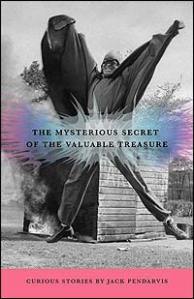 In The Mysterious Secret of the Valuable Treasure (MacAdam/Cage Publishing, 183 pages), Jack Pendarvis has the kind of wit that ambushes you – and then bludgeons you until you can no longer suppress the laughter. This collection of nine stories and a novella mocks bad writing and moronic thought through a complete submersion in each, with protagonists believing in absurd premises (like the dead-beat husband who imagines himself as a famous historian and the unemployed drinking buddies who want to be writers without doing the work.) The subtitle – “Curious stories” – Continue reading →
An Unfinished Season: A Novel by Ward Just
 Ward Just’s novel about the loss of innocence is the type of novel that can sneak up on a reader with its unassuming style and emotional power. Told in the steady voice of narrator Wils Ravan, An Unfinished Season (Houghton Mifflin Harcourt, 251 pages) is set mostly in and around Chicago during the 1950’s. Wils, who will soon enter the University of Chicago, spends his summer divided between working for a tabloid newspaper and attending the obligatory debutante balls: seersucker jacket by day, tux by night. These Continue reading →
Cotton by Christopher Wilson
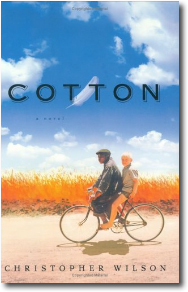 The title character of Christopher Wilson’s second novel, Cotton (Little, Brown, 320 pages) begins life as a blonde, white, blue-eyed boy born of a black mother. Lee Cotton’s problems are compounded by another oddity, his ability to hear the thoughts of both the living and the dead. If that were not enough, Lee discovers that his life holds surprising, even shocking, turns that ensure he will never fit in anywhere. First he survives a brutal, racially motivated assault that leaves him a John Doe, assumed to be white, in a neurological ward, and then, through a series of events, he undergoes major transformations that always Continue reading →
Black Dogs, by Ian McEwan
 Black Dogs: A Novel

