 I will avoid the absurdity of defending a National Book Award finalist; we can agree that the western can be literature. We have Larry McMurtry and Charles Portis to underline the point. The clean prose of News of the World (William Morrow, 224 pages) similarly explores universal themes of honor, purpose, age, and culture within a detailed period piece, allowing the conventions of bar fights and gunfights, natives and lawless towns, blacksmiths, willing ladies, and Mexican aristocracy to tell a fresh and compelling tale. Continue reading
Tag Archives: interiority in fiction
shows what’s going on inside characters’ heads
The 2016 Dactyl Literary Fiction Award goes to Sea of Hooks by Lindsay Hill
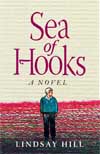 Sea of Hooks (McPherson & Co) was nominated by Barbara Roether, author of This Earth You’ll Come Back To. In her review of Hill’s unusual novel, Roether writes,
There is a paradox that floats through the Sea of Hooks, which is that the experience of reading it is almost the opposite of how it is written. That is to say, while the story is told in its short collage-like segments, their effect is an almost seamless classical narrative. The way sections move from multiple perspectives, dreamtime, real-time, then meld together with such cohesive and penetrating storytelling, is a testament to the author’s insightful eye for detail and character.
Andrew’s Brain by E. L. Doctorow


Naked Singularity by V. N. Alexander
 One of the many dark beauties of Victoria N. Alexander’s new novel, Naked Singularity (Permanent, 189 pages) is that, not only is it the proverbial good read, it is also an a proverbially brilliant one. Alexander — holder of a Ph.D in English from CUNY, Graduate School — has dished up a heart-stoppingly beautiful heroine who holds similar degrees in teleology (the study of why) and she thinks, and writes, like a dream. Witness this sample from a soliloquy by Hali on death: “You had thought death would at least be romantic, but now you realize there is nothing to be thankful for-how vacuous, how colorless, how without pity, how without regard for your intentions . . . . ” This, from a piece of popular fiction, is almost asking too much in the matter of sheer, unabused style.
Unfortunately, both narrator and author have run up against that same ontically insurmountable obstacle as described above: Hali’s beloved father, former pipe fiend Dave MacDonald, is, as we join the proceedings, being slowly undone, in sickbed and out, by a gross cancer that proceeds from mere discomfort of the throat areas to grueling pain of the neck and head, a progression unforeseen by his bubble-brained doctors to the utter despair of this wife and three daughters, including Hali.
Blinding: The Left Wing by Mircea Cărtărescu
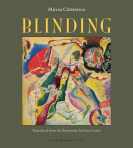 It starts in adolescence. The questions come to you while lying in bed (certainly now with a growing awareness of your sexuality), the walls of your room expanding into endless grainy darkness, as if the room itself could encompass the entire world: why am I here, why is there anything at all?
The questions may haunt you at age 13 or 15 or 17, but by adulthood they tend to feel banal. Unanswerable, impossible, if taken seriously debilitating, they are in a word blinding, and so you tend to avert your gaze. But suppose you can’t, suppose the inviolable white light only draws you closer, to madness possibly, to paint or write or drink or pray (to what God, tell me?) almost certainly. And so perhaps you scribble, the pages of your notebooks filling with furious script, like eons of sediment piling into sad mute mountains no one else will ever excavate or carve or climb. Continue reading
Dactyl Foundation Literary Fiction Award 2013
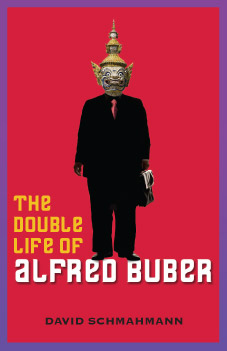
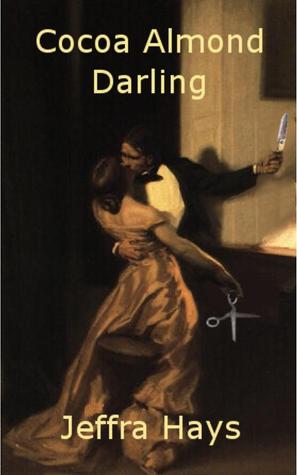 Because we were unable to give awards in 2011 and 2012, due to lack of qualifying entries, we decided to give two awards in 2013. The first award goes to The Double Life of Alfred Buber by David Schmahmann, which was reviewed by top DR reviewer Charles Holdefer. The second award goes to Cocoa Almond Darling by Jeffra Hays, which was reviewed by Peter Bollington, also a top DR reviewer, and VN Alexander, DR editor. Both authors receive a $1000 prize. Congratulations to David and Jeffra for their fine work.
Cocoa Almond Darling by Jeffra Hays
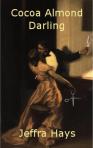 Cocoa Almond Darling (Kindle, 126 pages), by Jeffra Hays, is a rather intense, deliberately-paced story about a tailor Mr. Benton, his assistant Milly, and their daughter Nicky. The main action seems to be set in the 1960s, give or take a decade, and the story is told entirely from Milly’s perspective. The novel’s limited first-person narration is masterfully rendered by Hays, who allows the reader to experience a degree of empathy not possible except through the lens of skillful realist fiction. The language of the novel is plain. The narrator is not a gifted poet, nor especially clever or funny. She is not given to much analysis, but she does pay attention to detail, and she is sometimes capable of rather admirable self-awareness and honesty. Continue reading
The Untouchable by John Banville
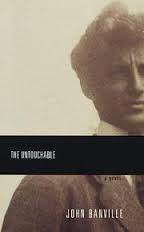 When Banville is writing at his best, he tends to reminisce about people and places rather than tell a story. In The Untouchable (Knopf, 668 pages), Victor Maskell, an Irishman living in England, becomes a spy for the Soviets during World War II. The book begins when the elderly Sir Maskell’s secret past has been revealed in the press. A young biographer, Serena Vandeleur, comes to interview him, and he takes the opportunity to look back over his life. Banville’s most artful writing is to be found in the plotless parts of the narrative, where he is working on characterization by relating memories of his childhood and young adulthood. Continue reading
Cocoa Almond Darling by Jeffra Hays
Jeffra Hays’ Cocoa Almond Darling (Smashwords 2011, 126 pages) is the story of Millicent Randolph, survivor of a bad marriage and starting over in tough circumstances. These include finding a place to live and a job. She finds work in a sewing shop and enjoys a brief, happy relationship with her employer, in which she becomes pregnant although he is married. Her difficulties are then resumed through a long, turbulent aftermath to this affair. The turmoil continues following the birth of her child and on up to this daughter’s marriage and birth of her own daughters, when Milly becomes a grandmother. Continue reading
The Sojourn by Andrew Krivak
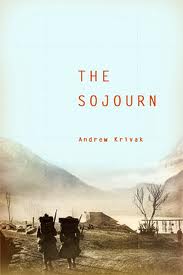 There will, unfortunately, always be a need for books about war, and this need takes many forms. In The Sojourn (Bellevue Literary Press, 191 pages), Andrew Krivak successfully defends the parish of the novel. Although the harsh imperatives of history require much sifting of facts, places and victims—synthesis and hindsight are essential, as part of our troubled species’ perverse CV—the novel, with its relentless subjectivity and its bloody-minded insistence on the plight of individuals, brings its own kind of necessary testimony. Continue reading
 Dactyl Review