The Dactyl annual award returns

The last “annual” award was given in late 2019. The lockdown and rollout were unsettling for everyone. I felt it keenly. After that, I was tapped to work full time as an editor for a political/health related publication. I was distracted. That’s not much of an excuse, but it’s the only one I’ve got.

I will be considering all the books that were nominated in the interim. I thank all the reviewers who kept the reviews coming while I slacked.

For more information about the award see this page.

If you would like to donate, please follow this link.

Best,

V. N. Alexander, editor

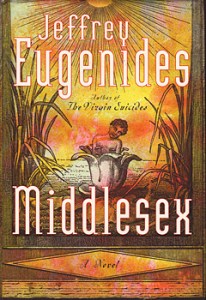
Middlesex by Jeffrey Eugenides

Like a hermaphrodite, Middlesex (Farrar, Straus and Giroux) by Jeffrey Eugenides is composed of two parts that are not usually joined together.
The first half of this 529-page novel is a memoir of an average Greek-American family living in Detroit. I was expecting a story about a person with genetic mutation that deeply affects his identity and sex life, but what is presented in that first half of the novel is a nostalgic tale of a Greek couple fleeing the Greek-Turkish war in 1922, settling down, in what was then becoming the Motor City,  having children, running into financial problems, and surviving a race riot.

None of this had much to do the immigrant couple’s grandson (née granddaughter, apparently). That novel didn’t start until the chapter called “Middlesex” on page 253 where an amazing coming-of-age story finally begins to unfold. Cal/Calliope was born with undeveloped genitals and was mistaken for a girl until puberty started to try to catch his body up at fourteen. Continue reading

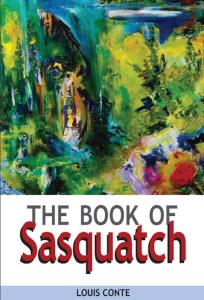
The Book of Sasquatch by Louis Conte

Part allegory, part action novel, The Book of Sasquatch (City Bear Press, 230 pages) by Louis Conte views humanity through the eyes of a misunderstood monster.

Flirting with magical realism, this novel gives Big Foot highly-evolved capacities for sight and hearing, allowing him to perceive what humans cannot, while remaining unseen. He mostly surveils human activity through windows and from the trees above. The humanoid can also communicate telepathically with others of his tribe; he can cover ground almost as rapidly as the crow flies, all of which skills make him a near-omniscient narrator, who relates the activities of the townspeople of Deception Falls, as they deal with the consequences of modern development and changes in local demographics.

We can say Sasquatch is a monster insofar as he is prone to let loose his righteous rage against those who harm the powerless. He is a figure of retribution. He is the spirit of the pristine forests of North America. The Big Foot tribe is aligned with Native Americans. Their ancestors took revenge against early settlers who brutally killed their friends and they have walked “in the shadows,” cursed ever since, and banished like Cain. Continue reading

A Book with No Author by Brent Robison

If the code, “Brent Robison,” were to undergo a random mutation—which in the writing world we call a typo—more likely than not, that “n” in the first name would jump, as even genes sometimes do, to the last name, where, as “Robinson,” it would create a more stable configuration.  And, of course the now isolated and wobbly “t” in “Bret” would likely undergo reduplication—as giraffe vertebrae have done—leaving us with the better reinforced product “Brett Robinson.”

Such are the circumstances that may lead a man to fancy he has a similarly-named double. If he is a writer of excellent literary fiction, he will take that fancy far. If he also moonlights in some other profession, say, as a photographer or videographer, the twinning can take on multiple dimensions. Continue reading

Zone 23 by C. J. Hopkins

In his novel Zone 23 (SS&C Press, 483 pages) expat playwright C.J. Hopkins depicts a society, much like ours at its worse — some six or seven hundred years in the future — when any departures from prescribed ways of thinking are pathologized. Being melancholy, pondering larger philosophical questions, or contemplating the lack of fairness of the system can earn one a diagnosis of mental illness. Virtually everyone is on medication. Those who can’t be controlled by medication are deemed “Anti-Social Persons” and are removed from the society of “Normals” and relegated to various zones of abandoned and bombed-out cities, where they are eventually blown to bits by gamer-controlled drones.

Human reproduction is the central theme. That, too, has been pathologized. Continue reading

Machines Like Me by Ian McEwan

Machines Like Me (Nan A. Talese, 352 pages) by Ian McEwan is set in the possible world of the 1980s if Alan Turing had not died in 1954, Kennedy had not been shot in Dallas, and Britain had not won the war in the Falklands. In the story, Open Source information has allowed technological progress to sprint ahead, and the automatization of work is leading, first to high unemployment and then, presumably, to the creation of a universally idle population supported by the labor of machines. The hero, Charlie Friend, has recently purchased a life-like robot named Adam and he and his new love interest Miranda Blacke will together train and condition Adam to develop a personality and consciousness. Continue reading
Hiking Underground by Amy Smiley

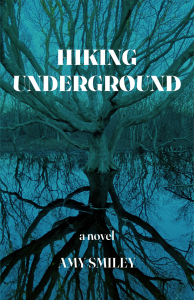
In Hiking Underground (Atmosphere Press, 203 pages), three urban naturalists explore the relationship between art and reality in episodic reveries about nature. Although the narratives ostensibly take place mostly in parks in Manhattan and Maine, the real action is in the minds of the characters as they explore the great outdoors and grow as artists and as individuals.

It worked, thematically, for me to think of the three main characters, Adam, Alice and Emma, as the same person at different stages of development. In the story, Adam is Emma’s six-year-old son; Alice is Emma’s student and Adam’s babysitter; Emma is a professional artist and a teacher. The book is divided into sections dedicated to each one of them in turn, although the focal point does visit different perspectives within each section. Adam’s sections are a portrait of the artist as a young child; Alice’s are of the artist as a student, whose emotional memories need resurrecting; Emma’s are of the consummate artist who is satisfied with her creations and begins the body of work that unites her past with her future. Continue reading

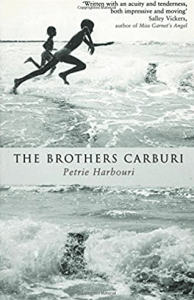
2021 Dactyl Foundation Award goes to Petri Harbouri

In his review of Petri Harbouri’s novel, The Brothers Carburi, U. R. Bowie, writes:

What do I like best about this book? I like a lot of things about it, but I like best the way the author loves words. Here is a description of what [Giovanni Battista Carburi], or any good physician, should be doing: “wrestling with obdurate diseases and overpowering them with an armamentarium—a good word, this—of powerful medicines.” The author loves words. Is there a better reason for writing creative literary fiction than a love for words? No. There is no better reason.

Apologies for the delay in announcing the award. It took a while to make contact with the author!

Petri Harbouri’s latest novel is Our Lady of the Serpents from Recital Publishing.

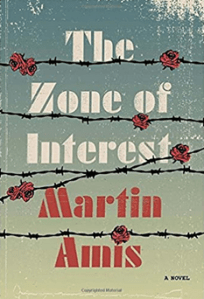
The Zone of Interest by Martin Amis

In Martin Amis’ The Zone of Interest (2014), set in a Nazi death camp, the Commander, Paul Doll, has his wife, Hannah, and two daughters living with him in the “zone,” where the smell of rotting flesh from the mass graves functions as a persistent clue that things have gone very, very wrong in the world.

How did the German civilians go about their lives and continue to be human beings in such an atmosphere? That’s the question that must have compelled Amis to write this novel. While no sane person can fully imagine the answer to that question, Amis creates a few plausible stories that people might have told themselves. Continue reading

Nineteen Eighty-Four by George Orwell

What made Orwell’s 1984 a classic? The language of this high-school required reading isn’t particularly memorable, with the obvious exception of phrases like, “war is peace,” and “ignorance is strength.” The plot swings rustily on an ill-fated romance in the first part. The lovers, Winston and Julia, are unlikable, one-dimensional, selfish anybodies. In the second part, Winston’s torturer O’Brien, like Milton’s Satan, steals the literary stage for a bit, but, even so, his evil nature lacks style, compared to, say, Medea or the Judge. Remarkably, however, I will say, that, as tragedies go, 1984 pulls its hero down lower than any Greek drama or Cormac McCarthy novel that I can think of. Winston Smith ends in total dehumanization when he accepts Big Brother into his heart as his savior.

It may be the bleakest book.

What made the book so popular—beyond its utility to American Cold War propagandists targeting Soviets—is that the literary naturalism brought the imagined surveillance state into reality. The gritty dismal future was made concrete and literal. Fully realized fear powerfully attracts readers. This is your future. Here we are. Continue reading