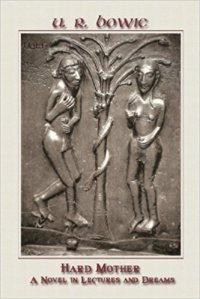
 Russia. Russia. Russia. Ever since the Wicked Witch of the West succumbed to the Reality Circus Clown, the popular press has been serving up reconstituted Cold War propaganda, declaring that the Russian “enemy” is brainwashing us through Facebook posts and massaging our malleable minds via sexy Russian public television hostesses. Clapper, former U.S. intel head, went so far as to warn us that all Russians are genetically predisposed to lying and meddling.
Before we learn to love the idea of trying to bomb them into oblivion, let’s consider the question of the Russian Soul. Who are these people? What characteristics do they share, if any, with you and me?
U. R. Bowie offers his meditation on Russianness in an extraordinary travel log through Ultimia Thule, the farthest point, exploring dreams, lectures and diaries. Hard Mother (Ogee Zakamora, 429 pages) is a challenging novel; never boring; persistently humorous, it is organized with staggering complexity, interweaving dreams with fiction with anthropology, flashing forward, back and around. The book cover warns the reader to “keep both hands on the wheel.” Good advice. Continue reading

 I had been director of the Dactyl Foundation in NYC for a dozen years, organizing art-science collaborations and hosting poetry readings, before it occurred to me that we were doing nothing to support literary fiction. As a literary fiction novelist myself, I was well aware that these unlikely-to-be-bestsellers could use some support. But it was not immediately clear to me what I could do to help. Hosting readings did not work. Poets tend to turn out for each other and buy each other’s work; they dedicate poems to each other and even write poems about each other’s poems, but not literary fiction novelists; they are as independent as cats. They keep to themselves, don’t do reviews, fear influence, and reserve their admiration for dead authors.
 Sea of Hooks (McPherson & Co) was nominated by Barbara Roether, author of This Earth You’ll Come Back To. In her
 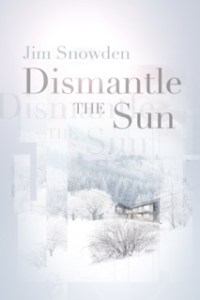 Throughout most of our lives, we can ignore our fears about the threat of non-existence that yawns beyond the casket with as much reality as the non-existence out of which we came into our cradles. But when facing death, our own or that of a loved one, we feel compelled to review the idea of after life. Believers ratchet up their beliefs and atheists, like Hal in Jim Snowden’s Dismantle the Sun (Booktrope, 324 pages), hang tough.

 Dactyl Review