 Black Dogs: A Novel
Author Archives: VN Alexander
The Sea by John Banville

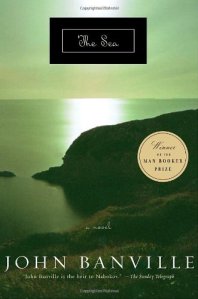 The Sea (Knopf, 208 pages) Spoiler alert. I don’t care for surprise endings, so I’m going to give this one away. If you’re at all like me, you may find it preferable to know more than what the jacket cover reveals about the story, that there was a death in the narrator’s childhood that he revisits in memory as an old man. It isn’t until the end of the book that we finally learn who dies, twin children with whom he had shared a memorable summer. They intentionally drown themselves. And although all suicides may seem shocking and unnecessary, these two especially so. The narrator also conceals Continue reading
The House of Meetings by Martin Amis
The House of Meetings (Knopf, 256 pages) is a narrative delivered as a long letter from an unnamed narrator, an 86-year-old Russian man, to his step-daughter Venus, living in Chicago. He is in the midst of traveling back home after many years in the U.S. The point of his journey is to revisit a work camp in the Artic where he had been held prisoner and slave laborer in the 40s and 50s. Particularly, he wants to visit the “house of meetings,” where, late in the labor camp era, the Soviets had begun allowing some prisoners to meet briefly with their wives. The narrator’s brother, Lev, Continue reading
Walk On, Bright Boy by Charles Davis
 Set in Medieval Spain, Walk On, Bright Boy (The Permanent Press, 144 pages), a story of a boy’s first confrontation with political and religious corruption, strives less for historical accuracy than for universal applicability. Written with lovely economy and sensitivity, it is reminiscent of a fable or of a young adult coming-of-age tale. At the same time, however, it is also complex in its exploration of human foibles and conflicting philosophies.
Continue reading
 (The Permanent Press, 144 pages), a story of a boy’s first confrontation with political and religious corruption, strives less for historical accuracy than for universal applicability. Written with lovely economy and sensitivity, it is reminiscent of a fable or of a young adult coming-of-age tale. At the same time, however, it is also complex in its exploration of human foibles and conflicting philosophies.
 Dactyl Review