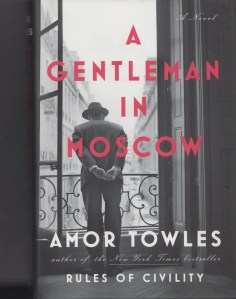
 Some time back I wrote a review of The Conductor, by a writer from New Zealand, Sarah Quigley—the review is available here on the site of Dactyl Review. Set in Leningrad during the Nazi siege of WW II, the book details the life of a rather unassuming and humble musician, who gets his chance to conduct Shostakovich’s Seventh Symphony, dedicated to the besieged city. Quigley’s novel is good, especially sparking for its insights into classical music and its depictions of Shostakovich, but it is full of details that produce unintentional comic effects.
These details are indicative of a writer who knows little about Russian life and culture, speaks no Russian, and may not have ever set foot in the city of St. Petersburg (Leningrad). In one of the biggest howlers in the book, The Bronze Horseman—that statue of Peter the Great in Petersburg and the most famous monument in the whole country—is described as waving a sword in one hand. The fertile imagination of the author conjures up that sword and describes it in some detail: “His sword had a greenish hue towards the hilt, but its tip was bright from the touch of many hands.” Nice sword, except that on the actual statue it does not exist.
I’ve recently read two other novels set in Russia: (1) David Benioff, City of Thieves (Viking Penguin, 2008) and (2) Amor Towles, A Gentleman in Moscow (Viking, 2016). Both books have been well received, attracting favorable reviews and scads of readers. And with good reason, since they both have appealing characters and fascinating plots. Continue reading →
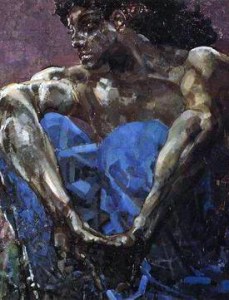 “Only part of us is sane: only part of us loves pleasure and the longer day of happiness, wants to live to our nineties [she did] and die in peace, in a house that we built, that shall shelter those who come after us. The other half of us is nearly mad. It prefers the disagreeable to the agreeable, loves pain and its darker night despair, and wants to die in a catastrophe that will set back life to its beginnings and leave nothing of our house save its blackened foundations. Our bright natures fight in us with this yeasty darkness, and neither part is commonly quite victorious, for we are divided against ourselves.”

 When does a presence become a force to be reckoned with? A few years ago, I became aware of Stephanie Dickinson because her name often appeared in literary magazines. She was a prolific writer, popping up in many places. I’d read a few of her flash pieces, which were strong in imagery, but I’d never read an entire book of her work until now. Her latest collection of short stories, Flashlight Girls Run (
 At first I liked the fact that readers could find every one of my books on the shelf at one place. I liked the way Amazon bought directly from the publisher, cutting out Ingram book distributor, which had become a monopoly. But I always wondered how Amazon could sell books so cheap. Now that they’ve put other booksellers out of business and are getting into publishing themselves, Amazon can begin to eliminate less-than-best-selling inventory.
 Dactyl Review