Commentary on Analysis by George Saunders of Story by Anton Chekhov


“In the Cart” (Yarmolinsy Translation)

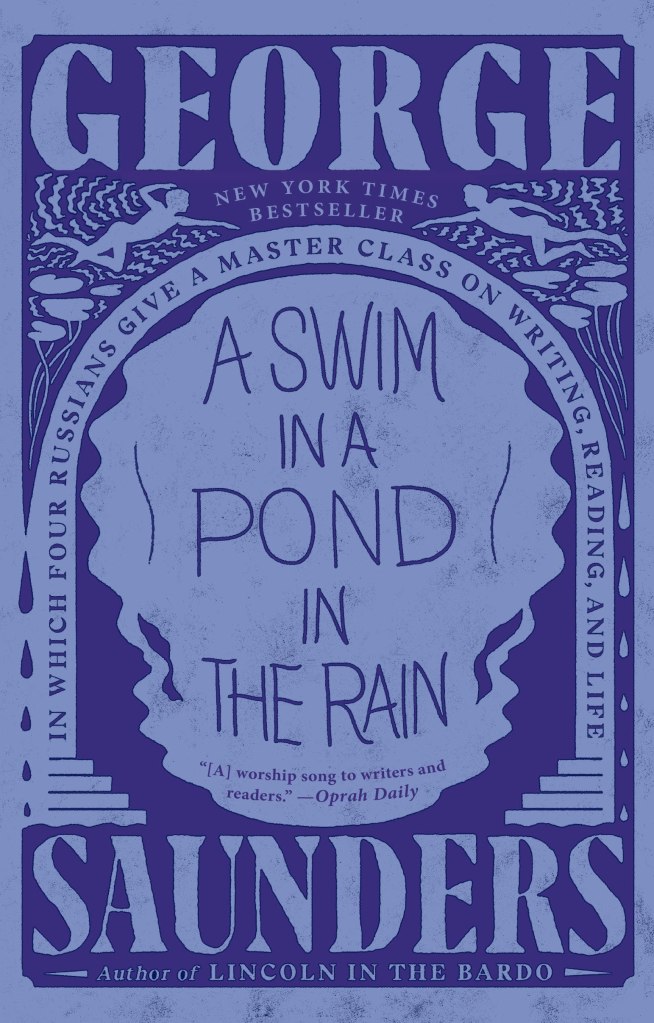
From the book by George Saunders, A Swim in a Pond in the Rain

Note: I taught Russian literature in a university for thirty years. Naturally, I was intrigued when the short-story writer George Saunders published a book detailing how he teaches Russian stories in his creative writing classes at Syracuse University. Among those stories are two by Anton Chekhov that I once taught (“The Darling” and “Gooseberries”) and one by Nikolai Gogol (“The Nose”).

I decided that before looking at the Saunders commentary I would publish my own critical remarks on each story. The result would be an interesting contrast: material as presented by a teacher of Russian literature versus material as presented by a teacher of creative writing. The first story treated by Saunders is Anton Chekhov’s “In the Cart.” I have already posted my critical analysis of that story on my blog, “U.R. Bowie on Russian Literature” and on Dactyl Review. What follows below is my commentary on how George Saunders approaches the story.

Continue reading

“In the Wagon” (“На подводе”), by Anton Chekhov


 Telega (Wagon, Cart) With Wounded Soldiers

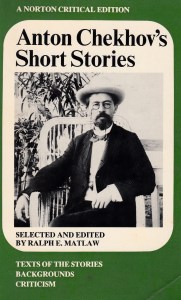
[Note: the story has appeared in English translation under a variety of titles; I know of at least three: “The Schoolmistress” (Constance Garnett trans.), “A Journey by Cart” (Marian Fell) and “In the Cart” (Avrahm Yarmolinsky, the translation discussed by George Saunders in his book, A Swim in a Pond in the Rain). My method, were I to be teaching this story in a course on Russian literature: I would read the original first, then compare translations, trying to pick the best one for my students to read. In quoting here from the story in English I use the Marian Fell translation, which appears in the Norton Critical Edition, Anton Chekhov’s Short Stories (edited by Ralph Matlaw). I have made slight changes in certain passages and have changed her title.]

The Structure of the Story, the Protagonist, the Venality, the “Slice of Life” Continue reading

Renato! by Eugene Mirabelli

Renato! (McPherson & Co, 577 pages) is a vast, rambling, delightful tale about the life and loves of Renato Stillamare, a once noted painter who mourns the decades-long dwindling of his reputation. He is also struck to the core by the loss of his wife, his near life-long love, and his complicated muse. The story is three previous novels merged through adroit craft into one. The first section offers the fantastic family origins in Renato’s mythic grandfather, a man half human and half horse. The second section is set a century later, covering the life of Renato, an aging painter wishing to reclaim his prominence in the art world. The third section follows Renato as he tries to revive his reputation and endure the scorching misery of widowerhood. Continue reading

The Feast of Love, by Charles Baxter

The Title, the Epigraph and the Prelude

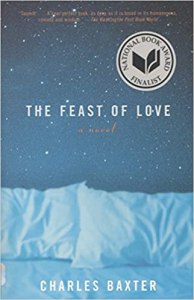
Somebody gave me a copy of this book (Charles Baxter, The Feast of Love, Random House, 2000. Vintage paperback edition, 2001, 308 pp.). It lay about my house for a long time, the bright blues of the cover occasionally calling out to me, “Read me.” I resisted, probably because the title put me off. “The Feast of Love” promises a light read, maybe a melodrama, nothing serious. The book, however, turns out to be a wonderful piece of literary fiction.

Here’s the epigraph, from Samuel Beckett’s Molloy: “Yes, there were times when I forgot not only who I was, but that I was, forgot to be.” Is the novel that follows about forgetting to be? Not really. This book as a whole is about being, and all the messiness of being human in flesh. That epigraph misleads the reader into thinking he’s in for something resembling Kafka, and the “Preludes” part that comes next—first subheading under “Beginnings”—reinforces that expectation of the Kafkaesque. In the prelude the writer Charles Baxter—most people call him Charlie—wakes up in the middle of the night and “cannot remember or recognize myself . . . I can’t manage my way through this feeling because my mind isn’t working, and because it, the flesh in which I’m housed, hasn’t yet become me.” Continue reading

The Deep Translucent Pond, by James Shelley

In James Shelley’s The Deep Translucent Pond (Adelaide Books, 192 pages), the Black Magus, “Cleveland’s greatest poet since Hart Crane,” is getting on in years and mentors his last two aspiring poets in an esoteric fellowship program known as the Triangulum. The Black Magus explains,

“The Triangulum Galaxy is the most distant light we can see with the naked eye. It contains a nebula, NGC 604. Radiation from new stars blows holes in the nebula, providing a view into its black interior. A star-birthing factory…The Tenth Triangulum’s first order of business is to understand holes.”

With references to Da Vinci’s Last Supper and triangles as the most stable shape, the novel opens with elements that are reminiscent of The Da Vinci Code. Jerome Konigsberg, one of the poets who has won the fellowship on the basis, in part, of a poem titled “The Regaining,” presents the poem in an introductory session:

I am realistic enough to know
If I stumble upon The Grail
It won’t be a chalice, haloed in
radial spokes of blinding white
I only hope
like the sighting of a rare bird
I recognize it before it slips away
long enough
to help keep my head above water

Scanning the horizon for rescue:
the next shimmer of light.

Continue reading

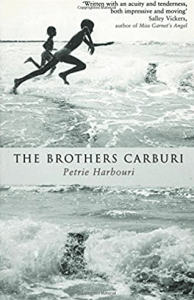
2021 Dactyl Foundation Award goes to Petri Harbouri

In his review of Petri Harbouri’s novel, The Brothers Carburi, U. R. Bowie, writes:

What do I like best about this book? I like a lot of things about it, but I like best the way the author loves words. Here is a description of what [Giovanni Battista Carburi], or any good physician, should be doing: “wrestling with obdurate diseases and overpowering them with an armamentarium—a good word, this—of powerful medicines.” The author loves words. Is there a better reason for writing creative literary fiction than a love for words? No. There is no better reason.

Apologies for the delay in announcing the award. It took a while to make contact with the author!

Petri Harbouri’s latest novel is Our Lady of the Serpents from Recital Publishing.

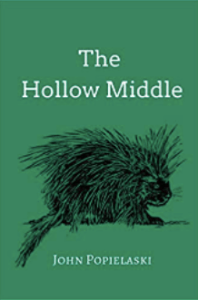
The Hollow Middle by John Popielaski

In John Popielaski’s The Hollow Middle (Unsolicited Press, 381 pages), forty-something Albert, an English teacher in a private school, longs to retreat from the human world. Early on, hungover, he looks out on a river and “waits for the compass needle to flutter less.” The answer, he senses, leads back to nature.

Albert’s wife Mary senses their childless marriage has been on some kind of border and, partly for that reason, develops an interest in adopting two ten-year old autistic boys, twins. Albert is drawn into the plan by the generous stipends the couple will receive for the boys’ care, money which can help fund his back-to-the-land dream. Additionally–in keeping with the novel having an ear toward environmental tampering–he receives funds from a settlement with the U.S. Government for his father’s cancerous death after working decades on a radiation tainted site. Continue reading

The Songs and Laments of Loömos, by René de Saint-Denis

With his Loömos book (Laocoön Press, 2021, 128 pp.), the author attempts a presentation of art as an integrated whole. As the subtitle tells us, “Text, drawings, paintings, music and sculpture” are included here. We read the words of the book, but, simultaneously, we interact with everything else. We, of course, do not interact directly with the sculptures by Saint-Denis—here we must be content with their visual representations. Nor do we hear the actual music, as this is not an audiobook. But the final section, “Songs and Laments,”—four separate pieces comprising a total of fourteen pages—consists entirely of musical notations.

Therefore, in order to “hear” the music of the final section you have to be a musician yourself, able to read the notes provided on paper. The author may have considered publishing an audiobook, or including a CD of the final section with this paperback. But then again, given certain unique and avant-garde features of Loömos, he may have deliberately intended the final section not to be played. So as to achieve something like what the composer John Cage created when he wrote his famous composition consisting of silence. All the musicians sit in stillness on the proscenium, holding their instruments, while the conductor stills his baton and all his gesticulations. The “music” consists of isolated coughs and throat-clearings from the audience, plus a few car horns blowing and ambulance sirens from the outside world.

Continue reading

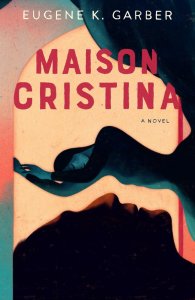
Maison Cristina by Eugene K. Garber

Where is Eugene K. Garber now? Some years ago he distinguished himself as a writer of dazzling short stories, many of them with an experimental edge. His Metaphysical Tales won the Associated Writing Programs annual prize for short stories, and a later work, The Historian, took the William Goyen Prize for fiction. Those two books, a dozen years apart, established Garber as an intellectual fabulist, a dazzling juggler of narrative devices, a witty and self-conscious artist with a subversive vision.

Joyce Carol Oates wrote a brief foreword to Metaphysical Tales which sounded more like a warning to readers than an introduction. After remarking on the author’s “extraordinary skill and vision” she wrote, “Garber is also stubborn, eccentric, self-conscious, and so willfully dazzling -– to be a virtuoso, or to be nothing! — that readers must be enjoined not to attempt to read this volume straight through, or even to read more than one story at a time.” And she concluded with, “Like all gifted writers, Eugene K. Garber is not to be understood – or loved – too quickly.” Clearly, that brainy Garber guy was some kind of card sharp, but with words. Continue reading

The Berserkers by Vic Peterson

New Book Announcement

A beautiful woman is found stabbed and frozen in the ice of Lake Much, dressed only in the costume wings and tight corset of a Norse Valkyrie.

Grammaticus Kolbitter, police precinct records clerk by day and keyboardist in a Viking heavy-metal band, The Berserkers, by night, is pulled into the investigation.

What does a records clerk know about solving crime? Reluctantly, Grammaticus embarks on the adventure of a lifetime.

Available through Book Depository (US, free shipping) and Amazon UK. Visit author website: vicpeterson.com

Genre: Literary Fiction, Magical Realism, Thriller