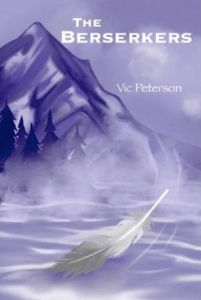
 New Book Announcement
A beautiful woman is found stabbed and frozen in the ice of Lake Much, dressed only in the costume wings and tight corset of a Norse Valkyrie.
Grammaticus Kolbitter, police precinct records clerk by day and keyboardist in a Viking heavy-metal band, The Berserkers, by night, is pulled into the investigation.
What does a records clerk know about solving crime? Reluctantly, Grammaticus embarks on the adventure of a lifetime.
Available through Book Depository (US, free shipping) and Amazon UK. Visit author website: vicpeterson.com
Genre: Literary Fiction, Magical Realism, Thriller

 What made Orwell’s 1984 a classic? The language of this high-school required reading isn’t particularly memorable, with the obvious exception of phrases like, “war is peace,” and “ignorance is strength.” The plot swings rustily on an ill-fated romance in the first part. The lovers, Winston and Julia, are unlikable, one-dimensional, selfish anybodies. In the second part, Winston’s torturer O’Brien, like Milton’s Satan, steals the literary stage for a bit, but, even so, his evil nature lacks style, compared to, say, Medea or the Judge. Remarkably, however, I will say, that, as tragedies go, 1984 pulls its hero down lower than any Greek drama or Cormac McCarthy novel that I can think of. Winston Smith ends in total dehumanization when he accepts Big Brother into his heart as his savior.

 Dactyl Review