 Professor Pedro Ponce’s recent collection, Alien Autopsy (Cow Heavy Books, 55 pages) is a departure from his most previous work Superstitions of Apartment Life (Burnside Review Press, 2008), but the imaginative, elegant, if not sweetly written observations one finds time after time in Ponce’s work have not been sacrificed. The newest collection treads more heavily into realism and more lightly into the magical-realism that often echoes in his short work. Continue reading
Pulp by Charles Bukowski
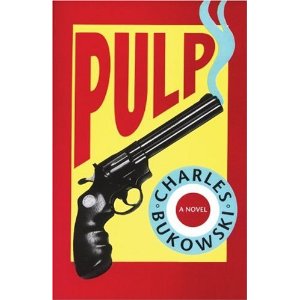 For newcomers to the world of Charles Bukowski, be forewarned: Pulp (Ecco, 202 pages) is probably not the best place to start.
I say this, not because it doesn’t rank right up there with his other books, or because greener readers will fail to grasp the allusions to earlier work it contains, but rather because as his ultimate novel (completed months before his death) Pulp can easily be seen as Bukowski’s final farewell. In it, the aged author takes his readers on one last foray into familiar territories of sex, madness, and death, while at the same time expanding on those themes in brilliant and often unexpected ways. Drawing on science fiction and hardboiled noir elements as well, the end result is a bizarre send-up of genre fiction that is just as hilarious and insightful as anything else he wrote. Continue reading
Shadowplay by Norman Lock
 Shadowplay (Ellipsis Press, 137 pages) by Norman Lock, is the 2010 Dactyl Foundation Literary Fiction Award recipient. Lock’s novella is a dense fable, mixing magic realism with self-reflexivity. The entire story is given to us in miniature at the beginning, such that the novella itself is really a constant retelling–a folding and refolding–rather than an unfolding. A shadow puppet master named Guntur falls in love with Candra, who comes into his theater one day to buy puppets. When she dies of typhoid fever six days later, he falls into despair for many years, until finally he understands how to enter the world of the dead, Continue reading
Shadowplay by Norman Lock
An uncanny tale of the limits and power of story telling, Shadowplay (Ellipsis Press, 137 pages) also works with a mesmerizing and subtle structure where the story repeats and folds into itself over and over again. Among Lock’s best work, it continues the self-conscious fascination and manipulation of the theme of “other” that appeared in works like A History of the Imagination and Land of the Snow Men. Here however Lock’s uproarious and dark-humored wit has been replaced with a different mode: that of a parable or fable. The alienation, vanity, occasional triumph, and seemingly inevitable destruction of the story-teller are almost classically illustrated in this compact and powerful tale. Continue reading
Mefisto by John Banville
 Gabriel Swan is the Faustian hero of Mefisto (Godine Press, pages 233). He is a savant mathematician, with talents that will make him out-of-place among uneducated poor Irish. With a desire to understand the truth of the universe, he believes that numbers will help him sense some “larger” pattern tying everything together. But as in Faust, what Swan does with his opportunities is disappointing. He hooks up with scam artists and junkies and, tragically, ends up being instrumental in his mentor’s efforts to prove there are no larger patterns. Continue reading
Love and Summer by William Trevor
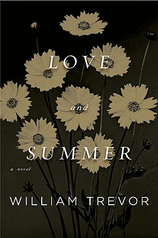 At the age of 81, William Trevor offered his 40th, or 44th book—something along those lines, depending on how you count the work, mainly fiction, novels, novellas and story collections, with some drama, nonfiction, a children’s book and editing interspersed. This latest novel, Love and Summer (Penguin, 2009, 211 pages), is not his best but it is good, in some respects excellent, even singular. Continue reading
Daddy’s by Lindsay Hunter
 Lindsay Hunter’s Daddy’s (Featherproof, 210 pages) is a fairly disturbing look at life in a southern rural area, though I think the book probably is meant to depict many rural areas. What the work is able to do, however, is entertain on more than one level through her craftsmanship in voice. The cold, matter-of-factness with which she writes is met in a simultaneous observational sentimentality, which works to then give us an inner clock-working machine we can hear clicking. Have you ever known a girl who has a deadpan sense of humor and this sort of distant manner yet simultaneously is obviously deep in existential thought? That’s what we’re working with here. Continue reading
The Voting Booth After Dark: Despicable, Embarrassing, Repulsive by Vanessa Libertad Garcia
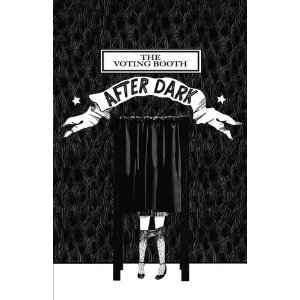 Vanessa Libertad Garcia’s first book, The Voting Booth After Dark: Despicable, Embarrassing, Repulsive (Fiat Libertad Co., 92 pages), is a slim volume of 23 short pieces, some of them poems, many of them first-person or third-person vignettes that capture a few minutes or hours of a given character’s “despicable, embarrassing, or repulsive” life.
Gritty and unflinching, the tone of the book is one of desperation and starkness as each character depicted—Marta, a young, disenchanted lesbian; or Diaz Diaz, a gay fashion designer, for example—speaks to us of their heartbreak, alienation, and sometimes of suicidal plans. The personas that Garcia invokes are products of a society that is too fast-paced, too materialistic, and too shallow for twenty-somethings or thirty-somethings trying to find a meaningful niche in life, as they struggle simultaneously to pay bills, be successful in a career, find true love, or simply forge a connection to someone or something outside of themselves that can make their lives fulfilling. Welcome to the underbelly of Los Angeles. Continue reading
Freedom by Jonathan Franzen
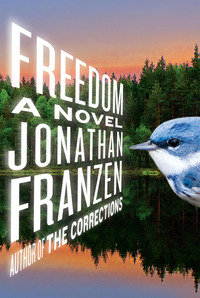 Americans have always had, in addition to wide-spread arrogance in imagining that their current literature is the best, the inferiority complex for not producing the Great Novel, nothing that could be compared with War and Peace and Brothers Karamazov or David Copperfield and Vanity Fair or Remembrance of the Things Past and Lost Illusions or The Magic Mountain and Tin Drum, or Don Quixote, or One Hundred Years of Solitude. Of course, it could be argued that Moby Dick, Invisible Man, Grapes of Wrath, The American Pastoral (Roth addresses terrorism before it became the central American problem) or Continental Drift by Russell Banks are great American novels, but somehow the critics and reviewers are still dreaming of The Great American Novel. And this novel has been anointed as such by many. Continue reading
Stories II by Scott McClanahan
 Scott McClanahan is an author gifted with stating intuition implicitly. A part of our work as writers is to make sense, to distill, to state it both beautifully and with clarity, and yet in McClanahan’s most recent collection Stories II (Six Gallery Press, 155 pages), not for a moment, does the writing feel put on, on purpose, pushed. However, in these 155 pages, we find ourselves bathed in truth, relating universally, unequivocally taken to these very specific and personal stories, stories written in a very distinct Southern/Appalacia dialect, at that. Continue reading
 Dactyl Review