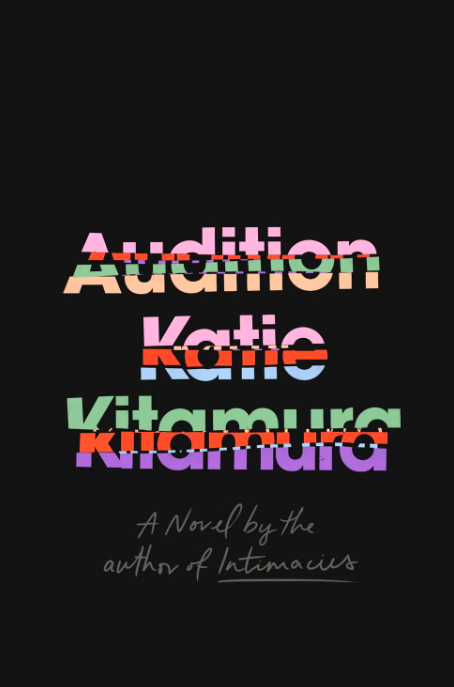
I found this novel because I’ve become interested in the “weird girl” sub-genre of literary fiction and Audition by Katie Kitamura was suggested by Forbes as one of the best of 2025. Weird girl lit usually features a young woman who “embraces her alienation from the world.”
Having been set up in my expectations, I was disappointed to find that the female (unnamed) narrator of Audition is not weird. But like so many New York actresses, she is neurotic. Her life, husband, son, friends and New York apartment all fit very neatly within the stereotype of a female in theater. Her struggles are the garden-variety domestic and work-related kind. She is worried about turning fifty; she and her husband have grown apart; their adult son moves back into their small apartment. What is unusual (but not weirdly cool) about the narrator is the way she narrates, in excruciating detail, all the intentions and unexpressed feelings of other people. She suspiciously reads the minds of her husband and son, even a passing waiter or strangers sitting at an opposite table. Here is the opening scene:
The host asked if I had a reservation. I said that I was meeting someone and indicated the young man seated at the back of the restaurant. Xavier. It occurred to me that the host must have been the person to seat him at the inhospitable table, and I saw a flicker of surprise cross his features as I pointed. He looked quickly from my face to my coat to my jewelry. It was my age, above all. That was the thing that confounded him. He gave a tight smile and asked me to please follow him.
Kitamura writes in the close first-person. If I were her editor, I would have found myself asking, Have you considered using the omniscient point-of-view?
Continue reading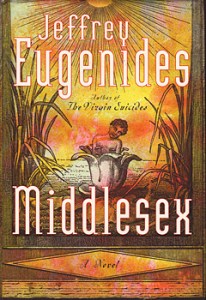 Like a hermaphrodite, Middlesex (Farrar, Straus and Giroux) by Jeffrey Eugenides is composed of two parts that are not usually joined together.


 In Disgrace (Penguin Books, 220 pages), Professor David Lurie’s crisis begins with his foolishly taking advantage of one of his students, then proceeds to his inadequate response under enquiry. Gradually, the story’s emphasis on “disgrace” pervades the entire narrative. It extends to white dominance and native reprisal in South Africa, to cruelty with animals, and to self-obsession within the human community generally.
 Dactyl Review