Emma Who Saved My Life by Wilton Barnhardt

emmaEvery once in a while a reviewer receives a book he puts on the shelf and just wishes it would go away. Emma Who Saved My Life (St Martin’s, 496 pages) is that kind of book.

Cursed with what is arguable the worst title ever given a novel ( and double-cursed with a depressingly ugly dust jacket), it had press releases that touted it with superlatives that would make Gore Vidal blush. It’s in the fist person and has one of those woesome post-adolescent narrators. Worse, it’s a first novel by a guy named Wilton who is at Oxford working on a doctoral thesis about Henry James. Continue reading

Isaac: A Modern Fable by Ivan G. Goldman

isaacHow should we suppose poor Isaac felt — son of a father all-too-willing to sacrifice him at the suggestion of some voice in his head? Christians are wont to overlook the obvious horror and absurdity of the Biblical tale. According to some (less awful) Jewish interpretations of events, it was perhaps Satan, as an agent of God, who spoke to Abraham, which would make more sense to those who imagine God to be not quite so sadistic.  Either way though, what kind of man would this traumatized son become?  In Isaac: A Modern Fable (Permanent, 223 pages), Ivan G. Goldman has arranged it so that Isaac, after the mishap at the altar, has been granted the gift of eternal youth. The identity of benefactor is not clear; the gift may be from Satan or from Jehovah. Isaac himself has never been able to decide, as his immortality and eternal youth often seem to him like a curse.

Continue reading

Wanderer Springs by Robert Flynn

wandererUp in that part of state just east of the Cap Rock, south of the Red River and west and north of Wichita Falls is a region of the country the residents continue to call “East Texas,” although, even at 70 mph it is hours from Amarillo, Lubbock or Spur, a half-day from San Angelo and Odessa, and a long, hard, hot day from Ozona or El Paso.

It is a part of the country that rhetorician Jim Cordon once called “terra incognito,” forgotten by most of Texas, ignored by everyone else. It is a hard land, filled with rattlesnakes, mesquite, winters that freeze livestock and people, summers that dry the ground so hard it cracks. Continue reading

The Corrections by Jonathan Franzen

correctionsGifted chronicler of American life, Jonathan Franzen offers a rather quiet plot in The Corrections (FSG, 568 pages), which follows the lives of the Lambert family headed by Enid and Alfred, typical Midwestern parents, whose children have scattered, eager to find their own definitions of happiness.  The oldest, Gary, is a money manager, an asshole son, whose inner workings are described with surprising compassion; the middle son, Chip, is a lecherous and pretentious academic who’s just lost his position and his girlfriend and is working on an autobiographical screenplay that betrays a dreadful lack of self-awareness; the youngest, daughter Denise, is a talented chef who keeps throwing herself into undesirable relationships. Will they succeed?  Is the aging patriarch going completely mad? And why is Alfred  such an unhappy old man?  Will Enid get all her children to come home for one last Christmas together?

Continue reading

The Marriage Plot by Jeffrey Eugenides

marriageplotAs the title confesses right up front, The Marriage Plot (FSG, 416 pages) is all plot, all 19th-century-style plot, with full biographical sketches and family histories for everyone who walks onstage for more than a few paragraphs to alter the action.  Which of the two men will Madeleine, English major and lover of Jane Austen and George Eliot,  end up with? Will it be Leonard, the big, broody sex-crazed boyfriend, a biology/philosophy double major? Or will it be Mitchell, the worshiping-from-afar religious studies student, whom Madeleine’s parents prefer? Continue reading

Andrew’s Brain by E. L. Doctorow

Andrew’s Brain (Random House, 244 pages), by E. L. Doctorow, is the narrative of a brain whose content has been digitized, whose DNA code has been cracked, and which now resides in a vat or has been uploaded to a computer at some Bush-era detention or torture site, unaware that he is no longer embodied, believing himself to be telling his story to a therapist (who, Andrew suspects, may be CIA), sometimes imagining himself to be elsewhere, writing to or phoning his therapist, sometimes visiting his office, but never realizing that he, like any human perhaps, has no true self-awareness because a brain cannot objectively know itself. Continue reading
The Pilgrim of Love: a ludibrium by Charles Davis

pilgrim

“I was pleased to discover in myself an uncanny knack for interpreting the hermetic language of alchemy, as if my book learning had been but a preparation for decrypting enigmatic texts, reading meaning into that which, on the surface, seemed meaningless.”

So says the unnamed narrator of Charles Davis’ The Pilgrim of Love: a ludibrium, an obsessively researched and elaborately plotted parody of an historical romance. (Parody, as I understand the term, is best written by an author who actually loves his target, but who can put some ironic distance between himself and his subject.) The story is set in the abbey of the legendary Mont Michel in 1621, when the absence of roadway access meant visiting pilgrims had to make their way around quicksand between dangerously unpredictable tides. The landscape always plays an important and often symbolic role in Davis’ novels. The pilgrims must interpret the patterns in the sand to avoid sinking in the lise. Continue reading

Dismantle The Sun by Jim Snowden

DTS_cv“Someone had to die for Hal Nickerson to live in the house that he and his wife Jodie bought for a song seven years ago.” So begins this dry-toned, cool, and detached novel Dismantle The Sun (Booktrope Editions, 324 pages) with a line and a sentiment that prove to be something of a mantra for its main protagonist and a lynchpin refrain for the narrative arc. In the world of nature — in the world of man — something has to die for something else to live. Some persons — the Nickersons — include this in their ample proof of the non-existence of a beneficent Creator, while others — the fundamentalists — attribute the state of the cosmos to original and ongoing sin. Both take it all very personally. Hal Nickerson’s atheism in conjunction with that of his wife informs all of his sensibility while providing a certain distance from the most basic issues of life and death, love and hatred. Continue reading

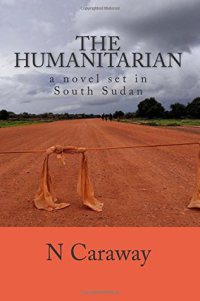
The Humanitarian by N Caraway

humanitarianHow do the powers that bring aid to displaced and starving people spread over a vast continent? The answer is in ways that don’t meet their true needs because these have long been either erased by or made irrelevant to the imperial incursions, power grabs, and internecine intrigues that go hand-in-hand with the delivery of the aid itself. The immediate merit of N. Caraway’s The Humanitarian (E-Publications, 239 pages) is that it doesn’t dwell upon the depredations that are in play and that any informed reader will bring to the book. The horrors that continue on the African continent are well known and provide for much of our daily news consumption. As of his last writing, one of the locales remains a United Nations no-go zone.

Continue reading

The Sea Trials of an Unfortunate Sailor by Kurt Brindley

seatrialsBefore I begin this review, let me first recommend to anyone whom it persuades to read The Sea Trials of an Unfortunate Sailor (Amazon,198 pages), that after doing so they further benefit themselves by looking again at their copy of Herman Melville’s Billy Budd, Sailor that I shall, however, quote from extensively. Kurt Brindley’s accomplishment should come into even greater focus when looked at through the lens of the nineteenth-century classic novel. Continue reading