[October 9, 2025, it was announced that László Krasznahorkai was awarded the Nobel Prize in Literature.] Here is a pertinent citation from Dennis Overbye (NY Times, 12/22/2024): “Everything that scientists have learned tells us that the universe is dynamic, and so is our knowledge of it. Nothing lasts forever, not even forever itself. Stars are born and they die, their ashes congeal in new generations of flash and crash. And so the show goes, until the last, biggest black hole gasps its last puff of subatomic vapor into the void.
“We don’t know what wonders await discovery back in the first nanosecond of time or in the yawning eons yet ahead. We don’t know why there is something instead of nothing at all. Or why God plays dice, as Einstein put it as he mulled the randomness implicit in quantum mechanics, the house rules of the subatomic realm.”
Continue reading


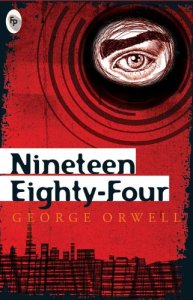 What made Orwell’s 1984 a classic? The language of this high-school required reading isn’t particularly memorable, with the obvious exception of phrases like, “war is peace,” and “ignorance is strength.” The plot swings rustily on an ill-fated romance in the first part. The lovers, Winston and Julia, are unlikable, one-dimensional, selfish anybodies. In the second part, Winston’s torturer O’Brien, like Milton’s Satan, steals the literary stage for a bit, but, even so, his evil nature lacks style, compared to, say, Medea or the Judge. Remarkably, however, I will say, that, as tragedies go, 1984 pulls its hero down lower than any Greek drama or Cormac McCarthy novel that I can think of. Winston Smith ends in total dehumanization when he accepts Big Brother into his heart as his savior.

 Dactyl Review