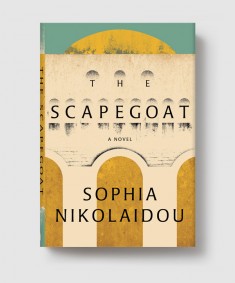
 As I begin to write this on January 20, 2015, the news from Buenos Aires isn’t good. Albert Nisman, the federal prosecutor assigned to finally uncover the truth about the 1994 bombing of the Argentina Israelite Mutual Association, a Jewish community center, was found dead in his apartment. Nisman was about to reveal a high-level government conspiracy to cover up Iran’s role in the bombing, which killed 85 people. Argentina has long struggled with corruption and politicization of its government institutions, making it almost impossible for the nation to confront its demons—from sheltering Nazis to the 1970s/1980s rounding up and killing of leftists, communists, intellectuals, and Jews who became known as the desaparecidos opposed to the ruling right-wing Junto. The powerful are usually protected. Continue reading
Category Archives: just literary fiction
The Sea Trials of an Unfortunate Sailor by Kurt Brindley
 Before I begin this review, let me first recommend to anyone whom it persuades to read The Sea Trials of an Unfortunate Sailor (Amazon,198 pages), that after doing so they further benefit themselves by looking again at their copy of Herman Melville’s Billy Budd, Sailor that I shall, however, quote from extensively. Kurt Brindley’s accomplishment should come into even greater focus when looked at through the lens of the nineteenth-century classic novel. Continue reading
Support Dactyl Review
 Dear Friends,
In the past four years, Dactyl Foundation has concentrated on growing the literary fiction community, which has dwindled over the past twenty years as publishing houses began to focus on big sellers ignoring the niche market of fine literature. In 2010, we launched Dactyl Review, a community of literary fiction writers who review literary fiction and nominate works for Dactyl Foundation’s $1000 annual prize. The contest is open to any living literary fiction writer, regardless of date of publication or type of publication. We are especially interested in books that came out some time ago and have not yet received the recognition they deserve.
Support this worthy project now. There are a lot of great writers out there who need encouragement. We can’t do it without you. Thanks in advance for your support. Dactyl Foundation is a 501 c3 organization, and your donation is fully tax-deductible.
Your friends in art and thought,
Neil Grayson, Director
Victoria N. Alexander, PhD, Director
Vox Populi by Clay Reynolds
 In Vox Populi: A Novel of Everyday Life (Texas Review Press, 211 pages) an unnamed narrator endures various brief encounters with strangers while out on errands—waiting for, paying for, or ordering something. Clay Reynolds must have been keeping a journal for years because his little tales ring true in their preposterousness. Truth is stranger than fiction. It is hard to believe people can be so rude, so tactless, so pushy, so dumb, and yet people are. Usually the unrelated event described in each chapter involves some implausibly insensitive and very loud person disrupting the normal course of humdrum business with performances that are as outrageous as they are unfortunately common. We’ve all have been shocked and appalled to witness such scenes in our own daily lives, and once home we say to our spouses, You’ll never believe what this crazy lady did at the grocery store, etc. Continue reading
Flight by Oona Frawley
 Flight (223 pages, Tramp Press) by Oona Frawley, is a novel set in Ireland, the United States, Vietnam, and Zimbabwe that explores how its characters have been affected by both old-style colonialism and the new colonialism–corporate globalism that began to rise in the 1990s. Themes center on migration and immigration, on feeling homesick and rootless at the same time. It’s about writing letters home, some of which are sent, some of which are kept. Continue reading
Naked Singularity by V. N. Alexander
 One of the many dark beauties of Victoria N. Alexander’s new novel, Naked Singularity (Permanent, 189 pages) is that, not only is it the proverbial good read, it is also an a proverbially brilliant one. Alexander — holder of a Ph.D in English from CUNY, Graduate School — has dished up a heart-stoppingly beautiful heroine who holds similar degrees in teleology (the study of why) and she thinks, and writes, like a dream. Witness this sample from a soliloquy by Hali on death: “You had thought death would at least be romantic, but now you realize there is nothing to be thankful for-how vacuous, how colorless, how without pity, how without regard for your intentions . . . . ” This, from a piece of popular fiction, is almost asking too much in the matter of sheer, unabused style.
Unfortunately, both narrator and author have run up against that same ontically insurmountable obstacle as described above: Hali’s beloved father, former pipe fiend Dave MacDonald, is, as we join the proceedings, being slowly undone, in sickbed and out, by a gross cancer that proceeds from mere discomfort of the throat areas to grueling pain of the neck and head, a progression unforeseen by his bubble-brained doctors to the utter despair of this wife and three daughters, including Hali.
Triangle by Hisaki Matsuura (translation by David Karashima)
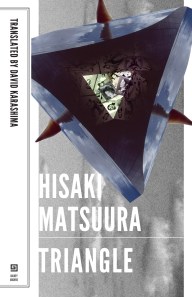 Tokyo, 1994. Japan is now well into what observers will later call the “lost decade,” a downward spiral triggered by the Japanese central bank’s bursting the speculative bubble of the 1980s. The seemingly inviolable climb of the Japanese economy—and society—has reversed.
Triangle, the 2001 novel by the respected Japanese writer Hisaki Matsuura released in its first English edition by Dalkey Archive Press (233 pages) this month, is an attempt to transform the Japanese downward spiral into a metaphysical thriller. But novels—even literary ones—based on conceptual ideas rarely work. Continue reading
The Absurd Demise of Poulnabrone by Liam Howley
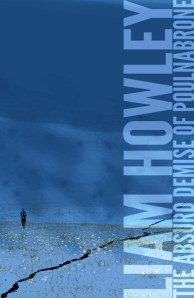 Liam Howley opens The Absurd Demise of Poulnabrone (Jagged C Press, 344 pages) with an introduction to Cornelius Solitude Conlon, an aging man who, I assumed, was the primary protagonist. In fact, my assumption continued throughout a good portion of the novel, even though the narrative shifted to various other characters as I read along. Nevertheless, as the story progressed, Cornelius became but one piece in the game board that is Poulnabrone.
It is, in fact, Poulnabrone that is the centerpiece of this story. Primary and secondary characters appear on the scene, make an impact, and leave. Some return later on, some never appear again, yet others remain present to weave the fabric of the tale as it is spun along, carrying with them the thread of continuity without overshadowing the main premise.
Continue reading
Battleborn by Claire Vaye Watkins
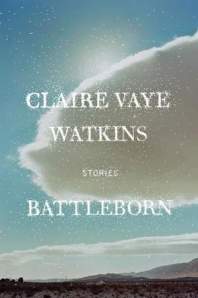 Claire Vaye Watkins writes as if she scratches her stories from the grit and mining detritus of the Nevada desert she grew up in, then transforms the elemental by gathering language as rich and as natural as the sand or minerals found there like an alchemist. The work is as layered as the often brutal human history of the region, a history she both draws upon and to which she will surely add her own narrative. And like the harsh landscapes and histories that everywhere informs these brilliant stories, when you peer long enough, closely enough, at what seems an empty, heartless place, you not only see its unforgiving beauty within the parched hills and among the tailings castaway after decades of exploitation, you also find glitter among the hardscape, the glint of silver and gold. Like the characters in her story collection Battleborn (Riverhead Books, 283 pages), the truths Watkins unearths require strong stomachs and strong wills to digest but reward the reader with sparkling prose, hard but achingly accurate portraits of unforgettable characters, and gemstones of hope among the chaos of despair and interior pain. Continue reading
Hush Now, Don’t Explain by Dennis Must
 This is a unique American novel, written in the language of the heartland before Jesus became a pawn in the political battle for the American soul. It is written in a subdued, subtle, understated lyrical style. It is as rich and diverse as America herself. It is at once a romance complete with trains, whorehouses, steel mills, and the death of the drive-in-movie theater and a coming of age novel in which the protagonist emerges from the chrysalis to transform into a singing butterfly.
Here, in Hush Now, Don’t Explain (Coffeetown Press, 287 pages), Dennis Must cuts a swath a mile wide and generations deep through the America of the lost dream. On a pilgrimage across a spoiling land and on a quest for lost parents, the dual protagonists—Honor and Billy—experience America as raw and pure and as complex as she has ever been.
Continue reading
 Dactyl Review