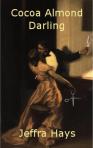
 Jeffra Hays’ Cocoa Almond Darling (Smashwords 2011, 126 pages) is the story of Millicent Randolph, survivor of a bad marriage and starting over in tough circumstances. These include finding a place to live and a job. She finds work in a sewing shop and enjoys a brief, happy relationship with her employer, in which she becomes pregnant although he is married. Her difficulties are then resumed through a long, turbulent aftermath to this affair. The turmoil continues following the birth of her child and on up to this daughter’s marriage and birth of her own daughters, when Milly becomes a grandmother. Continue reading
Category Archives: just literary fiction
Flaubert’s Parrot by Julian Barnes
 Julian Barnes’ Flaubert’s Parrot (Picador 2002, 190 pages) is the story of one man’s quest, his “project” to find the writer outside his writings, despite Flaubert’s insistence that the books should be enough, the writer should disappear and be left alone. Geoffrey Braithwaite, this amusing novel’s British protagonist, is a medical doctor about sixty. He pursues museums, letters, literary works, criticism, and Flaubert the person in a long quest as unofficial biographer and tireless seeker. Continue reading
Dismantle the Sun by Jim Snowden
 Dismantle the Sun (Booktrope, 324 pages) is literary, but if you are looking for a novel of bright sunshine, lollipops along with skittles and beer, this is not the book for you. It reeks pathos; “wrenches” is the term used on the back cover of the book, and the work lives up to that term. It is an uncomfortable read because you are being dragged into the intimate, excruciating dynamics of a couple where the wife is dying and the husband is struggling with that reality.
Continue reading
The Darling by Russell Banks
 “[M]erely the story of an American darling,” Banks’ 2004 novel The Darling (Harper Perennial, 393 pages) ends on September 10, 2001, one day before “a new history” in America begins. The words “merely” and “darling” are strongly ironic, suggesting the “new history,” beginning on the next day, will be even more ominous and horrible than the one recounted by Hannah Musgrave, the novel’s protagonist. She is also known as Dawn Carrington, her adopted pseudonym due to youthful foolishness in abetting the Weathermen revolutionary group in America during the late 1960’s into the 1970’s. Hannah is essentially still on the run, although she will manage to marry a Liberian minister close to President Samuel Doe, plus later be exploited by the CIA in arranging the escape from prison of Charles Taylor. She has been a self-necessitating fugitive, obliging herself with a life of running and hiding, and unaware of herself as also a political tool easily exploited. Continue reading
Milligan and Murphy by Jim Murdoch
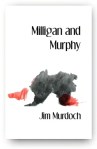 Opening a novel with a quote, particularly one from a writer as universally celebrated as Samuel Beckett, risks much. A reader is apt to spend a good deal of the novel comparing the works of the writer before him to those of the great master, fall into a reverie about how great was the work of the great master, and lose track of what the book in hand is going on about. Jim Murdoch, the author of Milligan and Murphy (Fandango Virtual, 180 pages), assumes that risk. Continue reading
If a Man be Mad by Harold Maine
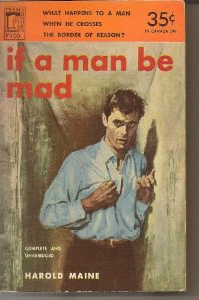 As cruel as the world itself.
If a Man be Mad (Permabooks, 156 pages)…there couldn’t have been a more appropriate title for this gem hidden amidst the American literature. Walker Winslow, writing as Harold Maine, had written this fascinating book while living in Big Sur, at a time when other great writers, such as Henry Miller resided nearby. Whether it was Winslow’s gift or the proximity of some of the greatest in modern American literature, Mr. Winslow has achieved what only but a few writers are capable of. He shook my world. Continue reading
A History of the World in 10 1/2 Chapters by Julian Barnes
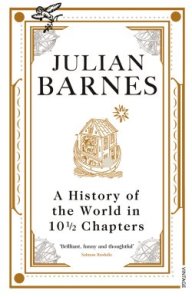 God’s all-time bestseller, The Book, might be described (I wish to offend no one) as metafiction; it was written, divinely, by its main character, Who appears in various forms, at crucial cliff-hanger moments, as Himself. Unfortunately, so the story goes, God’s sixth-day creation, us — or more accurately our ancestors — made a muddle of His work, so God recruited Noah & Sons to cruise.
Mr. Julian Barnes launches A History of the World in 10½ Chapters (Knopf, 307 pages) with his own mock-knowing version of history, as reported by a wiseacre, truth-telling woodworm (baby termite?) stowaway, one of several who survived the trip. Why the need to sneak? Woodworms were not one of God’s chosen species, which leads Continue reading
The Beach Beneath the Pavement by Roland Denning
 Bernard Hawkes is a cynical, disillusioned journalist who finds himself in a spot of trouble when someone starts enacting the theoretical terrorist plots described in his satirical newspaper column. So begins this sardonic tale of conspiracies within conspiracies set in modern-day London.
With the sinister Tranquility Foundation (a New Age conglomerate promising “serenity with security”) on one side and the Primitive Front (a group bent on shaking people out of such complacency) on the other, Bernard’s previously humdrum existence suddenly becomes quite interesting as he is drawn ever deeper into the intrigue behind the bombings. Adding to his problems are Inspector Pitmarsh, the paradoxically chummy yet menacing police detective, a vivacious young revolutionary calling herself Animal, and Dillwyn, his alternatively rational and paranoid neighbor. Continue reading
The Double Life of Alfred Buber by David Schmahmann
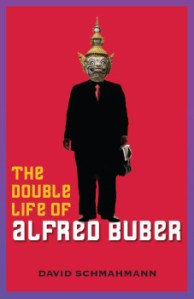 (Permanent, 197 pages) Who is Alfred Buber? In starkest terms, he is a respected Boston lawyer who falls in love with a Thai sex worker named Nok. Not surprisingly, they do not live happily ever after. This is not a book of neat resolutions.
But it is a story full of interesting ruminations, which are often amusing, sometimes provocative, and consistently engrossing. Narrated in the first person, the novel moves deftly between past and present and provides a nuanced portrait of loneliness. Continue reading
Dr. Jesus and Mr. Dead by Cooper Renner
 Spanish poetry translator, publisher of elimae press, and celebrated indie writer, Cooper Renner has written a debut novel Dr. Jesus and Mr. Dead (Ggantijia, 215 pages). The work is an amalgamation of historical fiction, and ebbs and flows across hundreds of years and multiple psyches. Disturbing, entirely entertaining, and expertly written prose which drawls in slow, southern sweeps, Dr. Jesus and Mr. Dead is dripping with beautiful language, harsh imagery and heady inquiry. Continue reading
 Dactyl Review