 I will avoid the absurdity of defending a National Book Award finalist; we can agree that the western can be literature. We have Larry McMurtry and Charles Portis to underline the point. The clean prose of News of the World (William Morrow, 224 pages) similarly explores universal themes of honor, purpose, age, and culture within a detailed period piece, allowing the conventions of bar fights and gunfights, natives and lawless towns, blacksmiths, willing ladies, and Mexican aristocracy to tell a fresh and compelling tale. Continue reading
The Things We Lose, The Things We Leave Behind by Billy O’Callaghan
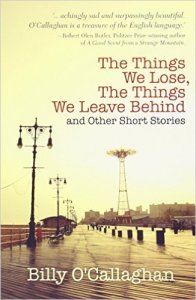 What to say about Things we Lose (New Island Press, 228 pages) a book that stunned me, time and again. I might call Billy O’Callaghan a “writer’s writer,” if that term did not immediately consign a writer to obscurity. (In the USA, Richard Yates is often referred to as a “writer’s writer,” and until the movie Revolutionary Road, few people, apart from those who taught in MFA programs, knew his name.)
I would like to invent a new way to describe what I think Billy O’Callaghan will leave as his literary legacy. I would call him a “human’s human” (with a pen) or an “explorer’s explorer” of our dreams. I would call him a poet of the spirit. Or, maybe, to use a more prosaic analogy, he is a housekeeper who assiduously dusts the cluttered rooms we keep closed, even from our conscious minds. Continue reading
The Tiger’s Wife by Téa Obreht
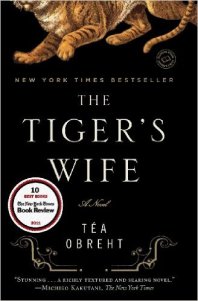 Like many who have read this first novel, written by a young woman still in her twenties, I marvel at the very existence of the The Tiger’s Wife (Random House, 338 pages). How could someone this young have written a narrative this complicated, this full of insights into human nature, this teeming with art—this GOOD? I have read several reviews of the book online and I marvel once again at the caviling, the failure to appreciate the book on the part of some reviewers. Have American readers become so inured to the genre of “domestic literary realism,” this dull, insipid stuff that dominates the publishing world these days—stories of ordinary Americans doing ordinary things, told, for the most part, in flat ordinary language—that they fail to appreciate something with genuine verve and brilliance? Continue reading
Leo Tolstoy’s Anna Karenina, translated by Miriam Schwartz
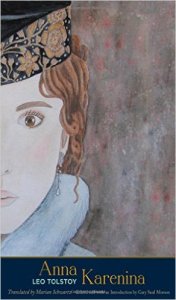 So here we have one more translation into English of Anna Karenina (Yale University Press, 754 pages) the greatest novel ever written in the history of world literature (my opinion, but not only mine). The publicity announcements and blurbs make big claims for this book. Marian Schwartz, a renowned translator with extensive experience, “embraces Tolstoy’s unusual style—she is the first English language translator ever to do so.” Hmm. “Clearly a labor of love—over a decade in the making—this translation is the most accurate Tolstoy we have in English.” Hmm. Marian Schwartz “bequeaths us not a translation at all but Tolstoy’s English original.” Huh?
Such grandiose blurbery places quite a burden on the shoulders of the translated text. Let’s see if the text can bear such a heavy weight. Continue reading
The Road by Cormac McCarthy
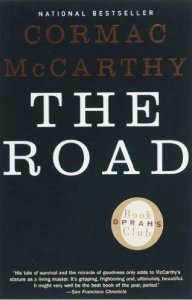 I’m ten years late getting around to reading The Road (Alfred A. Knopf, 287 pages), but since it has to rank among the most powerful pieces of American fiction written in the past ten years, it remains more than worthy of discussion. McCarthy here tells a tale of “nights dark beyond darkness and the days more gray each one than what had gone before.” We’re in the genre of post-apocalyptic fiction. Bad times have descended upon the U.S. and the whole world, consequent upon some enormous Catastrophe. We are never told what happened—it could have been a nuclear war—but one thing is obvious: something really big has blown, leaving ash all over the earth and floating through the air. Apparently most animals are extinct, and the few human beings who survive face fellow humans who are, largely, living beastly lives. Continue reading
The Making of Zombie Wars by Aleksandar Hemon
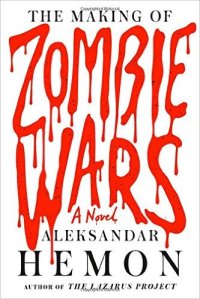 A literary truism: good comic writing, any comic writing that professes to call itself literary fiction, must be undergirded with a firm foundation in seriousness. Nikolai Gogol was/is the greatest comic writer in Russian literature; his works are profound. Vladimir Nabokov wrote the following about Gogol’s long story, “The Overcoat,” widely considered the best story ever written in Russia: “The diver, the seeker for pearls, the man who prefers the monsters of the deep to the sunshades on the beach, will find in ‘The Overcoat’ shadows linking our state of existence to those other states and modes which we dimly apprehend in our rare moments of irrational perception.”
Too many contemporary American writers of literary fiction are under those umbrellas on the beach. If they are swimming at all they are swimming in the shallows. There are depths to be plumbed through the art of writing creative fiction. Why not plumb them? Is it too risky? Is it easier to wade into tepid waters and potter around there? Time to take a deep breath and dive down deep now, modern American author. Time to stop your “shit-swimming” (Hemon’s term, taken out of context) in the literary shallows.
The Making of Zombie Wars (Farrar, Straus and Giroux, 307 pages) begins with Hollywood silliness—amateur screenwriters pitching ideas to one another in a Chicago workshop—the idiocy and mindlessness of Hollywood (and of the whole U.S. A.), lurks in the background all the way through to the end. Practically all of Hemon’s books with American characters in a U.S. setting present a picture of our country teeming with idiots. This novel is set in 2003, just as we were embarking on what will surely go down as one of the most idiotic foreign-policy decisions of the twenty-first century: the invasion of Iraq. Continue reading
Going Dark: Selected Stories by Dennis Must
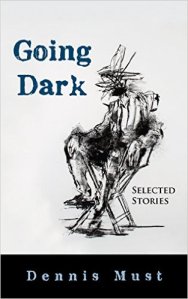 As I read Going Dark, Selected Stories by Dennis Must, (Coffeetown Press, 170 pages) I saw a realistic foundation in each story. Here is a recognizable world with real people suffering real-life anguish. What interested me, however, was the way the author then handled time, space, and imagination. To come to grips with it, I had to invent a literary term—lyrical surrealism—to distinguish Must’s work from fantasy which, to my mind, means dragons and dragonspeak, time warps, elves and men with long beards carrying oaken staves and speaking some dialect of incomprehensible origin. Continue reading
Minimum Maintenance by Carolyn Colburn
 The protagonist and narrator in Minimum Maintenance (Bonnie’s Mews Publications, 240 pages) by Carolyn Colburn is a thirteen-year old girl named Sugar, named so because her mother didn’t want to say “shit” on camera. Sugar bumps along in the wake of her untethered mother from Minneapolis to Up North to Montana, Oklahoma, Nevada and parts in between, smoking cigarettes and joints, working on a tattoo and making fleeting friendships along the way. The title indicates the nature of Sugar’s childhood along the back roads, where dead cars pile high and outliers hang onto reality for dear life, doing what they do with drugs, booze, guns, sex, and hair dye. Continue reading
The Conductor by Sarah Quigley
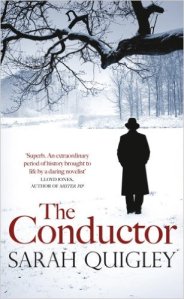 It is easy to understand how The Conductor (Vintage, 303 pages) stayed on the best seller list for weeks and weeks in New Zealand. The story is compelling, and Sarah Quigley knows how to tell it. Against the background of the siege of Leningrad during the Second World War Dmitry Shostakovich is writing his Seventh Symphony, struggling to finish it while German bombs are falling all around him. Meanwhile, the main character, Karl Il’ich Eliasberg (1907-1978), the second-rate conductor of a second-rate orchestra, goes about his life of quiet desperation, unaware that circumstances are coming together so as to place him at the center of history. Continue reading
Love and Obstacles by Aleksandar Hemon
 I’ve read all of Aleksandar Hemon’s books. They have been blurbed and reviewed by the most enthusiastic of blurbers and reviewers: “dazzling, astonishingly creative prose” with “remarkable, haunting autobiographical elements.” The latest Hemon offering, Love and Obstacles (Riverhead Books, 210 pages), is a series of short stories, most of which continue in Hemon’s now familiar reminiscent strain. They amount to a kind of Bildungsroman, the story of a guy from Sarajevo who comes to America—in a word, Hemon’s own story, and therein lies the problem. Or, to put it more precisely, there may have been no problem when he started writing in this nostalgic, reminiscent vein, but by now the problem is obvious. What I’m writing about below is, primarily, that problem. Continue reading
 Dactyl Review