 With The Suburban Swindle (So New Books, 99 pages) Jackie Corley delivers a collection of memoir-like stories about drunk, pissed-off, reckless, late-teen and twenty-something Jersey suburbanites fucking up relationships and getting the shit beat out of them. The narrative voice, sensibly consistent throughout the collection and rising to a kind of tortured literariness, wedges a space between author-narrator (who is destined to get the hell out of there) and subjects (who aren’t going anywhere). The narrator is an outsider-in-the-making, not quite not-one-of-them yet, but well on her way. Throughout this collection, the language is kicking violently against the box it finds itself in, rebelling like a young suburbanite, trying to find its meaning. It’s angry and frustrated: Continue reading
Vestments by John Reimringer
 One of the pleasures of literary fiction is its fluidity, how it engages both the physical world and mental states, moving back and forth in a manner that not only reproduces the experience of being alive, but adds to it. The book in hand is less a mirror than an additional, highly sensitive appendage of the self.
John Reimringer’s Vestments (Milkweed, 407 pages) highlights the process by staking out two sharply contrasting worlds: the earthy, often violent family of James Dressler, a young man growing up in blue-collar Saint Paul, and James’ calling as a Roman Catholic priest, Continue reading
The Suburban Swindle by Jackie Corley
 Jackie Corley’s The Suburban Swindle (So New Publishing, 100 pages ) paints a specific place in a specific time with a specific aesthetic in a timeless style which transcends narrative mode and delivers a straight-served good story. Short works bound together through an ultimately honest, sometimes naïve narrator showcase Corley’s ability to communicate what it is to be a young, smart, bored person in the suburban life, which in its own way at times, reads as surprisingly feminist. Continue reading
How to Survive a Natural Disaster by Margaret Hawkins
 It’s unfortunate that “adult entertainment” has become synonymous with porn, because there’s a shortage of the real thing. By that, I mean books and films for grown-ups. Not only about sex, but about the multitude of other concerns that mature people care about. These people know that there is more to life than celebrities, shopping and getting skinny. Or having to choose between zombies and vampires.
Margaret Hawkins’ How To Survive a Natural Disaster (Permanent Press, 199 pages) confidently embraces this fact and offers a literary novel that is both Continue reading
Tales of Woe by John Reed
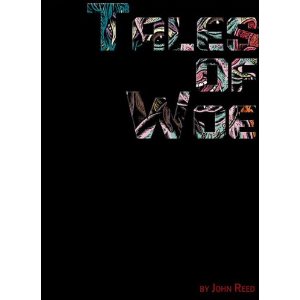 John Reed’s most recent book, Tales of Woe (MTV Press, 204 pages), structured in novelistic intertwined short stories, is actually a work of non-fiction. Each tale is entirely true, which perhaps is ultimately what makes the book so difficult and simultaneously profound. We walk with Reed through the murky depths of the worse angels of our nature.
Part crime-log, part historical map, we follow countries in contemporary time into the psyche of many cruelties. Reed’s tight minimal prose reads poetic, ultimately serving the work both in realistic relay of information, but also in Continue reading
Her Mouth Looked Like a Cat’s Bum By Matthew Ward
 The twenty-one stories in Matthew Ward’s latest collection Her Mouth Looked Like a Cat’s Bum (World Audience, 164 pages) are idiosyncratic and challenging. Built primarily out of character studies from society’s outcasts, the stories traverse a nihilistic baseline, where societal norms end and disintegration begins. The opening story, “Bathrobes” is almost a novella at 38 pages, at least compared to the other stories in this book. Within the story is the line that forms the book’s title, and the sense of disapproval that the title conveys is one which clearly sets the tone for the book. The stories are intended to shock, cause the reader to disapprove, frown, but perhaps also see life from a slightly different perspective. The characters are homosexual, naked, playing cards with Continue reading
The Best Australian Stories 2006 edited by Robert Drewe
The Best Australian Stories 2006, edited by Robert Drewe (Black Inc, 380 pages). As an art form, the short story seems to be growing stronger. Writers still bemoan the difficulty in getting a short story collection published, but collections like Black Inc annual ‘best of’ series are a testament to the continuing demand for short fiction. The reasons why are obvious – a short story is fully contained, able to be read in a single sitting, and are often engaging, without needing the development time of a full-scale novel. Part of the reason why the Black, Inc collections are so successful is the careful editorial input. This is the sixth year that this series has been in production, and the process for finding stories is a fascinating one, involving scouting through publications of respected literary mags, and, from this year on, accepting submissions from any writer so inclined. For writers, it’s a terrific opportunity to showcase work, get your name out, and pick up loyal readers. For readers, it’s a really nice way to expose yourself to a range of Continue reading
The Bait Shack by Harry Hughes
 In The Bait Shack (BeWrite Books), Dale Cooles is a mathematician ready to tie up some messy ends. He’s quit his fancy university job, said goodbye to his last fling, and applied himself to his new life as unemployed, kept husband of Lacy Chamblet. Lacy is secretary to robber baron Henry Meredith, who makes his living cheating his tenants, avoiding tax, and hiring low-cost street kids too unemployable to blow the whistle on him. But this time, he’s teamed up with mobster Johnny Avalino, and his plans take a nasty turn. Are Dale and Lacy smarter than Meredith thinks they are? Is thwarted conservation officer Continue reading
Look at the Harlequins! by Vladimir Nabokov
 Beginning with a list of the author’s “other” books, which don’t exist outside the distorted mirror world of what Nabokov calls “LATH” (as he acronymically pegs Look At The Harlequins! [Vintage, 272 pages] within that book’s own text) is a wildly inventive metafiction in the bilingually verbose hyper-alliterative Nabokovian mold. We get splendid sentences here on the jeweled gift of selfhood giving reason to resist suicide from whatever facet, cranky meditations on the author’s pederastic proclivities and ego, and, most brilliantly, strange slips down the semiotic slope into madness. In two or three places in this book we find ourselves in a meticulously rendered literary reality and then, through a process of what one might call Continue reading
Hollywood by Charles Bukowski
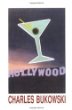 Although far from Bukowski’s best, Hollywood (Ecco, 248 pages) is a revealing send-up of what happens when brutal honesty (Buk) interacts with the California entertainment industry. A roman a clef about the making of the independent film Barfly based on Bukowski’s life and some of his earlier stories,the book shows Bukowski finally gaining some recognition and acceptance near the end of his career. The movie stars Faye Dunnaway and Hollywood badboy Mickey Rourke who does a good job slurring and walking about with hemorrhoids. Yet it appears from the text that Bukowski would have preferred Sean Penn, who was originally cast in the part, to play him in the film–Penn had more heart. As always Continue reading
 Dactyl Review