 Where is Eugene K. Garber now? Some years ago he distinguished himself as a writer of dazzling short stories, many of them with an experimental edge. His Metaphysical Tales won the Associated Writing Programs annual prize for short stories, and a later work, The Historian, took the William Goyen Prize for fiction. Those two books, a dozen years apart, established Garber as an intellectual fabulist, a dazzling juggler of narrative devices, a witty and self-conscious artist with a subversive vision.
Joyce Carol Oates wrote a brief foreword to Metaphysical Tales which sounded more like a warning to readers than an introduction. After remarking on the author’s “extraordinary skill and vision” she wrote, “Garber is also stubborn, eccentric, self-conscious, and so willfully dazzling -– to be a virtuoso, or to be nothing! — that readers must be enjoined not to attempt to read this volume straight through, or even to read more than one story at a time.” And she concluded with, “Like all gifted writers, Eugene K. Garber is not to be understood – or loved – too quickly.” Clearly, that brainy Garber guy was some kind of card sharp, but with words. Continue reading

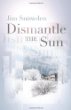
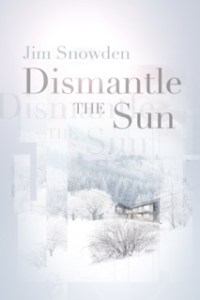 Throughout most of our lives, we can ignore our fears about the threat of non-existence that yawns beyond the casket with as much reality as the non-existence out of which we came into our cradles. But when facing death, our own or that of a loved one, we feel compelled to review the idea of after life. Believers ratchet up their beliefs and atheists, like Hal in Jim Snowden’s Dismantle the Sun (Booktrope, 324 pages), hang tough.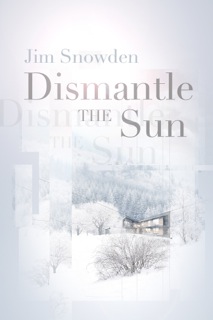


 Dactyl Review