The Absurd Demise of Poulnabrone by Liam Howley

Liam Howley opens The Absurd Demise of Poulnabrone (Jagged C Press, 344 pages) with an introduction to Cornelius Solitude Conlon, an aging man who, I assumed, was the primary protagonist. In fact, my assumption continued throughout a good portion of the novel, even though the narrative shifted to various other characters as I read along. Nevertheless, as the story progressed, Cornelius became but one piece in the game board that is Poulnabrone.

It is, in fact, Poulnabrone that is the centerpiece of this story. Primary and secondary characters appear on the scene, make an impact, and leave. Some return later on, some never appear again, yet others remain present to weave the fabric of the tale as it is spun along, carrying with them the thread of continuity without overshadowing the main premise.
Continue reading
Blinding: The Left Wing by Mircea Cărtărescu

Blindingforweb1It starts in adolescence. The questions come to you while lying in bed (certainly now with a growing awareness of your sexuality), the walls of your room expanding into endless grainy darkness, as if the room itself could encompass the entire world: why am I here, why is there anything at all?

The questions may haunt you at age 13 or 15 or 17, but by adulthood they tend to feel banal. Unanswerable, impossible, if taken seriously debilitating, they are in a word blinding, and so you tend to avert your gaze. But suppose you can’t, suppose the inviolable white light only draws you closer, to madness possibly, to paint or write or drink or pray (to what God, tell me?) almost certainly. And so perhaps you scribble, the pages of your notebooks filling with furious script, like eons of sediment piling into sad mute mountains no one else will ever excavate or carve or climb. Continue reading

Isaac: A Modern Fable by Ivan Goldman

isaacAs Ivan Goldman’s Isaac: A Modern Fable (The Permanent Press, 222 pages) nears its conclusion, one of the novel’s narrators makes a telling observation: “Whatever we think we know, we’re just guessing, like everyone else.” In context, the narrator, Ruth, is commenting on her familiarity with a slippery and sinister academician named Borges, but the line also captures the essence of the novel itself. Drawing heavily on the Biblical tale of Abraham and Isaac, this “modern fable” serves as a telling commentary on humanity’s ongoing struggle with questions of religion and our intimations of the divine. To wit: What’s the difference between those who claim to hear the voice of God and those who are just plain crazy? Continue reading

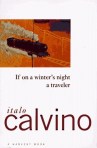
If on a Winter’s Night a Traveler by Italo Calvino

wintersnightItalo Calvino opens up his masterpiece, If on a Winter’s Night a Traveler (HBJ,  260 pages), in the second person, addressing and engaging the reader in a very direct way; a powerful, uncompromising way: Here you are – the reader; and here I am – the protagonist; the author is somewhere else, as impertinent to the story as is his publisher. It is what it is, and you, the reader, are here with me, sucked into the depths of my mind, where you’ll trip over threads that are seemingly random, unrelated and without ends, yet serve a purpose that you may or may not grasp unless you persist until the closing lines fade away as you turn the last page over and walk away, pensive, wondering whether you can make any sense of this work at all. Continue reading

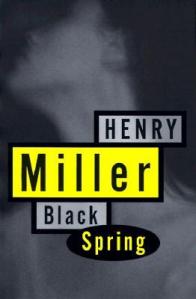
Black Spring by Henry Miller

blackspringWarning: This review is long, has an excessive amount of quotes, and does not reach much of a conclusion. If you have a short attention span, this may not be for you. However, if you appreciate Henry Miller, one of the finest writers America has produced in the last century, I encourage you to read on.

When his name comes up, most readers associate Miller with sex, scandals, pornography. This is mostly due to the press attention given to his two books, The Tropic of Cancer, and The Tropic of Capricorn. Continue reading

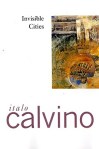
Invisible Cities by Italo Calvino

invisiblecitiesYou pass adolescence and enter the world of adult literature. At first, you read anything and everything that found its way to your hands; then, slowly you begin discovering your own, unique literary taste, and you become selective. The more you read, the more selective you become. Your list of favorite authors and genres grows; you find literary voices that speak directly to your soul. By now, you have reached mid age, and you have over two decades of serious reading under your belt. Any new book that you open, any new author that you discover is judged against your favorites, against the voices that stimulated your mind over the years. Words and phrases are judged against those that provided comfort when you felt down; ideas and executions are compared against the benchmarks established over the years. You think you know what you like; you think you know what to expect. Well, perhaps you do. New books come along, and some attempt to quietly sneak in to your consciousness, while others attempt to shatter your world. Most, if not all, pale with your favorites, do not fit with your ideas, or leave you cold. Continue reading

Flaubert’s Parrot by Julian Barnes

indexJulian Barnes’ Flaubert’s Parrot (Picador 2002, 190 pages) is the story of one man’s quest, his “project” to find the writer outside his writings, despite Flaubert’s insistence that the books should be enough, the writer should disappear and be left alone. Geoffrey Braithwaite, this amusing novel’s British protagonist, is a medical doctor about sixty. He pursues museums, letters, literary works, criticism, and Flaubert the person in a long quest as unofficial biographer and tireless seeker. Continue reading

The Plague by Albert Camus

plagueComposed in 1948, Albert Camus’ The Plague (Vintage International, 308 pages) is a study of human habit and frailty in a time of widespread destruction and crisis. A plague appears in a modern city called Oran in Algeria, afflicting the community for most of a year, then as abruptly lifts. Residents celebrate, much in the way of celebrations for the ending of world wars, with renewed energy for humanity’s “humble yet formidable love” (301). It is this love, an adult’s understanding of love in the view of protagonist Dr. Rieux, that Camus highlights toward the ending of the novel—that is, love as desire to join with another, whether adult son with mother, father with child, doctor with patients, wife with husband, or “true healers” who seek peace (254). Continue reading

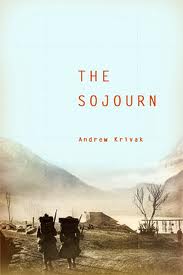
The Sojourn by Andrew Krivak

There will, unfortunately, always be a need for books about war, and this need takes many forms. In The Sojourn (Bellevue Literary Press, 191 pages), Andrew Krivak successfully defends the parish of the novel. Although the harsh imperatives of history require much sifting of facts, places and victims—synthesis and hindsight are essential, as part of our troubled species’ perverse CV—the novel, with its relentless subjectivity and its bloody-minded insistence on the plight of individuals, brings its own kind of necessary testimony. Continue reading

Dr. Jesus and Mr. Dead by Cooper Renner

Spanish poetry translator, publisher of elimae press, and celebrated indie writer, Cooper Renner has written a debut novel Dr. Jesus and Mr. Dead (Ggantijia, 215 pages). The work is an amalgamation of historical fiction, and ebbs and flows across hundreds of years and multiple psyches. Disturbing, entirely entertaining, and expertly written prose which drawls in slow, southern sweeps, Dr. Jesus and Mr. Dead is dripping with beautiful language, harsh imagery and heady inquiry. Continue reading