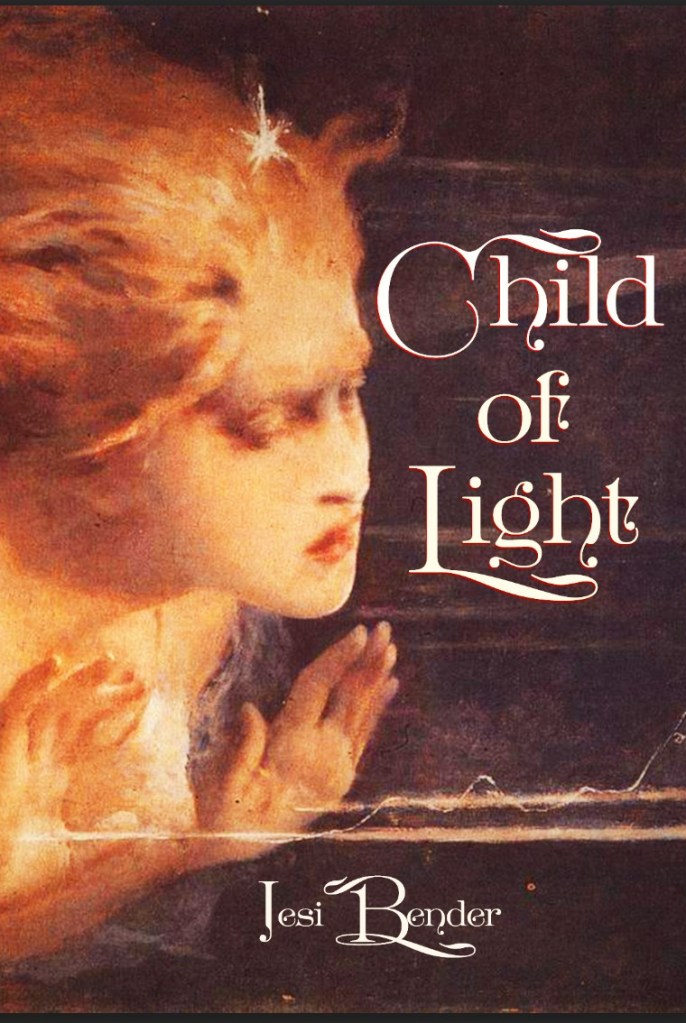
Child of Light by Jesi Bender

What do we really know when epistemic parameters are fluid? This question is central to Jesi Bender’s historical novel, Child of Light (Whisky Tit, 318 pages), set in upstate New York at the end of the 19th century. It centers on Ambrétte Memenon, a clever and dutiful young woman whose father is a French scientist immersed in his studies of electricity, and whose mother is a Québécoise enthusiast of Spiritualism.  Papa seeks to illuminate cities at night, Maman to communicate with the dead.

These are rather different agendas, to put it mildly, but the story dramatizes how, within the context of the period, both pursuits are cutting edge. And Ambrétte, in an attempt to mend her broken family, tries to reconcile the two.

Continue reading
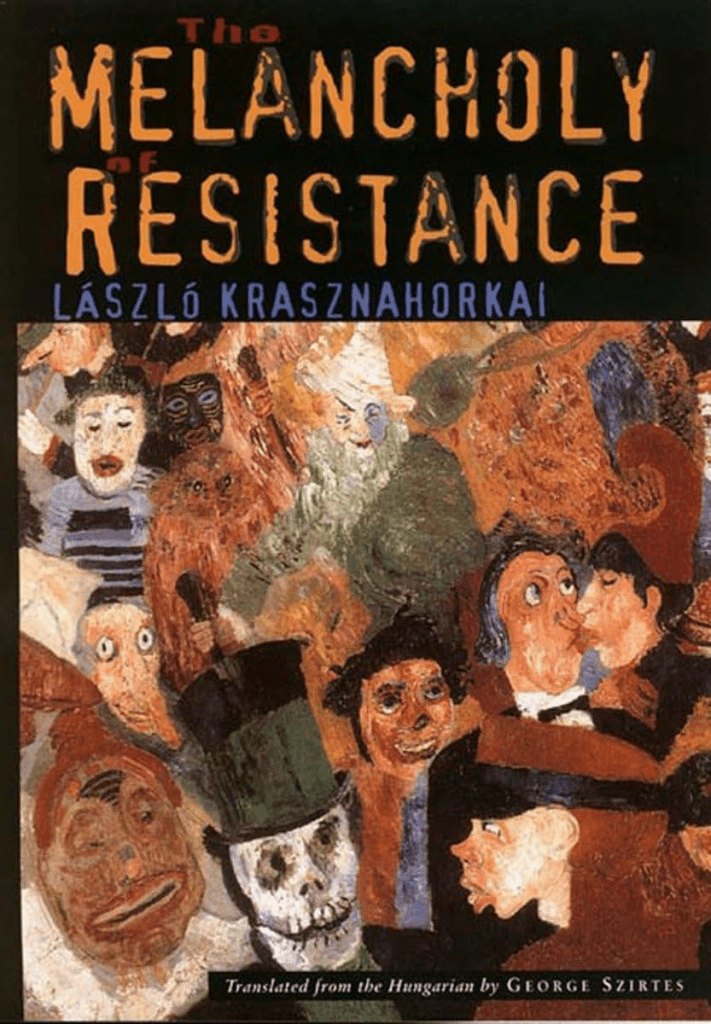
The Melancholy of Resistance, by László Krasznahorkai (translated by George Szirtes)

Part One: “An Emergency: Introduction”

The Malaise

[Note: the part in quotes above is Krasznahorkai’s. These brief titles for various sections of the book are all he gives the reader to go on. I see this as a kind of perversity on the part of the storyteller, a middle finger stuck up in the face of the reader. Figure it out for yourself, sucker. Therefore, in my review—in aide of the reader—I sometimes provide chapter numbers and titles, the things the writer himself should have provided. A few breaks for paragraphs would have been a nice thing too. The words are crammed together in huge glomps on every page, so as to squeeze the tender brains of any reader. Dialogue is not set off in separate paragraphs, but placed in quotation marks in amidst the glomps.]

Continue reading

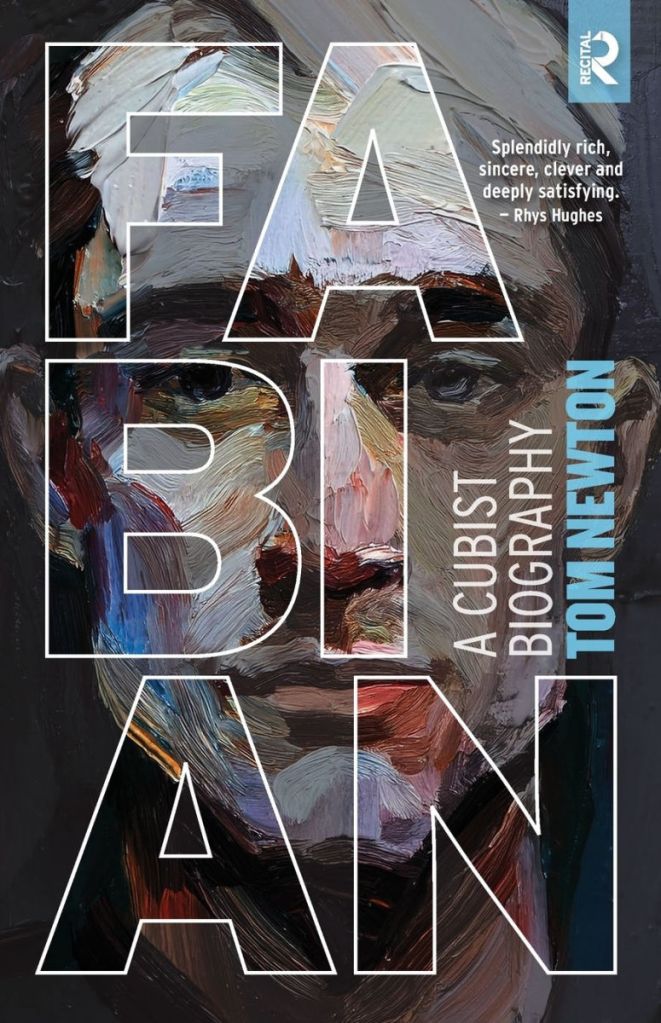
Fabian: A Cubist Biography, by Tom Newton

Tom Newton’s latest novel, Fabian: A Cubist Biography (264 pages Recital Publishing), presents itself as a biography of Fabian, a “disillusioned, would-be filmmaker.” Fabian, a civil servant in the British Ministry of Information during WWII, longs to make a groundbreaking film, but never quite does it. He creates a treatment. He thinks through his artistic desire. Leaving off a Godot-like deferral of Fabian’s planned film, the novel careens fantastically through epochs and ideas. We encounter Spanish conquistadors and Aztec priests, Dr. French (a time-traveling psychoanalyst), Junita (another enigmatic time-traveler) and more. Everyone has a backstory and place in intertwined narratives, arriving at a resolution that challenges the notion that a good book should tuck every loose end in place. 

Continue reading

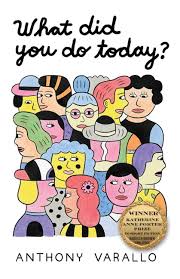
What Did You Do Today? by Anthony Varallo

Fiction labeled magic realism is sometimes too squishy, to my taste, relying too much on novelty or hoped-for charm. Instead of providing an added charge to the storytelling, the other-worldly conceits can bring about a dilution, like a film that leans too heavily on special effects.

In What Did You Do Today? (UNT Press, 216 pages), winner of the Katherine Anne Porter Prize, Anthony Varallo avoids this pitfall across 45 stories that often defy realistic convention. He knows how to strike the right balance between the ordinary and the frankly impossible. Bizarre events occur against a backdrop of everyday domesticity, as parents and children go about their lives.

Continue reading

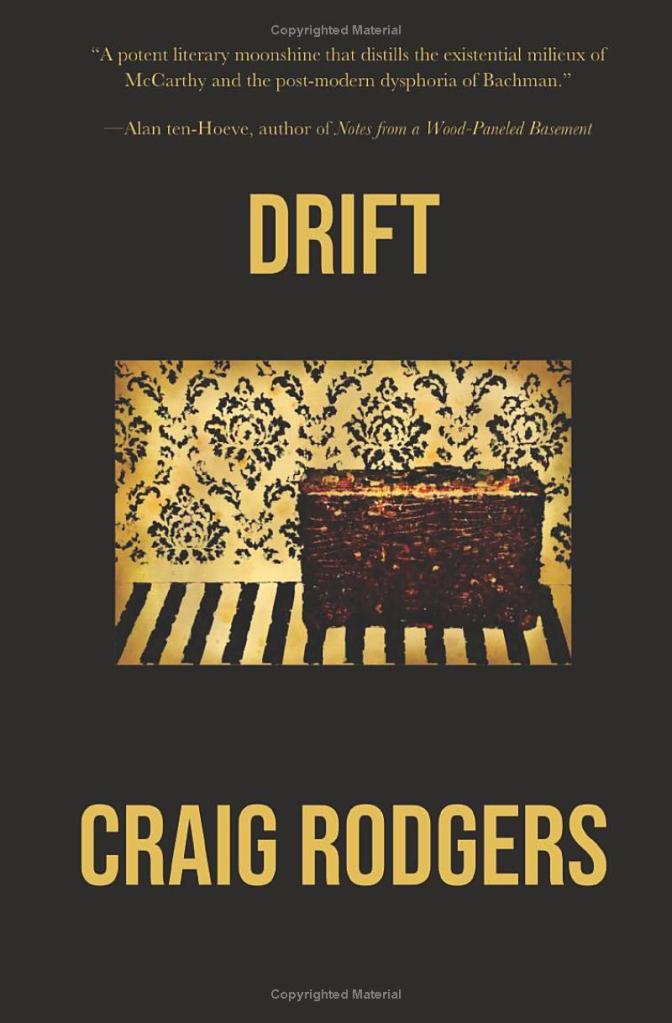
Drift by Craig Rodgers

Sometimes a novel’s originality is less a matter of affirmation than an act of refusal. Refusal to go along with received ideas of how to tell a story or create verisimilitude or even how words signify. Saying no opens up new space, or at least points towards what has been neglected by complacence.

Craig Rodgers’ Drift (Death of Print, 156 pages) is such a novel. A dystopian tale of a bible salesman named Charlie, it will defy the ingrained expectations of many readers. Plotwise, Charlie has no trouble making a sale: everyone seems to want his product. He has no idea why. Women like Charlie—no struggles there, either. Other characters include a clown on a rampage and a mysterious goon in a dented bowler hat who seems to be following Charlie. There’s a bearded lady, with whom Charlie has sex, and a young boy afflicted by plague who becomes his travel companion. Then the boy steals Charlie’s car. Continue reading

Hiking Underground by Amy Smiley

In Hiking Underground (Atmosphere Press, 203 pages), three urban naturalists explore the relationship between art and reality in episodic reveries about nature. Although the narratives ostensibly take place mostly in parks in Manhattan and Maine, the real action is in the minds of the characters as they explore the great outdoors and grow as artists and as individuals.

It worked, thematically, for me to think of the three main characters, Adam, Alice and Emma, as the same person at different stages of development. In the story, Adam is Emma’s six-year-old son; Alice is Emma’s student and Adam’s babysitter; Emma is a professional artist and a teacher. The book is divided into sections dedicated to each one of them in turn, although the focal point does visit different perspectives within each section. Adam’s sections are a portrait of the artist as a young child; Alice’s are of the artist as a student, whose emotional memories need resurrecting; Emma’s are of the consummate artist who is satisfied with her creations and begins the body of work that unites her past with her future. Continue reading

Seven Cries of Delight by Tom Newton wins 2019 Dactyl Foundation Literary Award

Newton’s collection of surreal stories, Seven Cries of Delight (Recital Publishing, 170 pages) was nominated by Brent Robison who, in his review, writes, “As legions of MFA students busily workshop their childhood drama into market-friendly ‘realistic’ fiction, Tom Newton has clearly been following a different muse.” At Dactyl Review we value unique and eccentric talent and our readers will find those few authors writing today who aren’t trying to appeal to the most common of those dominating the market. Newton appeals to a special literary taste, to those whose minds tend to wander, who question the act of thinking itself and who often catch themselves in the act, examining the form and structure of the process of meaning-making. In short, Newton writes about thought-art. Continue reading
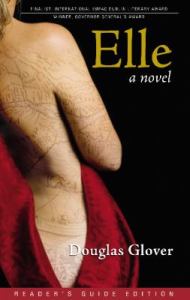
Elle by Douglas Glover

I read Douglas Glover’s novel Elle (Goose Lane Editions, 226 pages) when it came out in 2003, and over the years I’ve continued, now and again, to read a few pages at random. It’s an excellent book – it won Canada’s prestigious Governor General’s Award – with a remarkable narrator heroine and a curious plot, but I go back to it simply because I enjoy the story teller’s voice. The novel is based on an actual event in Canada’s history when a French noblewoman was abandoned on the Isle of Demons in the Gulf of St. Lawrence in 1542.

The history is simple. In 1541 Jean-François de La Rocque de Roberval, a nobleman privateer, was made Lieutenant General of New France. He set sail from the old to the New France that same year and along with him and the other colonists in his charge he had his cousin, or maybe it was his niece or his sister – the record is confused – but in any case she was Marguerite de La Rocque de Roberval. For some unknown reason Lieutenant General Roberval became infuriated with Marguerite and as the ship entered the Gulf of St. Lawrence he had Marguerite, plus her lover and her maidservant, put ashore on a small unpopulated island, providing them with scant hunting and fishing gear. A few years later Marguerite was rescued by Basque fishermen and by then her lover and an infant whom Marguerite had given birth to had died, as had the maidservant. Continue reading

Seven Cries of Delight by Tom Newton

Seven Cries of Delight  (Recital Publishing, 170 pages) is not like most collections of literary short stories. As legions of MFA students busily workshop their childhood drama into market-friendly “realistic” fiction, Tom Newton has clearly been following a different muse. These stories (two dozen of them!) range widely in setting and imagery and allusion, but all are hung on a solid spine: a lively curiosity about the deeper, invisible nature of what we call reality. This curiosity is expressed as speculative imaginings and unharnessed mental rovings, with an articulate, wryly humorous voice that obviously springs from a well-traveled and well-read intellect. At every turn are enjoyable discoveries of unlikely connections, unpredictable logic, and unanswerable questions.
Continue reading

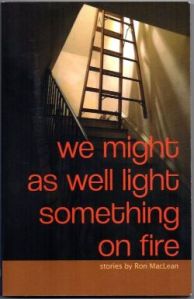
We might as Well Light Something on Fire by Ron Maclean

Three Dialogs about Ron Maclean’s Three-Part Short Story Collection, We Might as Well Light Something on Fire (Braddock Avenue Books, 179 pages):

I. goats, rabbits, etc.

We’re going to talk about we might as well light something on fire .

Right. You know the writer?

Yes.

Is he brave?

I was never in combat with him. Why do you ask?

Guy writes a really far out book called we might as well light something on fire, some smartass will say, right, let’s start with this book.

That would be an incendiary insult to one of the most original collections I have ever read. How do you want to proceed?

Section by section, one of the three sections for each meeting, and concentrate on one story. Continue reading